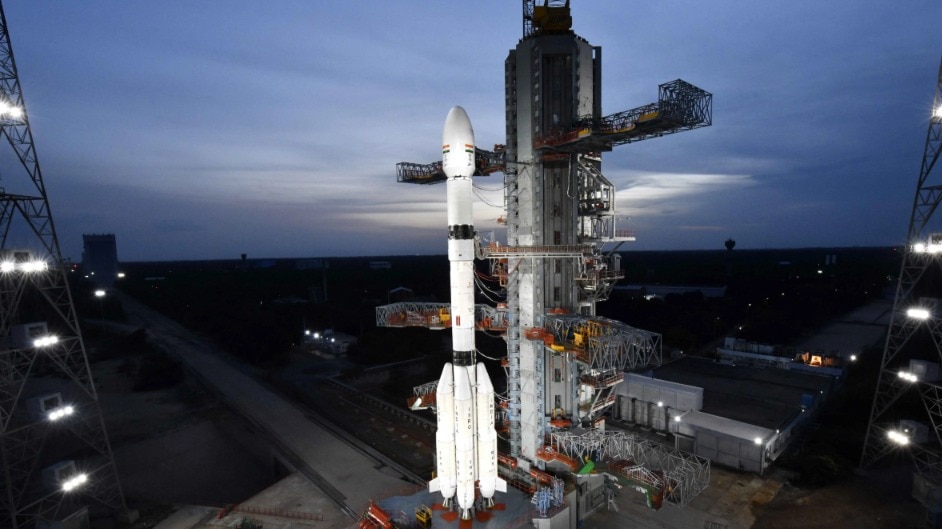
The Indian Space Research Organisation (ISRO) is set to launch its GSLV-F17 rocket tonight, carrying an advanced geosynchronous imaging satellite, reportedly EOS-05. Dubbed the 'Naughty Boy' due to its past inconsistencies, this mission is critical for enhancing India's 24-hour surveillance capabilities along its sensitive borders, particularly with China and Pakistan, aiming to bolster national security.
- GSLV-F17 rocket to launch tonight, deploying an advanced imaging satellite (likely EOS-05).
- Mission is crucial for 24/7 border surveillance, especially along China and Pakistan fronts.
- The GSLV, nicknamed 'Naughty Boy', aims to reaffirm its reliability after past issues.
The Indian Space Research Organisation (ISRO) is poised for a pivotal mission tonight, as its Geosynchronous Satellite Launch Vehicle (GSLV-F17) prepares to carry an advanced imaging satellite into orbit. This mission, reportedly involving EOS-05, is expected to be a game-changer for India's national security and border surveillance capabilities. The GSLV rocket, affectionately known as the 'Naughty Boy' within the space community due to its sometimes unpredictable past performance, faces a crucial test to further cement ISRO's reputation for reliability.
The satellite is designed to provide round-the-clock surveillance along India's borders, particularly with China and Pakistan. Described as 'India's most powerful eye,' it will deliver high-resolution imagery in real-time. This capability will offer significant strategic advantages to the Indian armed forces and intelligence agencies, enabling them to detect and respond to any potential threats or incursions more effectively. The launch from the Satish Dhawan Space Centre in Sriharikota marks another significant milestone in India's ambitious space program.
EOS-05's geosynchronous orbit will enable it to continuously monitor a specific region of the Earth, which is essential for persistent surveillance. This satellite will not only provide invaluable data for defense purposes but also aid in civilian applications such as disaster management, agriculture, and meteorology. Its state-of-the-art imaging technology and data transmission capabilities make it an invaluable addition to India's fleet of space-based assets.
Historical Background: The GSLV's Journey
The development of the GSLV rocket has been crucial for India to launch heavy communication and meteorological satellites into Geostationary Transfer Orbit (GTO), thereby reducing reliance on foreign launch services. However, in its early years, the GSLV faced some setbacks, including the failures of GSLV-D3 and the GSLV-F10 (EOS-03 mission), which earned it the 'Naughty Boy' moniker. Despite these challenges, ISRO has consistently improved GSLV technology, enhancing its reliability and making it one of India's most vital launch vehicles. Its success propels India towards self-reliance in space and provides the capability to launch strategically important payloads.
Why This Matters
BozokMedia analysis shows that this launch is more than just a technological feat; it is a clear statement of India's strategic autonomy and defense capabilities. The deployment of an advanced surveillance satellite can influence the regional power balance, allowing India to protect its interests and respond more effectively to situations along its borders. It also underscores India's growing prominence in space-based intelligence, a critical factor in the global geopolitical landscape.
"This launch is not just about placing a satellite in orbit; it's a strategic declaration of India's growing capabilities in space-based intelligence and self-reliance in critical defense infrastructure," states Dr. Alok Sharma, a renowned space policy analyst.
This mission represents a critical juncture for India's space program, demonstrating the nation's commitment to developing advanced space technology and its applications for national security. It is also a testament to ISRO's engineering prowess and capacity for innovation, consistently pushing boundaries despite challenges. Such missions help solidify India's position as a formidable global space power.
Frequently Asked Questions
- What is the significance of the 'Naughty Boy' nickname for the GSLV rocket?
- How will the EOS-05 satellite enhance India's border security?