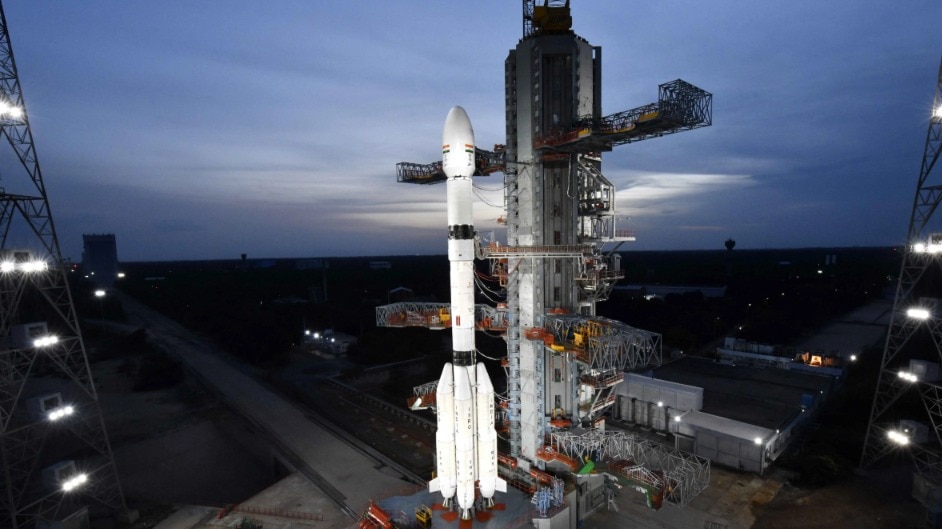
The Indian Space Research Organisation (ISRO) is set to launch its GSLV-F17 rocket carrying the advanced EOS-05 Earth observation satellite. Scheduled for September 4, 2026, this mission marks India's pioneering effort to deploy an imaging satellite into geosynchronous orbit, promising enhanced, continuous monitoring capabilities for critical national applications.
- ISRO's GSLV-F17 rocket is set to launch the EOS-05 Earth observation satellite on September 4, 2026.
- EOS-05 will be India's first imaging satellite operating from a geosynchronous orbit, enabling continuous regional monitoring.
- The mission, the 19th flight of the GSLV, will significantly enhance India's capabilities in agriculture, disaster management, and urban planning.
The Indian Space Research Organisation (ISRO) is on the cusp of another monumental achievement with the impending launch of its Geosynchronous Satellite Launch Vehicle (GSLV-F17), which will carry the cutting-edge EOS-05 Earth observation satellite. This highly anticipated mission is scheduled for Friday, September 4, 2026, at 2:55 am IST, from the Second Launch Pad at the Satish Dhawan Space Centre (SDSC-SHAR) in Sriharikota.
The EOS-05 represents a significant leap in India's space-based imaging capabilities. Unlike most Earth observation satellites that traverse lower orbits, offering intermittent views of different regions, EOS-05 is designed to operate from a geosynchronous orbit. This strategic positioning allows the satellite to remain effectively stationary over a specific geographical area, providing continuous and extended monitoring. This capability is crucial for real-time data collection and analysis over India and its surrounding regions, making the mission a cornerstone for various national applications.
Upon successful deployment, EOS-05 will transmit vital data that will serve a broad spectrum of applications. These include detailed monitoring for agriculture, efficient management of water resources, informed urban planning, comprehensive environmental surveillance, robust forestry management, exploration of ocean resources, and critical support for disaster management efforts. The ability to provide persistent observation from geosynchronous orbit will offer an unprecedented level of detail and responsiveness, particularly during natural calamities or rapid environmental changes.
Historical Context of GSLV
The GSLV-F17 mission marks the 19th flight of India's Geosynchronous Satellite Launch Vehicle, a testament to ISRO's consistent advancements in rocket technology. The GSLV is a sophisticated three-stage launch vehicle, integrating solid, liquid, and indigenous cryogenic propulsion systems. Its cryogenic upper stage is a technological marvel, providing the necessary thrust to place roughly 2-tonne-class spacecraft into geosynchronous transfer orbits. For this particular mission, the rocket is configured with a 4-meter-diameter ogive composite payload fairing, meticulously designed to protect the sensitive EOS-05 satellite during its arduous journey through Earth's atmosphere.
Why This Matters
BozokMedia analysis shows that the launch of EOS-05 from a geosynchronous orbit is not merely another satellite deployment; it signifies a strategic pivot in India's Earth observation strategy. By enabling continuous, real-time monitoring of specific regions, India gains a powerful tool for national security, economic development, and environmental stewardship. This mission solidifies ISRO's position as a global leader in space technology, particularly in developing advanced capabilities tailored to specific national needs, and demonstrates a commitment to leveraging space assets for societal benefit.
This mission represents a critical advancement for India, providing an unprecedented capability for continuous, high-resolution Earth observation from a fixed vantage point, which will be invaluable for strategic planning and rapid response.
Following separation from the GSLV-F17, the EOS-05 spacecraft will perform a series of intricate maneuvers to precisely reach its operational geosynchronous orbit. This mission also builds upon ISRO's recent successes, including the GSLV-F16's triumphant launch of the NASA-ISRO NISAR satellite in July 2025, further showcasing India's growing prowess in international space collaborations and complex mission executions. The successful deployment of EOS-05 will cement India's self-reliance and leadership in the rapidly evolving domain of space technology and Earth observation.
Frequently Asked Questions
- What is the primary advantage of EOS-05 being in a geosynchronous orbit?
The primary advantage is its ability to remain positioned over a specific geographical region for extended periods, providing continuous and real-time imaging and data collection, unlike satellites in lower Earth orbits. - How does the GSLV-F17 contribute to India's space capabilities?
As a three-stage vehicle with an indigenous cryogenic upper stage, the GSLV-F17 is crucial for launching heavier communication and Earth observation satellites into higher orbits, demonstrating India's advanced self-sufficiency in space launch technology.