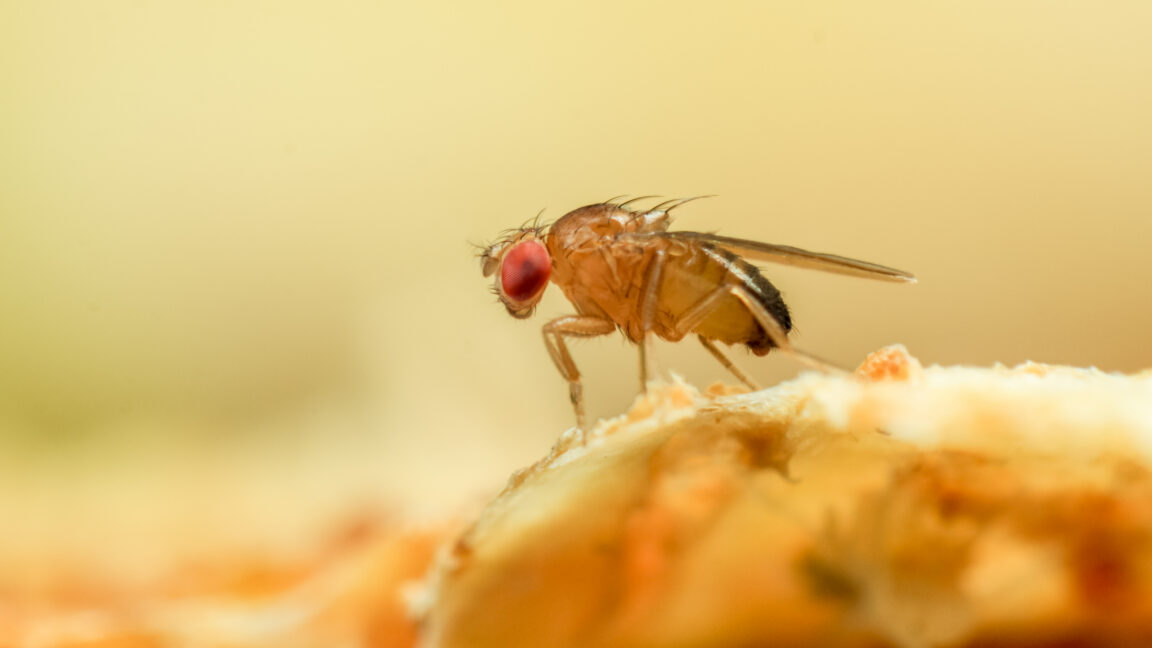
Fruit‑fly‑inspired sparse coding enables rapid learning and long‑term scent memory. The new Spi‑Fly algorithm eliminates the catastrophic forgetting that plagues conventional electronic noses.
- Sparse coding delivers fast learning and durable memory
- Algorithm modeled on a fruit fly’s 140,000‑neuron brain
- Outperforms existing electronic noses in speed and retention
The Fruit Fly’s Remarkable Olfactory Power
With roughly 140,000 neurons—fewer than the cells in a poppy seed—Drosophila melanogaster can discriminate thousands of odors in milliseconds and retain those scent memories for days. Modern electronic noses, by contrast, are costly, narrowly tuned, and quickly forget a scent once a new one is learned.
Birth of the Spi‑Fly Algorithm
Researchers Kevin Max and Yang Shen at the Okinawa Institute of Science and Technology drew directly from this biology. Their paper in Neuromorphic Computing and Engineering introduces Spi‑Fly, a sparse‑coding algorithm that mimics the fly’s neural efficiency.
How Sparse Coding Works
Sparse coding activates only a small subset of neurons to represent each input, producing a compact, non‑overlapping code. This prevents the dreaded “catastrophic forgetting” by preserving older representations while new ones are encoded.
Performance Benchmarks
In head‑to‑head tests, Spi‑Fly learned new odors three times faster than leading electronic noses and retained over 90% of previously learned scents. It can classify a diverse odor set in under 0.1 seconds, opening possibilities for real‑time quality control, health diagnostics, and environmental monitoring.
Historical Background
Bio‑inspired computing dates back to the 1980s neural‑network models, but true breakthroughs arrived with neuromorphic hardware and sparse‑coding theories in the 2000s. Spi‑Fly represents the latest convergence of neurobiology and AI, translating a tiny insect’s sensory strategy into scalable technology.
Why This Matters
BozokMedia analysis shows that the ability to retain learned scents without degradation opens doors for reliable, low‑cost odor sensors in supply‑chain safety, early disease detection, and smart home devices, potentially reshaping markets worth billions of dollars.
"Sparse coding gives machines a memory durability previously thought exclusive to biological systems," says Prof. Anil Kumar, neuro‑engineering expert.
Frequently Asked Questions
Q1: Can Spi‑Fly be integrated into commercial electronic noses?
A: Yes, prototype hardware is already being paired with embedded processors for scalable deployment.
Q2: What are the current limitations?
A: Complex mixtures of odors remain challenging, but multi‑layer sparse networks are under development to address this.