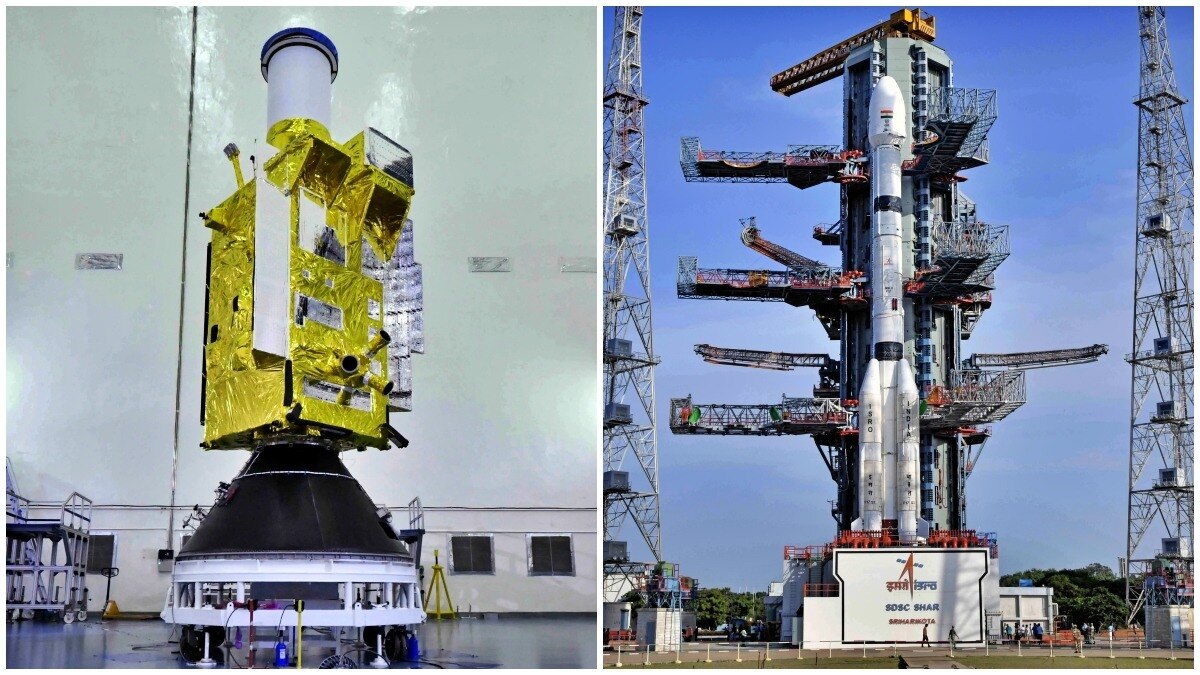
The Indian Space Research Organisation (ISRO) is slated to launch the GSLV‑F17 rocket with the EOS‑05 Earth observation satellite tonight, aiming to close an eight‑month launch gap and revive India's geosynchronous imaging capability.
- ISRO will launch the GSLV‑F17 rocket carrying the EOS‑05 Earth observation satellite tonight.
- The mission seeks to end an eight‑month launch drought and revive India's geosynchronous imaging push.
- EOS‑05 will be India’s first imaging satellite designed to operate from geosynchronous orbit.
The Indian Space Research Organisation (ISRO) is set to return to the launch pad after a prolonged hiatus, with its GSLV‑F17 rocket scheduled to lift off in the early hours of Friday carrying the EOS‑05 Earth observation satellite, also known as GISAT‑1A.
GSLV‑F17 Launch: A Crucial Mission for ISRO
The mission is scheduled for launch at 02:55 AM IST on September 4 from the Second Launch Pad at the Satish Dhawan Space Centre in Sriharikota. GSLV‑F17 will be the 19th flight of India’s Geosynchronous Satellite Launch Vehicle and is expected to end a launch drought of nearly eight months for the country’s space programme.
The ‘Naughty Boy’ Reputation
The rocket has infamously earned the nickname “naughty boy” at ISRO after a series of unpredictable performances during its early years. Six of its first 18 flights failed to achieve full mission success, leading to repeated setbacks before recent technical refinements restored confidence.
EOS‑05: A New Era of Geostationary Imaging
EOS‑05, also called GISAT‑1A, will operate at roughly 36,000 km in geosynchronous orbit, allowing continuous monitoring of the same broad region. Unlike conventional low‑Earth‑orbit Earth observation satellites that can view an area only during periodic passes, EOS‑05 will provide persistent, high‑resolution imagery for weather monitoring, disaster management, agriculture, forest fire detection, and cyclone tracking.
Why This Matters
BozokMedia analysis shows that a successful EOS‑05 launch will not only restore ISRO’s launch cadence but also position India as a leader in persistent geostationary Earth observation, a capability currently limited to a few space‑faring nations.
“The successful launch of GSLV‑F17 will restore India’s launch momentum and demonstrate a new capability in persistent space‑based observation.”
Frequently Asked Questions
- What is the significance of the GSLV‑F17 mission?
- What are the primary applications of the EOS‑05 satellite?
The launch also represents a crucial second attempt to establish India’s geosynchronous imaging capability. The earlier GISAT mission, launched aboard GSLV‑F10 in August 2021, failed after an anomaly in the rocket’s cryogenic upper stage prevented the satellite from reaching orbit.