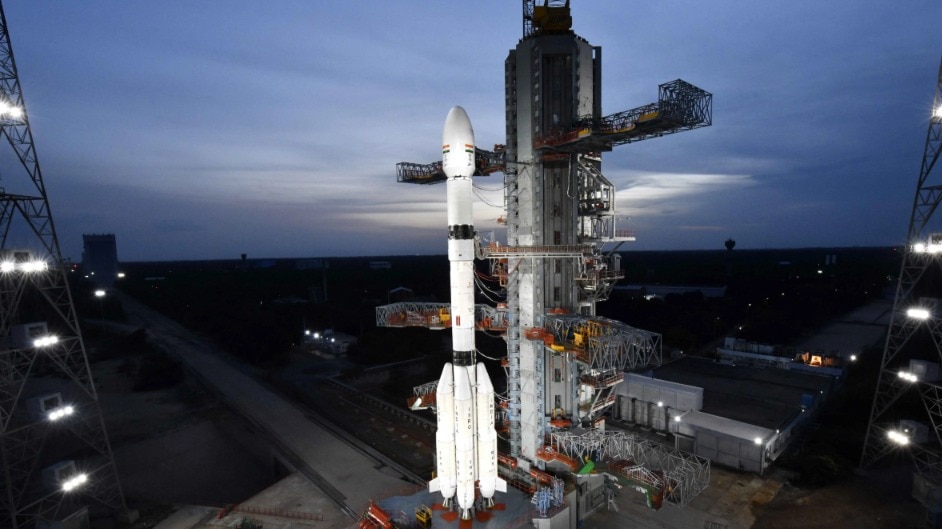
In a landmark pre-dawn mission, ISRO successfully launched the GSLV-F17 rocket carrying the EOS-05 satellite from Sriharikota. This mission marks India's entry into high-altitude geosynchronous imaging capabilities.
- ISRO successfully launched the EOS-05 Earth observation satellite via the GSLV-F17 rocket.
- EOS-05 is India's first-ever imaging satellite designed for Geosynchronous Orbit.
- The mission serves as a critical replacement for the failed 2021 GSLV-F-10 mission.
- The satellite will operate at an altitude of approximately 36,000 km for real-time monitoring.
In a monumental achievement for India's space program, the Indian Space Research Organisation (ISRO) successfully launched the GSLV-F17 rocket carrying the EOS-05 Earth observation satellite from the Satish Dhawan Space Centre, Sriharikota, in the early hours of Friday, September 4, 2026. Despite rainy conditions and the darkness of the pre-dawn hours, the 51.7-meter-tall rocket lifted off from the second launch pad at exactly 2:55 AM.
The EOS-05 mission represents a paradigm shift in India's remote sensing capabilities. Unlike traditional Earth observation satellites that operate in Low Earth Orbit (LEO), EOS-05 is destined for a Geosynchronous Orbit at an altitude of roughly 36,000 km. At this specific altitude, the satellite will match the Earth's rotational speed, allowing it to hover over a fixed point on the ground, providing continuous and real-time imagery.
Why This Matters
BozokMedia analysis shows that this mission is a strategic masterstroke for India's national security and economic sectors. The ability to provide real-time, high-resolution imaging from a geosynchronous position will revolutionize agriculture monitoring, urban planning, and most critically, disaster management. During extreme weather events, the data from EOS-05 will allow authorities to track changes in real-time, potentially saving countless lives through faster response times.
The successful deployment of EOS-05 solidifies India's position as a global leader in high-altitude space technology and real-time planetary observation.
Technically, the GSLV-F17 is the 19th flight of the Geosynchronous Satellite Launch Vehicle. The rocket had a lift-off mass of 420.5 tonnes and featured a sophisticated three-stage propulsion system, including a cryogenic upper stage. The payload, EOS-05, has a mass of 2,367 kg and is intended for delivery into the Sub-geosynchronous transfer orbit (Sub-GTO).
Historical Background
This successful launch comes after a period of technical scrutiny for ISRO. The EOS-05 mission was specifically designed to replace the unsuccessful GSLV-F-10/EOS-03 mission of 2021, which failed due to an anomaly in the Cryogenic Upper Stage. Furthermore, ISRO had faced recent challenges with the PSLV-C62 and PSLV-C61 missions. This triumph at Sriharikota demonstrates the agency's resilience and its ability to iterate and improve complex cryogenic technologies.
Frequently Asked Questions
1. What is the primary advantage of EOS-05 being in a geosynchronous orbit?
It allows the satellite to provide constant, real-time monitoring of specific areas on Earth without the rapid movement seen in LEO satellites.
2. Which sectors will benefit most from this satellite?
Key sectors include agriculture, disaster management, environmental monitoring, and telecommunications.