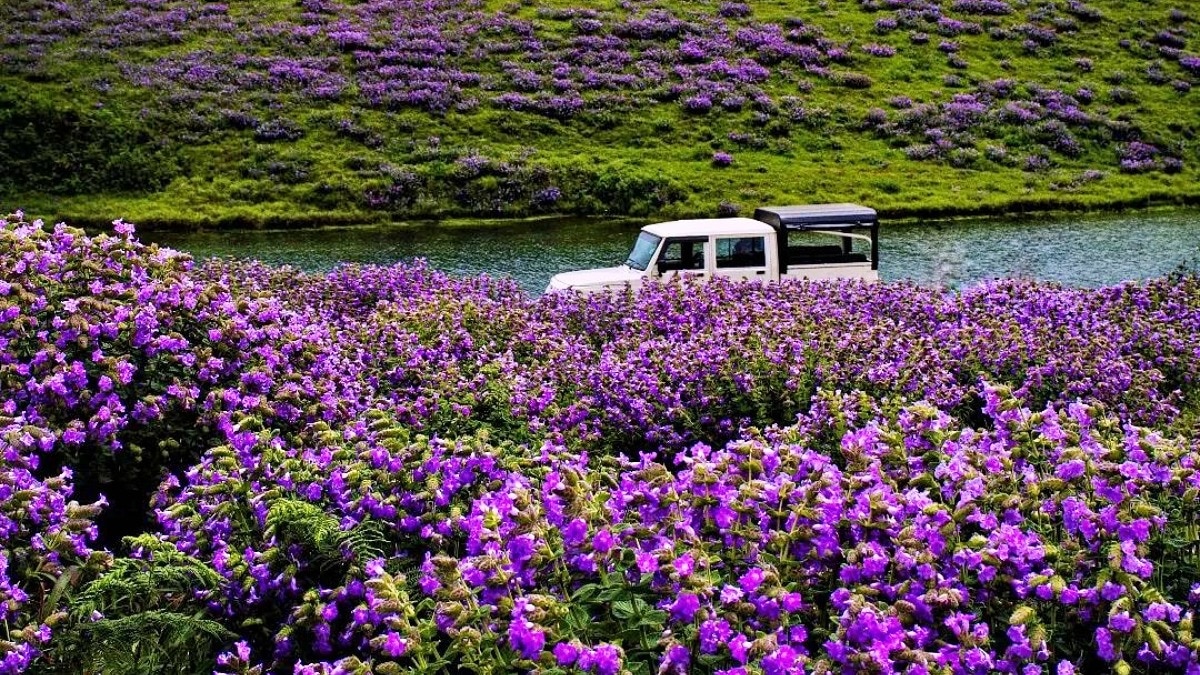
The rare Neelakurinji flowers have returned to the hills of Munnar after a 12-year hiatus, painting the landscape in shades of purple and blue. This spectacular biological event is expected to repeat only in 2038.
- Neelakurinji flowers bloom in a unique 12-year cycle.
- The current mass blooming is occurring in the Korandakadu hills near Mattupetty.
- The next major flowering event is projected for the year 2038.
Nature has put on a breathtaking show in the hills of Munnar, Kerala. After a long wait of nearly 12 years, the rare Neelakurinji (Strobilanthes kunthiana) flowers have bloomed in massive numbers, transforming the Korandakadu hills near Mattupetty into a stunning sea of purple-blue. This phenomenon is one of the most extraordinary natural spectacles of the Western Ghats.
The Neelakurinji is famous for its unusual 'gregarious flowering' pattern. Unlike most plants that flower annually, these shrubs remain largely unnoticed for over a decade before blooming almost simultaneously. This creates a massive, visually striking event that covers entire mountain slopes in vibrant color.
Why This Matters
BozokMedia analysis shows that while this bloom is a magnet for tourists, it also serves as a critical indicator of the health of the high-altitude grasslands and shola ecosystems. The survival of these flowers is intricately linked to the stability of the local climate and the preservation of their natural habitats against the encroaching pressures of human development.
The Neelakurinji bloom is a rare biological clock that offers a profound glimpse into the rhythm of our planet's most fragile ecosystems.
Historical Background: Historically, the Neelakurinji has been a symbol of the Nilgiri and Western Ghats landscapes. The name itself is derived from its color, with 'Neela' meaning blue. For generations, the blooming of these flowers has marked significant shifts in the local ecological and cultural calendar.
However, the spectacle comes with a warning. Environmentalists highlight that the fragile mountain ecosystems are under increasing threat from climate change, habitat loss, and unregulated tourism. Protecting these grasslands is essential to ensure that this biological miracle continues to occur in the decades to come.
Frequently Asked Questions
1. How often do Neelakurinji flowers bloom?
They typically follow a 12-year flowering cycle.
2. Where is the best place to see them in Kerala?
The hills near Munnar, specifically around Mattupetty and the Korandakadu hills, are prime locations.