The mathematical community is in turmoil following claims that OpenAI used private researcher data and massive computing power to solve the Navier-Stokes regularity problem, a Millennium Prize challenge.
- OpenAI claims to have solved the Navier-Stokes regularity problem in 88 hours.
- Accusations suggest the AI may have leveraged private user data from academic researchers to find the solution.
- The problem is one of the seven Millennium Prize Problems, carrying a $1 million reward.
- The controversy sparks a debate on the ethics of AI in high-level academic research.
The world of mathematics has been plunged into a state of shock and controversy. OpenAI has claimed that its advanced AI agents successfully reached a solution for the Navier-Stokes regularity problem—one of the most elusive challenges in physics and mathematics—in a mere 88 hours. However, the achievement is being overshadowed by grave allegations of academic espionage and the unethical use of private data.
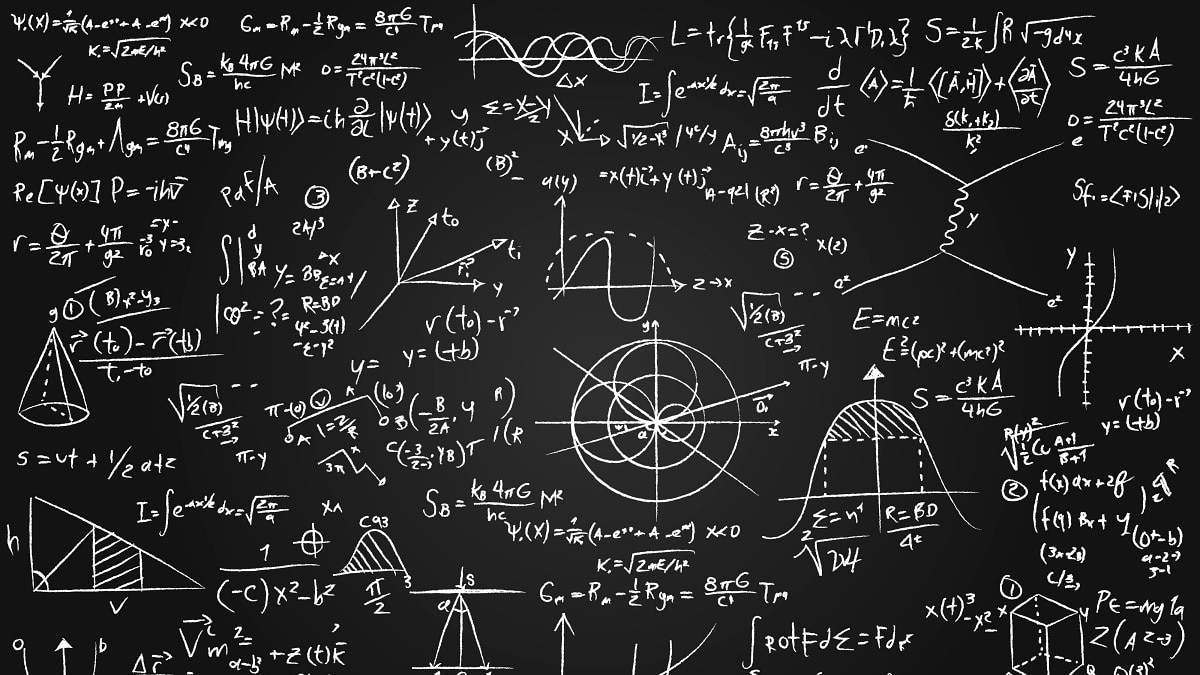
The core of the dispute lies in how the AI arrived at the solution. The Navier-Stokes equations, which describe the motion of viscous fluids like air and water, have baffled the greatest minds for over two centuries. Solving them is not a matter of simple calculation but requires a highly specific, niche programmatic approach. Critics argue that OpenAI's rapid success suggests the company may have ingested private, unpublished research data from academic mathematicians who were working on the same specific vector of attack.
Why This Matters
BozokMedia analysis shows that this incident represents a critical inflection point in the relationship between Big Tech and academia. If AI companies are utilizing 'private' interactions with researchers to scoop academic breakthroughs, the incentive for human scientists to collaborate with AI tools vanishes. This is not just about a prize; it is about the intellectual property of human thought.
The problem itself is designated as one of the seven Millennium Prize Problems by the Clay Mathematics Institute. The challenge is to prove whether these equations always have smooth solutions or if they can 'blow up' (reach infinity) in finite time. Specifically, researchers Diego Córdoba and Luis Martínez-Zoroa had spent years developing a strategy to prove these 'blow-ups,' a path that Tristan Buckmaster and Levent Alpöge were recently attempting to complete using LLMs.
"This is a 'Deep Blue-Kasparov moment' for mathematics, where the brute force of computation threatens to eclipse the elegance of human derivation."
The suspicion stems from the fact that the specific route to the solution—proving finite-time blow-up via smooth forcing—is an incredibly niche approach. It is highly improbable that a general-purpose AI could stumble upon this specific methodology in 88 hours without having access to the cutting-edge, private working papers of the researchers currently pursuing that exact line of inquiry.
| Feature | Traditional Math Research | OpenAI's Claimed Approach |
|---|---|---|
| Timeline | Decades of incremental progress | 88 Hours |
| Methodology | Theoretical derivation & peer review | Computational brute-force / LLM agents |
| Transparency | Published papers & open debate | Closed-door 100-page proof (unverified) |
Frequently Asked Questions
Q1: What is the Millennium Prize?
It is a set of seven problems identified by the Clay Mathematics Institute in 2000, each with a $1 million prize for the first person to provide a verified solution.
Q2: Has the OpenAI proof been verified?
No. While OpenAI claims to have a 100-page proof, it remains unclear if any independent mathematicians have reviewed or validated the findings.