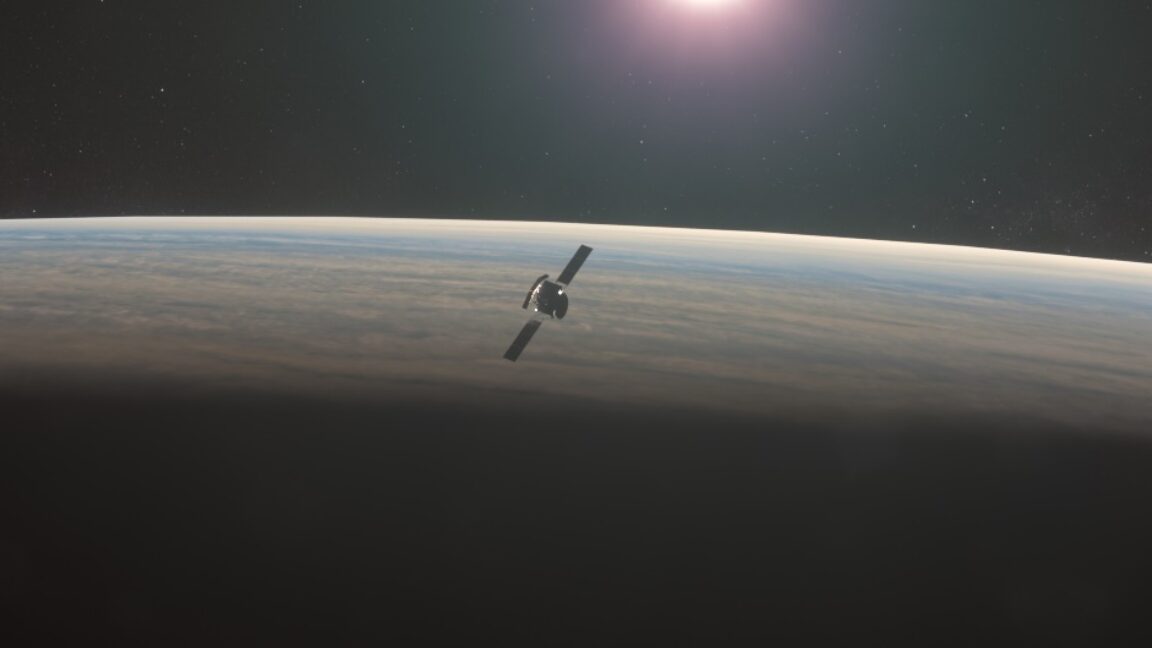
The European Space Agency (ESA) is moving forward with its Envision mission to Venus after NASA failed to commit to providing a critical radar instrument.
- ESA is continuing the 'Envision' robotic mission to Venus despite NASA's withdrawal.
- The mission aims to map the Venusian surface at 10x higher resolution than previous missions.
- The spacecraft will be launched using Europe's Ariane 6 rocket.
The European Space Agency (ESA) is moving "full steam ahead" with the development of its robotic mission to Venus. This decision follows a determination by NASA officials that the U.S. agency is unlikely to fulfill its commitment to provide a critical U.S.-built radar instrument for the spacecraft.
The orbiter, designated Envision, is designed to map the surface of Venus with a resolution ten times higher than the last radar mission conducted by NASA in the 1990s. Venus is notoriously difficult to study due to its dense blanket of sulfuric acid clouds, which obstruct optical cameras, making radar the only viable method to penetrate the atmosphere.
Why This Matters
BozokMedia analysis shows that this shift highlights a precarious moment in international space cooperation. As the White House tightens budgets or pivots priorities, ESA is forced to accelerate its indigenous technological capabilities or potentially seek strategic partnerships with other global powers, such as China, to fill the void.
"The ability to detect active volcanism on Venus would fundamentally change our understanding of planetary evolution in the inner solar system."
In 2024, NASA and ESA had signed a memorandum of understanding (MoU). Under this agreement, NASA was to supply a synthetic aperture radar (SAR) instrument—the primary tool for mapping—and provide tracking via the Deep Space Network. In return, ESA agreed to integrate American researchers into the scientific team.
With NASA's exit from the hardware provision, ESA now shoulders the full burden of the mission's technical success. The agency will build the spacecraft and all science instruments, utilizing the Ariane 6 rocket for launch, further cementing Europe's role as a primary player in deep-space exploration.
Frequently Asked Questions
1. What is the primary goal of the Envision mission?
The mission aims to map the surface of Venus at unprecedented resolution to search for signs of active volcanism.
2. How will the Envision spacecraft be launched?
The mission will be launched using the European-made Ariane 6 rocket.