A Brazilian physicist has analyzed the legendary 'Picard Maneuver' from Star Trek: The Next Generation, discovering that the tactic is even more effective in reality than portrayed on screen.
- Physicist Níckolas de Aguiar Alves analyzed the 'Picard Maneuver' using relativity.
- The maneuver involves traveling faster than light to create visual duplicates of a ship.
- Real-world physics suggests the tactic is more effective than the show's writers imagined.
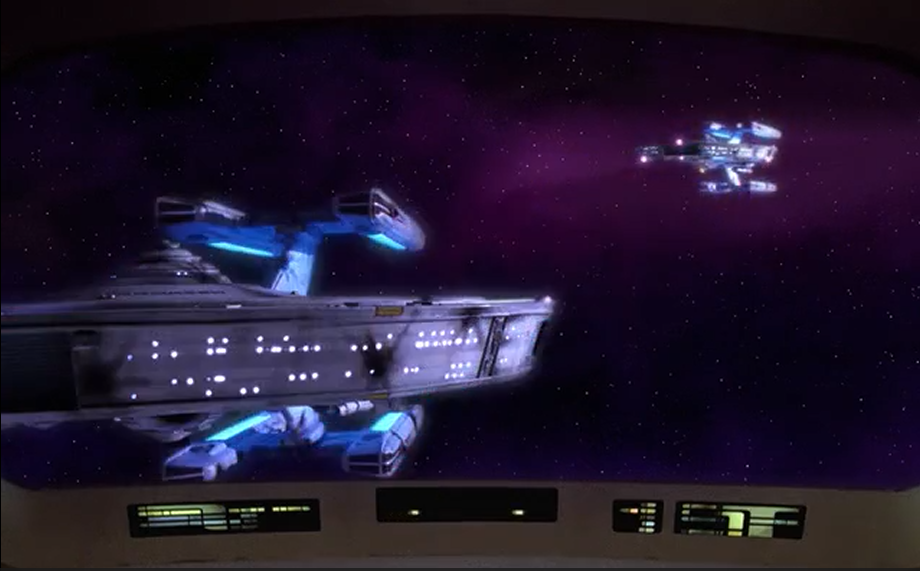
In the first season of Star Trek: The Next Generation, Captain Jean-Luc Picard employs a daring tactical gamble known as the 'Picard Maneuver.' During a flashback to his time commanding the Stargazer, Picard faces an enemy with superior firepower and disabled shields. To survive, he orders the ship to charge at warp speed and stop abruptly, creating a visual paradox for the enemy.
The core logic of the maneuver rests on the concept of faster-than-light (FTL) travel. According to the show, by exceeding the speed of light and then stopping, the enemy ship would perceive two images of the Stargazer simultaneously: one at the point where the ship accelerated to warp and another where it came to a halt. This visual duplication was intended to trick the enemy into firing at a ghost image.
Why This Matters
BozokMedia analysis shows that this intersection of pop culture and theoretical physics serves as a powerful pedagogical tool. Níckolas de Aguiar Alves, a physicist at the Federal University of ABC in Brazil, discovered that the writers of the show actually undersold the effect. In a real-world application of relativity, the visual distortion would be even more profound, making the enemy's task of targeting the ship nearly impossible.
The application of relativity to fictional FTL travel reveals that the 'Picard Maneuver' isn't just a plot device, but a lesson in how light reaches an observer.
The physicist's study delves into the 'light cone' and the way information travels through spacetime. When an object moves faster than the speed of light, it essentially 'outruns' its own image. When it stops, the light from the stop point reaches the observer before the light from the journey, creating a temporal and visual overlap that defies conventional intuition.
Historically, Star Trek has always attempted to ground its science in some form of theoretical possibility, often employing consultants to ensure a veneer of authenticity. The Picard Maneuver is a prime example of 'soft science' that, upon rigorous mathematical scrutiny, holds up surprisingly well under the laws of Special Relativity.
Frequently Asked Questions
Q: What is the Picard Maneuver?
A: It is a tactical maneuver where a ship travels at warp speed and stops suddenly to create multiple visual images of itself to confuse an enemy.
Q: Who conducted the scientific analysis?
A: Níckolas de Aguiar Alves, a physicist from the Federal University of ABC in Brazil.