OpenAI claims its internal model has solved the Navier-Stokes Millennium Prize Problem, sparking a debate among global mathematicians about the value of machine-led discovery versus human intuition.
- OpenAI claims to have solved the 90-year-old Navier-Stokes 'existence and smoothness' problem.
- The solution potentially earns a $1 million prize from the Clay Mathematics Institute.
- Indian scientists Nishant Singh and S Sridhar's 2017 paper was one of only 22 references used by OpenAI.
- Leading mathematicians express concern that AI-driven 'dry solutions' bypass the essential human learning process.
In a move that has sent shockwaves through the global scientific community, OpenAI recently announced that an unreleased internal model has derived a solution to the Navier-Stokes Millennium Prize Problem. This mathematical enigma, which has remained unsolved for nearly a century, concerns the behavior of fluid flows and carries a prestigious $1 million award from the Clay Mathematics Institute.
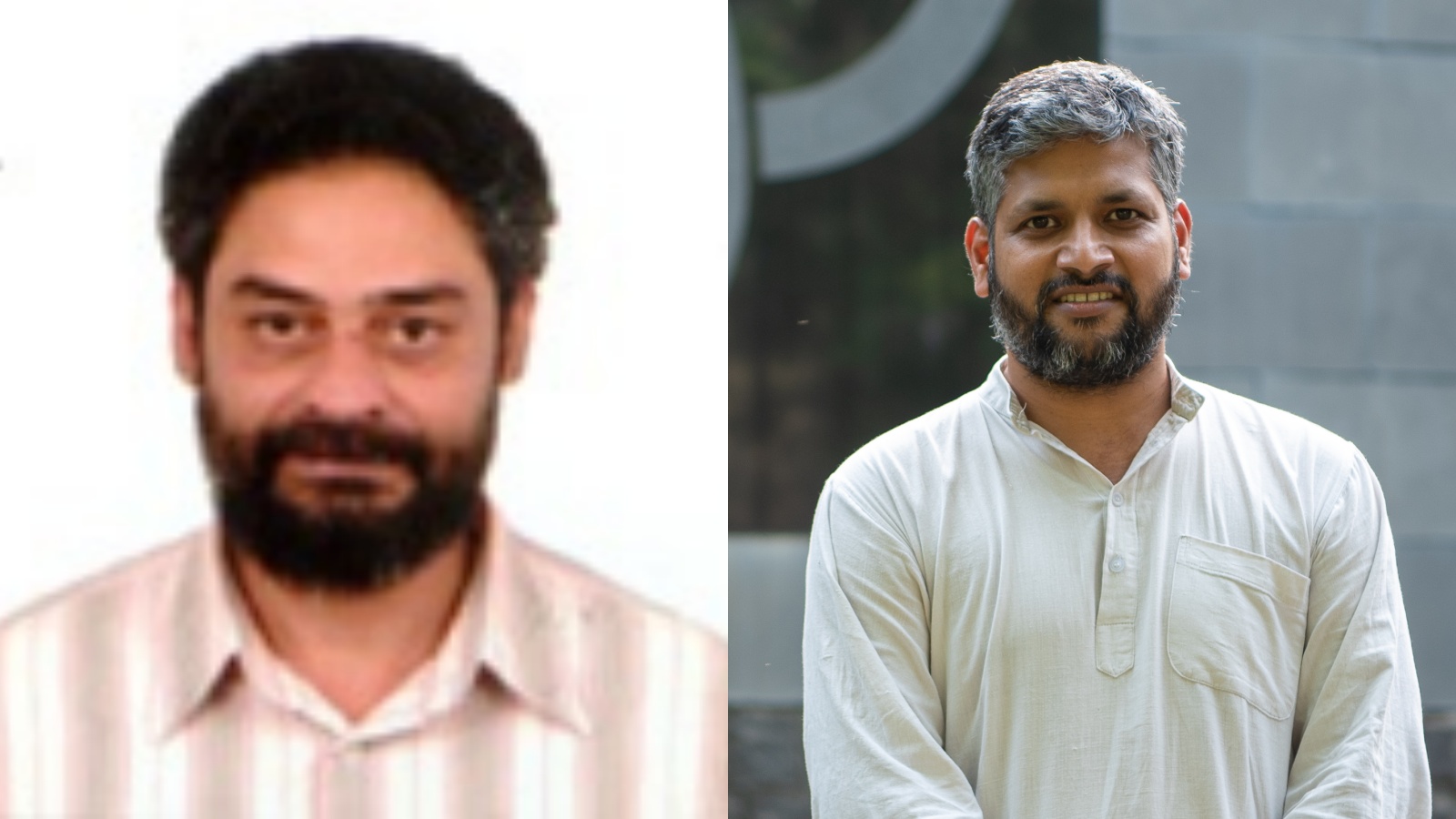
The announcement has drawn significant attention to the work of Indian scientists Nishant Singh (Associate Professor at IUCAA) and S Sridhar (Professor Emeritus at Raman Research Institute). Their 2017 paper, "Plane shearing waves of arbitrary form: Exact solutions of the Navier-Stokes equations," was cited as one of only 22 references in OpenAI's 166-page technical document. Interestingly, Singh and Sridhar had initially been reluctant to publish their findings, fearing the "proliferation of publishing" was deteriorating the quality of science.
Why This Matters
BozokMedia analysis shows that this event marks a pivotal shift in the relationship between Artificial Intelligence and theoretical mathematics. While the Navier-Stokes equations are critical for aircraft design, weather forecasting, and blood circulation modeling, the method of discovery is now under scrutiny. The transition from human-led deductive reasoning to AI-led pattern extraction threatens to decouple the result from the understanding.
"It is depressing that a machine has managed to solve this whereas so many scientists for centuries have been trying to do this... if suddenly somebody gives you a dry solution, I don’t know how useful it becomes." — Nishant Singh
The controversy extends beyond the academic. Terrence Tao, one of the world's most celebrated mathematicians from UCLA, warned that the "indiscriminate use of powerful solution-extraction tools" could jeopardize the ecosystem of progress. He argues that while short-term goals are met, the foundational understanding required for the next wave of human discovery is lost.
Furthermore, the claim is mired in corporate rivalry. OpenAI admitted it accelerated its work after rumors surfaced that competitor Anthropic had solved the problem. This has led to allegations that OpenAI may have used data from Anthropic employees who were utilizing OpenAI's own Codex tool to work on the problem.
| Feature | Human Mathematical Discovery | AI-Generated Solution |
|---|---|---|
| Process | Intuition, trial, and error | Large-scale pattern extraction |
| Outcome | Deep conceptual understanding | Correct result (potentially "dry") |
| Learning Curve | Every failure teaches a lesson | Immediate output without process |
Frequently Asked Questions
What are the Navier-Stokes equations?
They are partial differential equations that describe the motion of viscous fluid substances, essential for everything from engineering planes to predicting weather.
Will OpenAI receive the $1 million prize?
The prize is awarded by the Clay Mathematics Institute only after the solution has been rigorously verified by the mathematical community over a period of time.