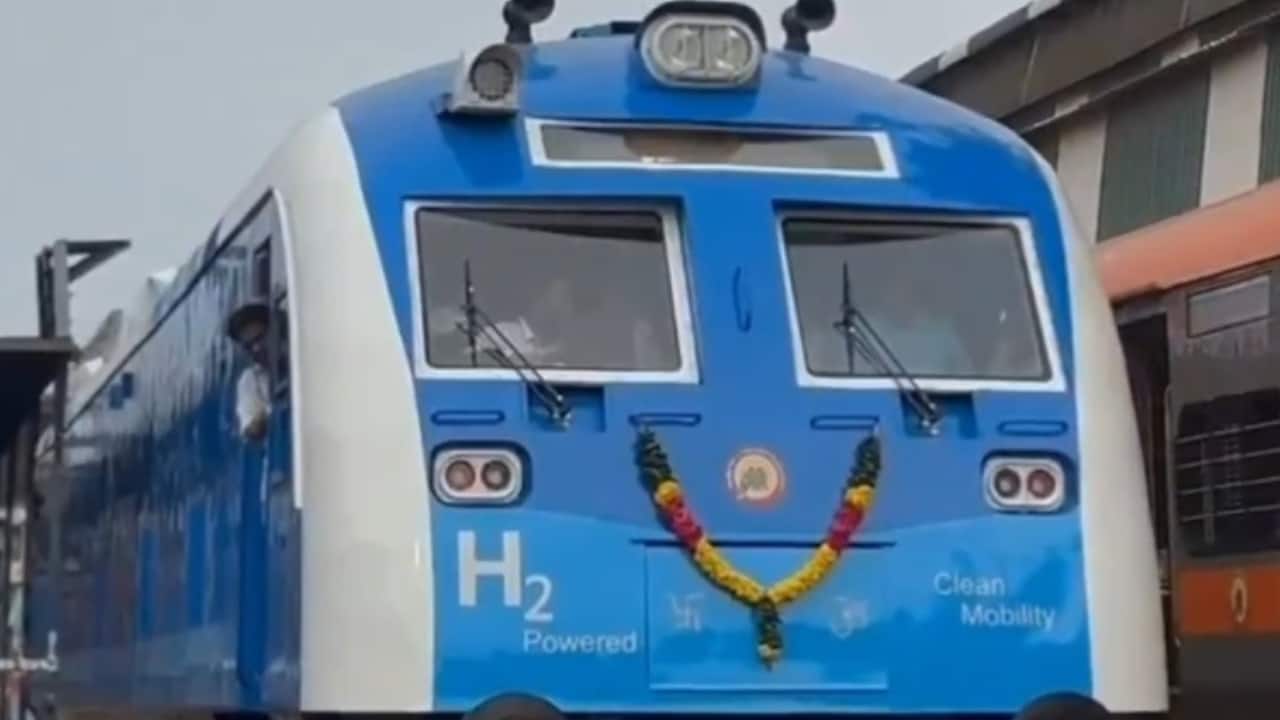
Prime Minister Narendra Modi flagged off India’s first hydrogen fuel‑cell train on the Jind‑Sonipat route. The 10‑coach train generates its own electricity onboard, reaching speeds of 110 km/h while transporting up to 2,600 passengers.
Key Takeaways
- India unveils its first hydrogen‑powered passenger train
- Trial run on the 89‑km Jind‑Sonipat stretch
- Capacity to carry 2,600 passengers at 110 km/h
On July 16, 2026, Prime Minister Narendra Modi inaugurated the nation’s inaugural hydrogen fuel‑cell train set on the Northern Railway’s Jind‑Sonipat corridor. The 10‑coach consist comprises two hydrogen‑driving power cars, each capable of delivering 1,200 kW (≈1,600 hp), coupled with eight trailer coaches, totaling a passenger capacity of roughly 2,600.
Technology and Operation
The train stores hydrogen in onboard cylinders. Inside a Proton Exchange Membrane (PEM) fuel cell, hydrogen reacts with ambient oxygen, producing electricity that powers the traction motors. The only by‑products are water vapor and a modest amount of heat, rendering the system virtually emission‑free.
Jind’s Complete Hydrogen Ecosystem
Indian Railways has created the country’s first dedicated hydrogen ecosystem at Jind. Here, hydrogen is generated via electrolysis, compressed, stored, and supplied to the train through purpose‑built refuelling stations. The facility can hold nearly 3,000 kg of hydrogen at any given time, ensuring uninterrupted daily operations.
Safety Architecture
Given hydrogen’s high flammability, multiple safety layers are embedded in both the rolling stock and the refuelling infrastructure. Leak detectors, flame, heat and smoke sensors, round‑the‑clock ventilation, and automatic shut‑off systems activate the moment an anomaly is detected. Independent safety audits certify compliance with international standards and India’s Petroleum and Explosives Safety Organisation (PESO) regulations.
Strategic and Environmental Significance
This milestone aligns with Indian Railways’ broader green agenda, following the electrification of over 99 % of the broad‑gauge network. It dovetails with the National Green Hydrogen Mission and the country’s net‑zero aspirations, paving the way for additional hydrogen‑powered services on other routes, including heritage lines, in the coming years.