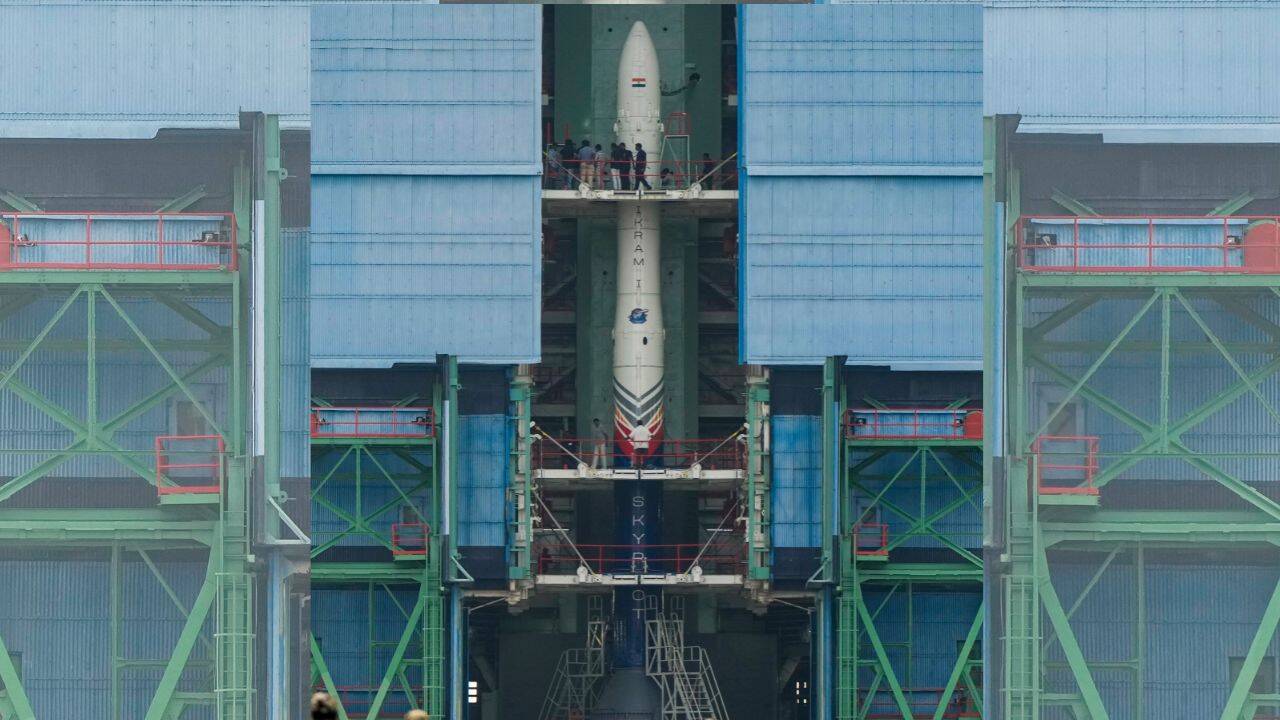
India's private space sector is set to soar as Skyroot Aerospace prepares to launch Vikram‑1 under Mission Aagaman. The historic flight will place a carbon‑composite orbital rocket on a 450 km low‑Earth orbit, carrying scientific payloads and unique artwork, marking a milestone for Indian private launch capabilities.
Key Takeaways
- Vikram‑1 launch will cement India’s private orbital launch capability
- Payload capacity of up to 350 kg to a 450 km LEO with 60° inclination
- Carbon‑composite structure reduces weight and cost, setting a new industry benchmark
Skyroot Aerospace, a Hyderabad‑based space‑tech start‑up, is poised to lift off its first fully private orbital‑class vehicle, Vikram‑1, from the historic Sriharikota launch pad at 11:30 a.m. Saturday. Dubbed “Mission Aagaman,” the flight not only tests cutting‑edge propulsion but also showcases a 18‑kilogram gold micro‑art piece, blending science with culture.
Background and Development
Following the 2022 sub‑orbital success of Vikram‑S, which reached an altitude of 89.5 km, Skyroot embarked on building an entirely carbon‑composite orbital rocket. Vikram‑1 features three solid‑fuel stages and a liquid orbital‑adjustment module, making it five times lighter than comparable steel‑based rockets. This lightweight design translates into higher thrust‑to‑weight ratios and lower launch costs.
Mission Objectives
The vehicle will deploy up to 350 kg of payloads into a 450 km low‑Earth orbit with a 60‑degree inclination. Payloads include technology demonstrators from Grahaa Space, Cosmoserve, DCubed, and Skyroot’s own SCOPE experiment. In addition, Cosmos Diamonds’ artwork “Cosmic Bloom” and a gold micro‑art piece bearing miniature sculptures of Sir C V Raman, Dr Vikram Sarabhai, and Dr A P J Abdul Kalam will orbit the Earth, symbolising India’s scientific heritage.
Current Status and Future Outlook
Vikram‑1 is fully integrated on the pad, with final vehicle checks completed at Skyroot’s launch‑control centre. Telemetry ground stations and tracking radars have already been validated. Founder and CEO Pawan Kumar Chandana remarked, “This is our first test flight, and we will be getting valuable data from it. It is the first rocket to go to orbit that has been completely built with carbon composite.” The successful launch is expected to unlock a new era of affordable, reliable, on‑demand launch services for satellite operators worldwide, positioning India as a competitive player in the global launch market.

