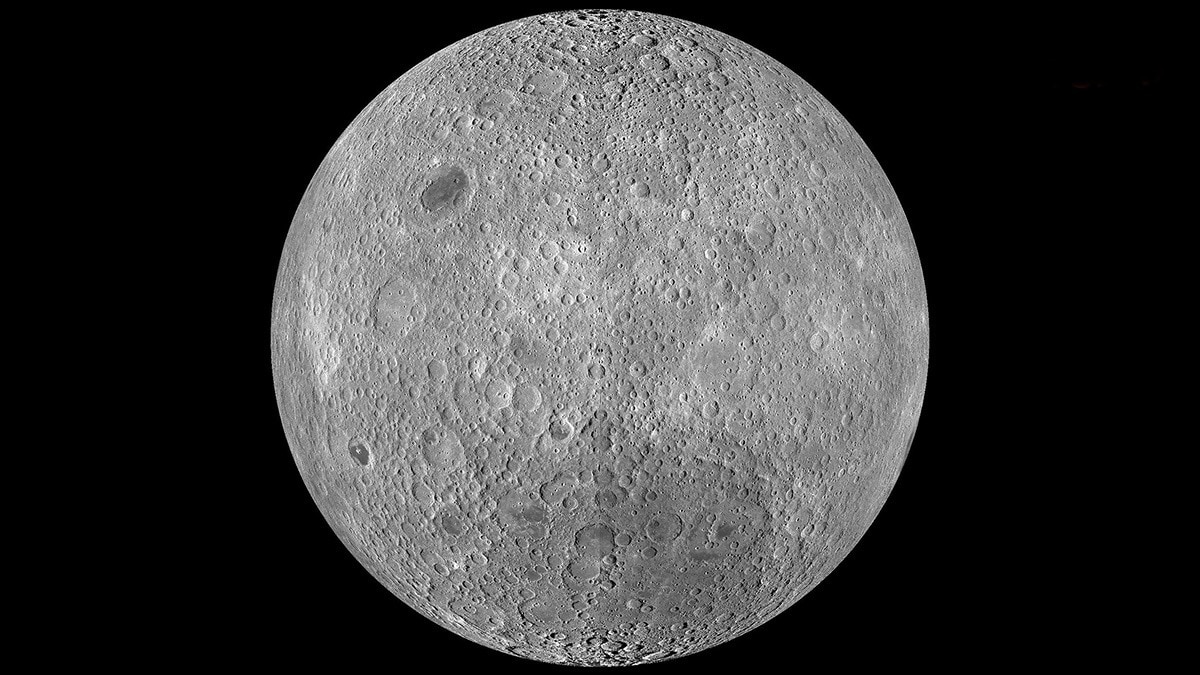
A discarded SpaceX Falcon 9 upper stage, comparable in size to a five-storey building, is projected to strike the Moon on August 5, 2026, creating a fresh crater.
Key Takeaways
- A SpaceX Falcon 9 upper stage will impact the Moon on August 5, 2026.
- The object is approximately the height of a five-storey building.
- The impact will create a new lunar crater for scientific study.
- The event highlights the growing challenge of deep-space debris management.
The Moon is preparing to welcome a brand-new crater, but it won't be caused by a natural asteroid. Instead, a discarded SpaceX Falcon 9 rocket upper stage is expected to slam into the lunar surface on August 5, 2026, marking a significant event in lunar geology.
The object in question is the second stage of the legendary Falcon 9 launcher. While the first stage is designed to land back on Earth, the upper stage is often left in orbit after completing its mission. This particular stage has been traveling in a highly elliptical orbit for over a year and is roughly the size of a five-storey building.
Why This Matters
BozokMedia analysis shows that while this collision poses zero threat to Earth or upcoming lunar missions, it provides a unique laboratory for scientists. By observing the impact and the resulting debris, researchers can gain unprecedented insights into the composition of the Moon's surface and the mechanics of how impacts shape celestial bodies.
This impact serves as a natural experiment to study cratering physics and the long-term behavior of space debris in deep space.
Tracking this object has proven difficult. Because the object is near the Moon, it is nearly 400 times farther away than satellites in Low Earth Orbit, making radar detection nearly impossible and forcing astronomers to rely on high-powered optical telescopes.
Frequently Asked Questions
Q1: Is the Moon impact dangerous to astronauts?
A1: No, the impact is predicted to occur in a remote area and poses no risk to current or future lunar missions.
Q2: Why can't we use radar to track it?
A2: The distance is too great; objects near the Moon are much harder to detect than those in Earth's orbit.