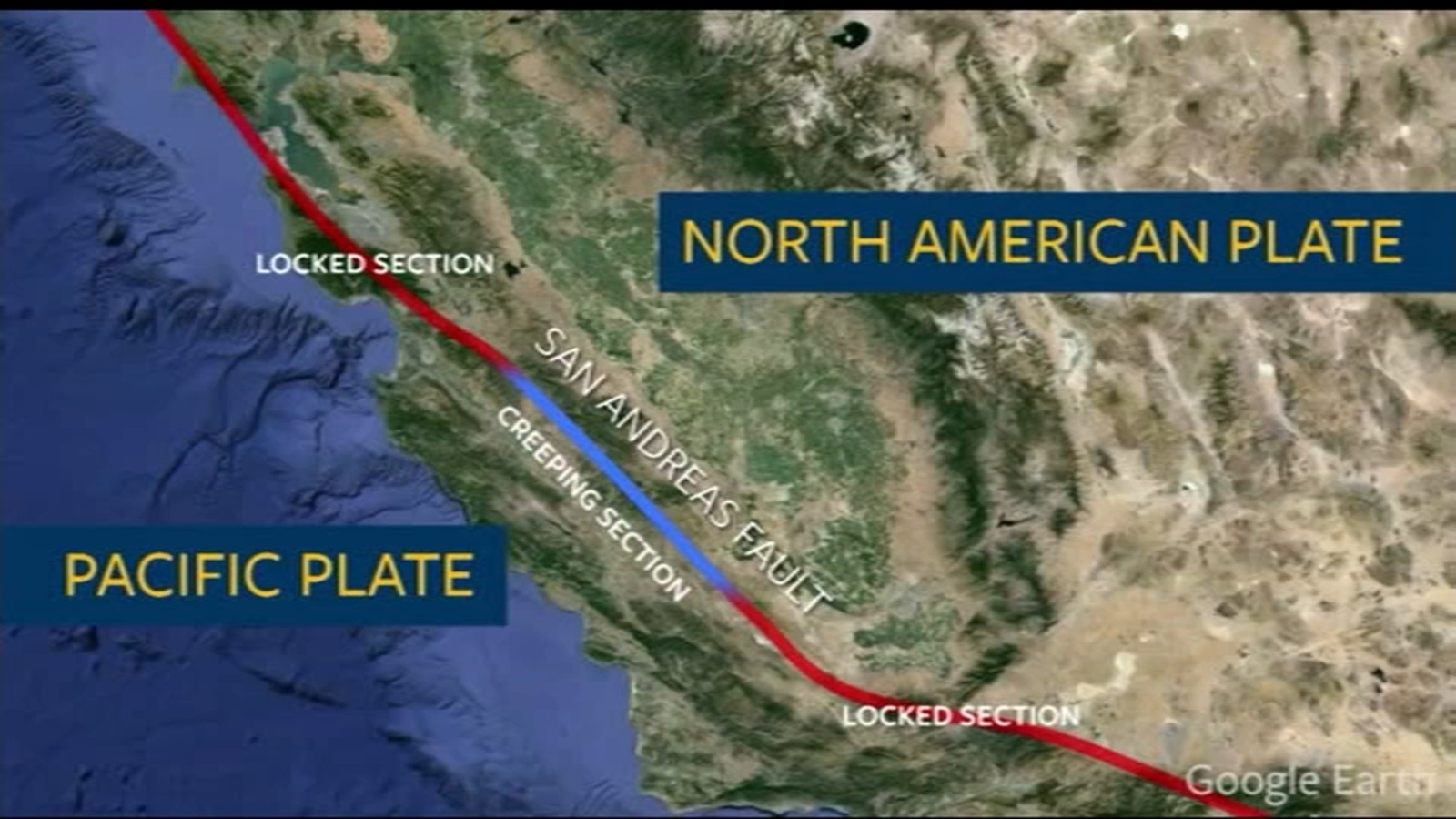
New research from San Jose State University reveals that the San Andreas Fault is moving at a higher rate than previously thought, raising concerns about earthquake frequency.
- San Jose State University researchers found higher-than-expected slip rates in the San Andreas Fault.
- The movement rate has appeared constant over a documented 10,000-year window.
- Faster fault movement is generally linked to more frequent seismic activity.
- Experts urge residents to maintain earthquake preparedness kits.
A significant geological revelation has emerged from San Jose State University (SJSU), suggesting that the San Andreas Fault is slipping at a velocity that exceeds previous scientific models. This discovery comes on the heels of a recent 3.9 magnitude earthquake that struck the Hayward Fault near Oakland, heightening regional anxiety regarding seismic stability.
Professor Kim Blisniuk, leading the research, explained that the study focused on the landform's ability to preserve evidence of previous seismic events. By analyzing data from Sanborn County Park, the team discovered that the slip rate does not decrease along the fault as once thought; instead, it has remained remarkably constant over a 10,000-year period.
Why This Matters
BozokMedia analysis shows that understanding slip rates is critical for disaster mitigation. When tectonic plates move more rapidly or maintain a high constant speed, the accumulation and release of seismic energy occur more frequently, potentially leading to more regular and intense earthquake cycles.
"We know that we live on a plate boundary... we are going to have an earthquake in California, and we should be prepared," noted Professor Blisniuk.
The implications are historically grounded. The San Andreas Fault zone was the epicenter of the catastrophic 1906 San Francisco earthquake and the devastating 1989 Loma Prieta earthquake. The new data suggests that the geological engine driving these events is operating at a pace that demands heightened vigilance.
Historical Background
The San Andreas Fault is a major transform boundary between the Pacific Plate and the North American Plate. For over a century, seismologists have studied its segments to predict movement. However, the realization that slip rates might be constant across vast stretches of the fault, rather than tapering off, provides a new layer of complexity to earthquake forecasting models.
While the findings are currently awaiting full peer review, the scientific community is treating the data as a vital reminder of California's inherent seismic risks. The study emphasizes that preparedness, much like insurance, is a necessity rather than an option for those living in high-risk zones.
Frequently Asked Questions
Question 1: How does a faster slip rate affect earthquake risk?
Answer: A faster slip rate typically means that tectonic stress is redistributed more quickly, which can lead to more frequent earthquake occurrences.
Question 2: What should residents do following this news?
Answer: Experts recommend preparing an earthquake emergency kit and having a family communication plan in place.