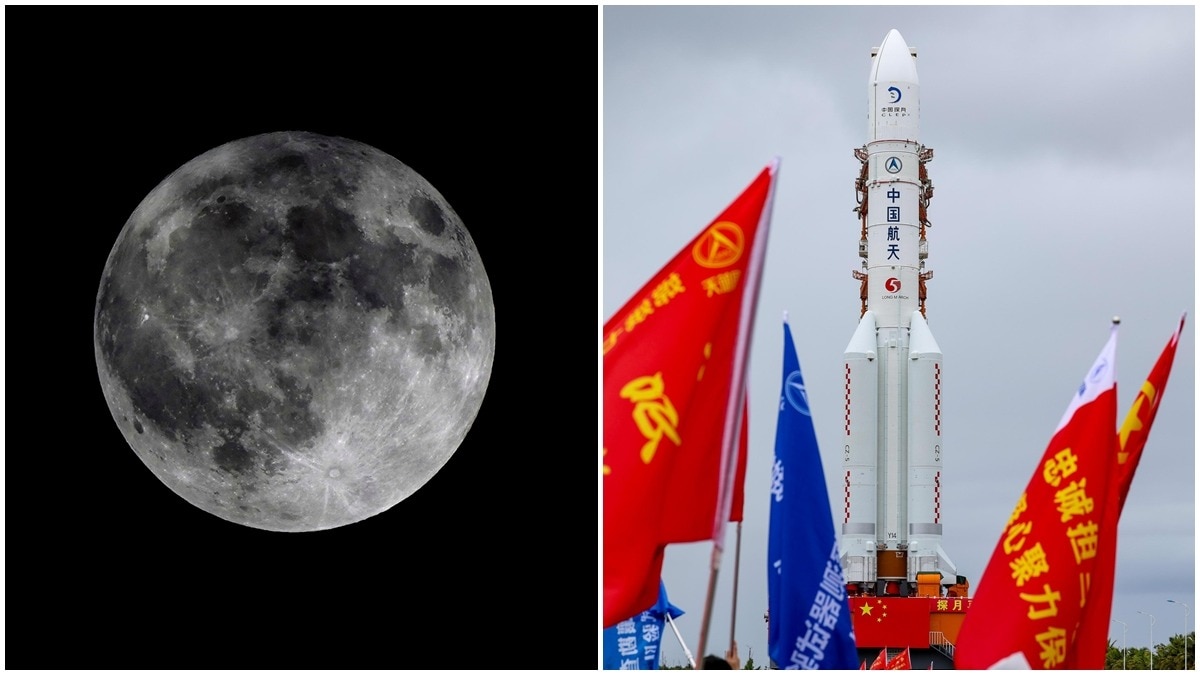
China is set to launch the Chang'e-7 mission to the Moon's South Pole, targeting permanently shadowed regions where temperatures plummet to -203°C. The mission aims to map water ice, a critical resource for future lunar colonies.
- The Chang'e-7 mission targets the Moon's South Pole, specifically Permanently Shadowed Regions (PSRs).
- The primary objective is to identify and map the distribution of water ice and other volatiles.
- The mission utilizes a sophisticated suite including an orbiter, lander, rover, and a specialized hopping probe.
In a bold move toward lunar dominance, China is preparing to launch its Chang'e-7 mission to one of the most hostile environments in the solar system. The mission is destined for the Moon's South Pole, a region characterized by extreme darkness and bone-chilling temperatures that can reach as low as -203°C.
The Mystery of the Lunar Cold Traps
At the lunar poles, the Sun's angle remains extremely low, leaving deep craters in perpetual shadow. These areas, known as Permanently Shadowed Regions (PSRs), act as natural 'cold traps.' In these environments, substances that would typically evaporate under the Moon's harsh radiation remain frozen for billions of years.
The scientific community, including NASA, has long identified these regions as high-priority targets. The presence of water ice is the ultimate prize. Following the groundbreaking evidence provided by India's Chandrayaan-1 mission, the global race to map these resources has intensified.
Why This Matters
BozokMedia analysis shows that the success of Chang'e-7 could fundamentally alter the roadmap for deep-space exploration. Water is not just for hydration; it is a multi-purpose resource. Through electrolysis, water can be split into oxygen for breathing and hydrogen for rocket propellant, essentially turning the Moon into a 'gas station' for missions heading to Mars and beyond.
Access to lunar volatiles will determine which nations lead the next era of interplanetary travel.
Mission Logistics: Scheduled for launch on August 24 via the Long March-5 rocket, the Chang'e-7 mission is a complex multi-vehicle operation. Unlike standard rovers, this mission includes a 'hopping probe' specifically engineered to navigate the treacherous, uneven terrain of the shadowed craters that have remained untouched for eons.
Historical Background
The quest for lunar water has been a decades-long endeavor. NASA's Clementine mission in 1994 and the Lunar Prospector in 1998 were pioneers in detecting the chemical signatures of ice on the lunar surface. China is now building upon this foundation to realize its long-term vision of an International Lunar Research Station.
Frequently Asked Questions
1. Why is the South Pole the focus of lunar missions?
The South Pole contains deep, shadowed craters that likely hold significant deposits of water ice.
2. How does water ice help in space travel?
It can be processed to provide drinking water, breathable oxygen, and fuel for spacecraft.