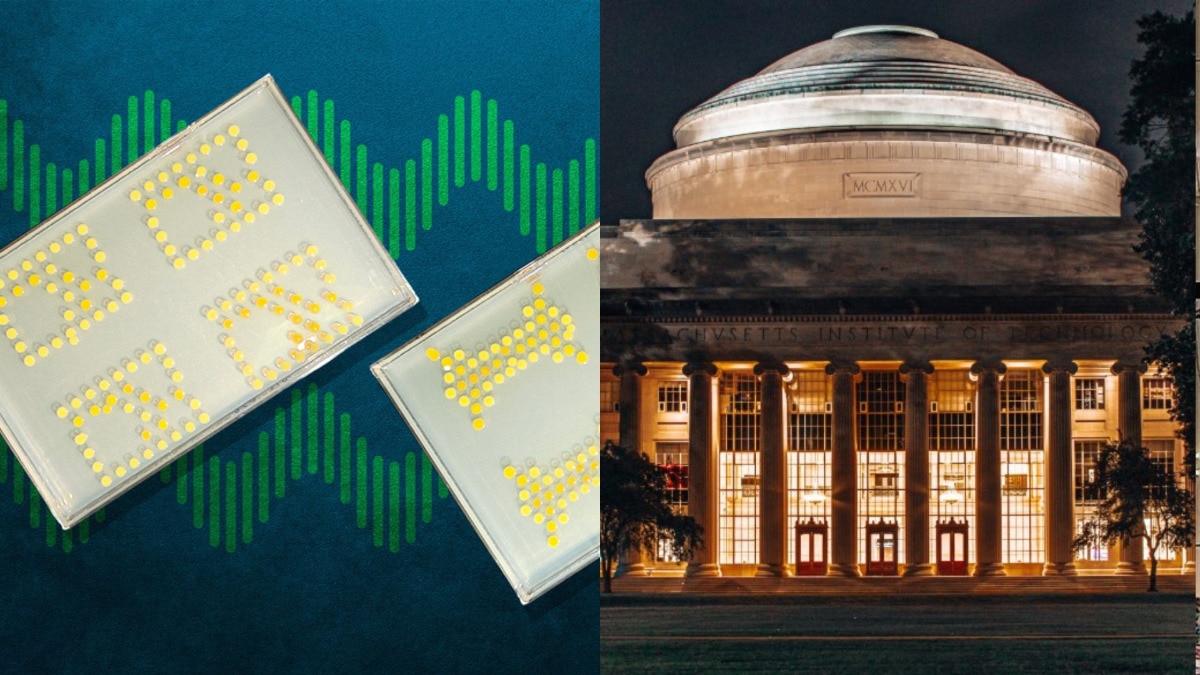
MIT researchers have engineered bacterial colonies to function like biological transistors, creating living circuit boards that process information via chemical signals.
- MIT engineers have successfully created biological transistors using bacteria.
- The system uses chemical molecules instead of electrical currents to process data.
- This technology could enable plants to sense and respond to environmental threats autonomously.
In a groundbreaking leap for synthetic biology, engineers at the Massachusetts Institute of Technology (MIT) have successfully transformed living bacteria into functional circuit boards. Unlike traditional computers that rely on silicon and electricity, these new biological systems use colonies of bacteria to relay chemical messages, performing complex computational tasks through organic processes.
The Mechanics of Biological Transistors
The research, led by Christopher Voigt, head of MIT's Department of Biological Engineering, and postdoctoral researcher Hamid Doosthosseini, centers on the bacterium Pantoea agglomerans. The team engineered these microbes to act as biological transistors. While electronic transistors control the flow of electricity, these biological counterparts control chemical signals using specific molecules like OC-6 and OC-12.
The system works by creating two types of bacterial transistors: one that switches 'on' in the presence of a specific molecule and another that switches 'off'. A third molecule, OHC-14, acts as the output, carrying the result of the computation to the next component. To build a complete circuit, the researchers developed three additional bacterial strains that act as biological relays, allowing information to travel in a controlled direction across a printed surface.
Why This Matters
BozokMedia analysis shows that this is not an attempt to replace the silicon-based computers in our pockets, but rather to introduce computational logic into the living world. The ability to embed processing power into biological organisms opens up unprecedented possibilities in environmental sensing and autonomous biological response.
The goal is not to replace computers but to bring computational control into biology.
Currently, the system is significantly slower than electronic counterparts. A single calculation can take approximately eight hours, whereas an iPhone performs similar tasks in nanoseconds. However, for biological processes—where responses are measured in hours or days rather than milliseconds—this speed is perfectly adequate.
Comparison: Biological vs. Electronic Computation
| Feature | Electronic Circuit | Biological (Bacterial) Circuit |
|---|---|---|
| Power Source | Electricity | Chemical Signals |
| Processing Speed | Ultra-fast (Nanoseconds) | Slow (Hours) |
| Base Material | Silicon | Living Bacteria |
| Primary Application | Digital Computing | Biological Sensing & Agriculture |
Frequently Asked Questions
1. Can these bacteria 'think' like humans?
No, they do not possess consciousness; they perform 'computation' by responding to chemical inputs according to programmed logic.
2. How will this impact agriculture?
It could allow crops to be programmed to detect drought or pests and automatically trigger a defensive chemical response.