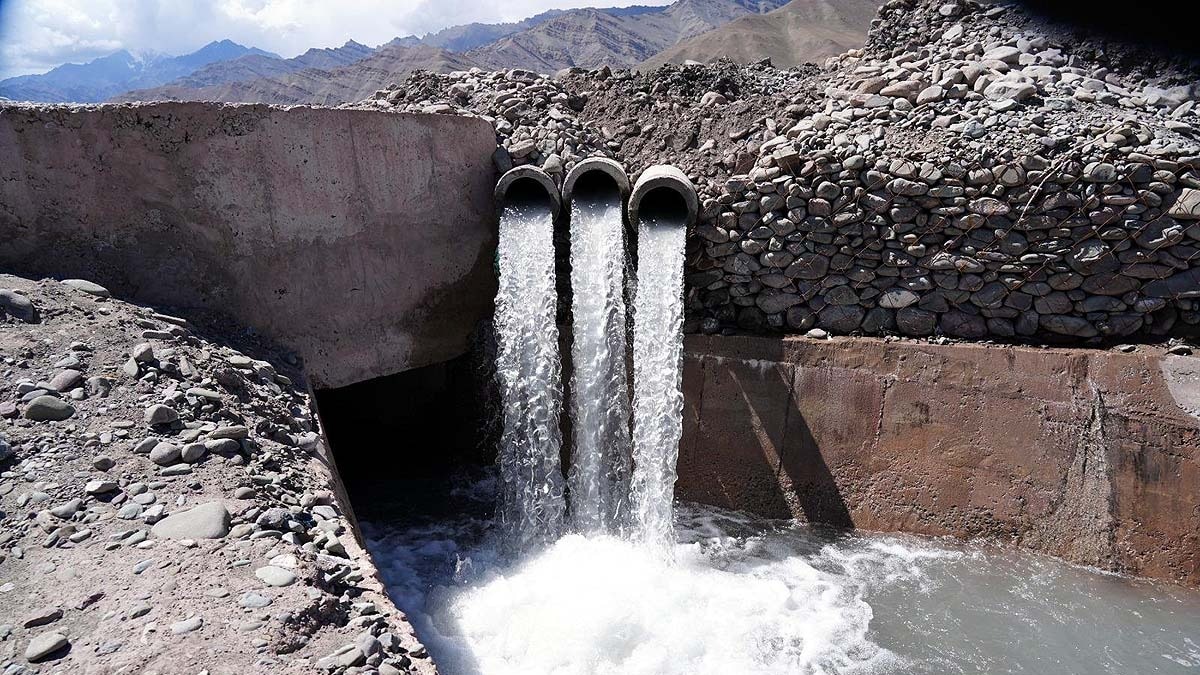
A massive irrigation breakthrough in Ladakh is turning glacial melt into agricultural gold. By diverting 9 crore litres of water daily into the Igau-Peh canal, 12 villages are set to see a green revolution across 1000 acres.
- 9 crore litres of glacial meltwater are being diverted daily for irrigation.
- The 43km Igau-Peh canal will serve 12 villages and over 1000 acres of land.
- Water flow in the canal has increased from 1415 L/s to over 2123 L/s.
In a significant boost to local agriculture, Ladakh is witnessing a transformation in how it utilizes its most precious resource: glacial meltwater. Water that previously flowed wastefully into the Indus River is now being systematically channeled to thirsty farmlands, providing a lifeline to hundreds of farming families.
The Igau-Peh Canal Project
The administration has successfully diverted water from the streams near Stok Village into the 43-kilometer-long Igau-Peh irrigation canal. This strategic move ensures that the massive volume of water—approximately 9 crore litres per day—reaches the agricultural heartlands rather than being lost to the riverbed. Following the construction of new feeder channels on August 14, the flow rate in the canal surged from 1415 litres per second to a staggering 2123 litres per second.
Why This Matters
BozokMedia analysis shows that in high-altitude cold deserts like Ladakh, water scarcity is the single greatest barrier to economic stability. By capturing the surplus runoff from melting glaciers, the administration is not just managing water; they are securing food security and preventing rural migration. This initiative represents a masterclass in micro-irrigation management in extreme terrains.
Efficiently harnessing glacial runoff is the key to unlocking the agricultural potential of the Himalayan cold deserts.
The impact of this project is widespread, directly benefiting 12 villages. For decades, farmers in these regions struggled with unpredictable water availability, often waiting long periods for their turn to irrigate. The increased volume ensures that over 1000 acres of land, which previously remained fallow due to drought, can now be cultivated year-round.
Historical Background
Ladakh has historically been defined by its harsh, arid climate. As a high-altitude desert, it receives minimal rainfall, making the region almost entirely dependent on seasonal snowmelt. Traditionally, the lack of infrastructure meant that much of the early-season meltwater escaped the local ecosystems, leaving farmers at the mercy of limited resources.
Frequently Asked Questions
Question 1: How many acres of land will be irrigated by this project?
Answer: The project is expected to provide irrigation to more than 1000 acres of land.
Question 2: What is the daily volume of water being diverted?
Answer: Approximately 9 crore litres of water are being diverted from the glaciers every single day.