As photorealistic AI video tools like Google Veo and Kling AI blur the line between reality and synthesis, digital literacy has become essential. Learn the critical red flags to identify deepfakes and synthetic media before sharing.
- AI videos often struggle with consistent blinking, skin textures, and natural human micro-movements.
- Lighting inconsistencies and illogical shadows are primary technical giveaways of synthetic footage.
- Platform labels like 'AI info' are helpful but not foolproof, as some synthetic content remains unlabeled.
- Source verification of the posting account is the most reliable manual method for detecting misinformation.
The landscape of digital content has shifted dramatically with the emergence of advanced AI video generators such as Google’s Veo and Kling AI. These tools can now produce minutes of photorealistic footage from a simple text prompt, making it increasingly difficult for the average user to distinguish between authentic real-world captures and synthetic creations. As AI research labs continue to refine simulations of motion, lighting, and physics, the potential for sophisticated misinformation grows.
While the industry is moving toward standards like C2PA Content Credentials and Google’s SynthID to embed verifiable origin data (watermarking), detection technology still lags behind generation capabilities. Consequently, the responsibility of verification now rests heavily on the individual user. Spotting an AI-modified video is no longer just a technical skill—it is a fundamental requirement for digital literacy in the modern age.
Why This Matters
BozokMedia analysis shows that the democratization of high-fidelity video generation tools has created a 'trust deficit' in online media. When the cost of creating a convincing fake drops to near zero, the social cost of misinformation rises exponentially. The ability to verify content is now a critical defense mechanism against fraud, political manipulation, and social engineering.
Critical Red Flags for Detection
One of the most prominent giveaways is found in facial expressions and body movements. AI-generated humans often exhibit irregular blinking patterns—either too frequent or unnervingly slow. Furthermore, skin textures, hair strands, and eye reflections may shift subtly between frames. Human movement is inherently imperfect; AI, conversely, often produces motion that is too smooth or lacks the natural corrective adjustments of a biological body.
Another area of failure is audio-visual synchronization. While voice cloning has advanced rapidly, the precise alignment of lip movements with spoken words—especially at the end of complex sentences—often falters in synthetic videos. However, experts warn that this is becoming a less reliable metric as generative models evolve.
"The battle between AI generation and detection is an arms race where the generators currently hold the upper hand, making human skepticism the most effective filter."
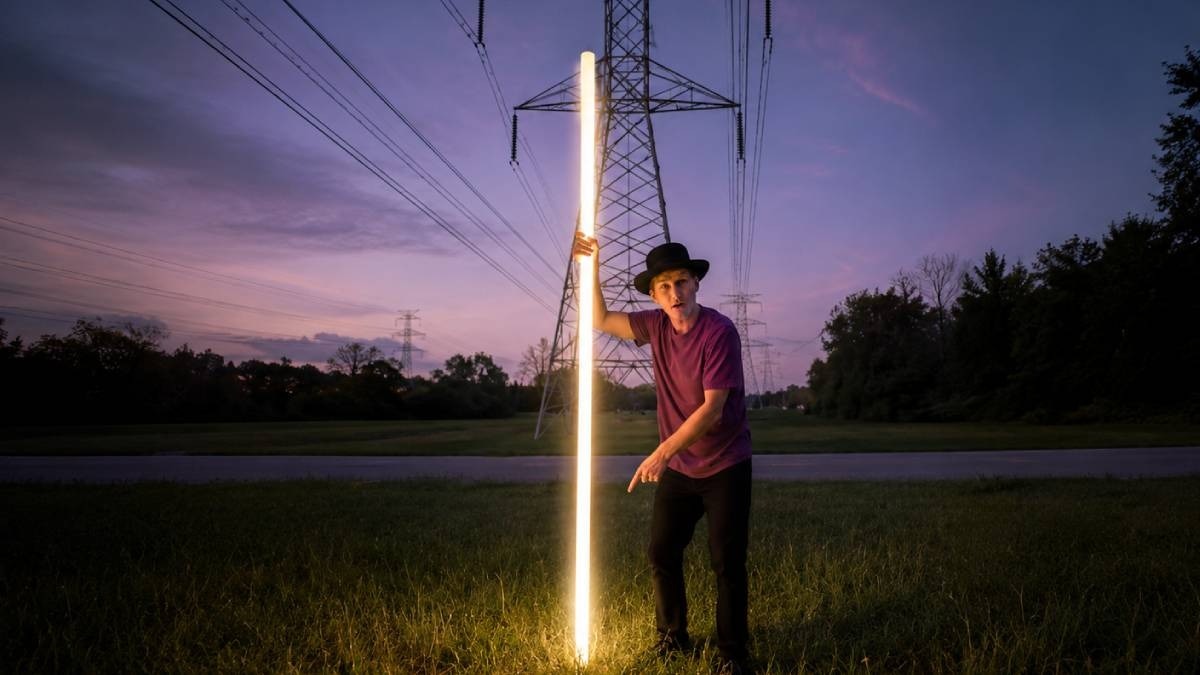
Technical anomalies in lighting, shadows, and reflections also serve as key indicators. AI often struggles with the laws of physics; for instance, a shadow may point in a direction inconsistent with the light source, or a reflection in a mirror might not perfectly match the subject's movement.
Users should also look for platform labels. Meta-owned Instagram and YouTube have implemented 'AI info' or 'Altered content' tags. While these are useful, they rely on creator disclosure or automated detection, both of which can be bypassed or erroneously applied.
| Feature | Real Video | AI-Generated Video |
|---|---|---|
| Blinking | Natural/Irregular | Too fast, too slow, or absent |
| Physics | Consistent Lighting | Illogical shadows/reflections |
| Motion | Micro-corrections | Unnaturally smooth or jittery |
| Lipsync | Perfect alignment | Slight lag or mismatch at ends |
Finally, the most effective manual check is to trace the video to its source. Scrutinizing the account—checking the creation date, posting frequency, and profile authenticity—can reveal if a video is being pushed by a bot farm or a newly created account designed for disinformation.
Frequently Asked Questions
Q: Are AI labels on Instagram always accurate?
A: No. While they help, some AI content slips through undetected, and occasionally real videos are mislabeled as synthetic.
Q: Can AI-generated videos be 100% indistinguishable from reality?
A: Currently, most have subtle flaws in physics or anatomy, but as models evolve, the gap is closing rapidly.