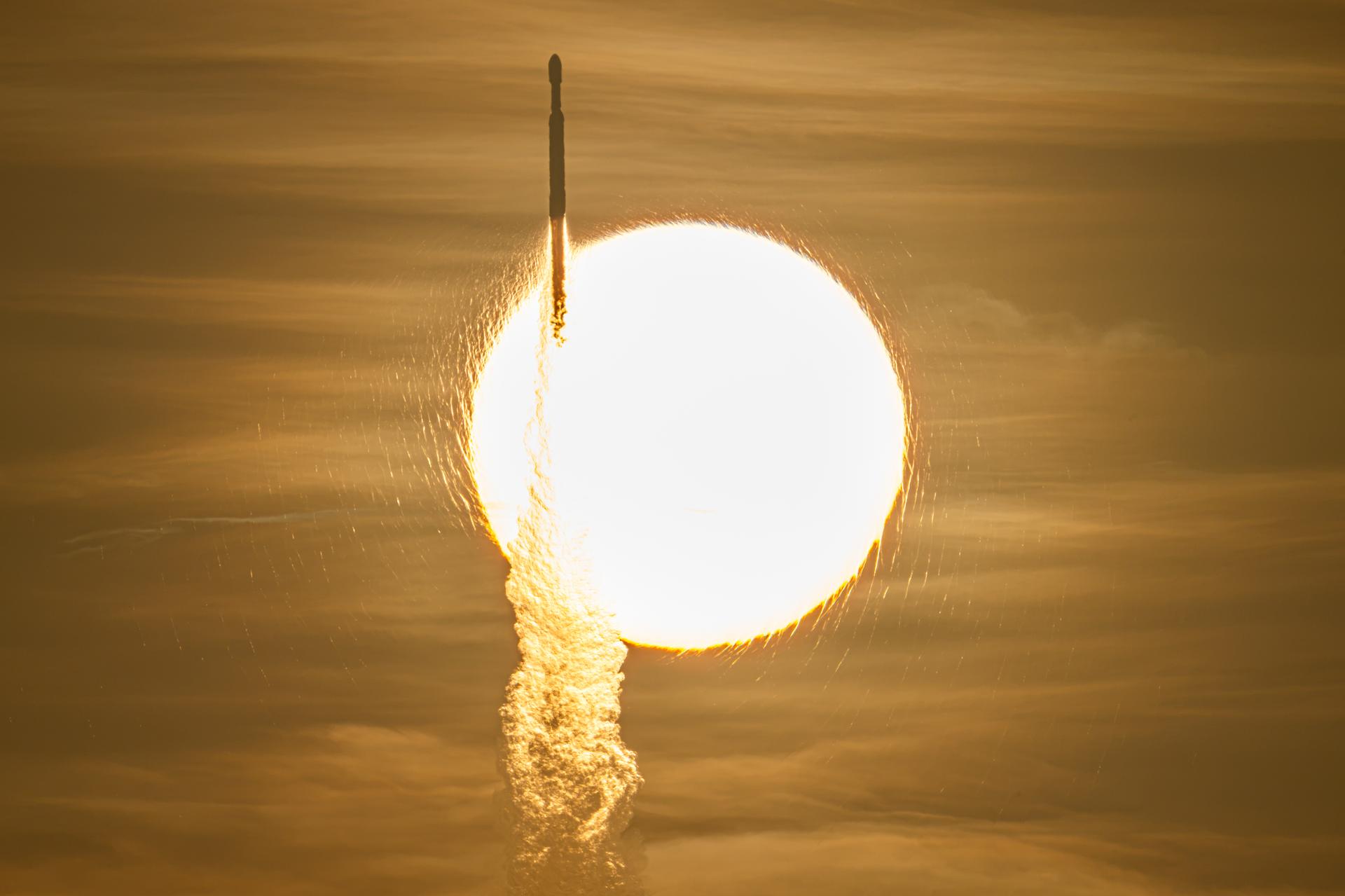
The Nancy Grace Roman Space Telescope and its Falcon Heavy launch vehicle have been delivered to the pad. The mission aims to uncover the mysteries of dark energy and the Milky Way's hidden structures.
- The Roman Space Telescope and Falcon Heavy rocket are now positioned at the launch pad.
- The mission will focus on mapping the Milky Way's massive bulge and identifying rare cosmic anomalies.
- The project successfully navigated significant budget cuts to reach this final stage.
In a pivotal moment for modern astrophysics, NASA's Nancy Grace Roman Space Telescope has officially been delivered to the launch pad. Accompanied by the powerful Falcon Heavy rocket, this mission is poised to redefine our understanding of the cosmos by observing the 'weird, the rare, and the unusual' across the deep reaches of space.
Unlike its predecessor, the James Webb Space Telescope, which focuses on deep, narrow targets, the Roman telescope is designed for wide-field imaging. This capability will allow NASA to conduct massive surveys of the sky, providing unprecedented data on the expansion of the universe and the nature of dark energy.
Why This Matters
BozokMedia analysis shows that the Roman telescope acts as the essential bridge between deep-field observation and wide-sky surveying. By capturing vast swaths of the universe in high resolution, it will allow scientists to identify thousands of new exoplanets and map the distribution of dark matter with surgical precision.
"The Roman Telescope is the wide-angle lens the scientific community has craved to finally decode the acceleration of the universe."
The journey to the launch pad was not without turmoil. The mission faced substantial hurdles, including potential Trump-era budget cuts and technical recalibrations. However, the resilience of the NASA Science team ensured that the mission remained on track to explore the Milky Way's massive bulge.
Historical Background
The telescope is named after Nancy Grace Roman, a trailblazing astronomer who was instrumental in the early development of NASA's space science programs. Her legacy of persistence and vision is mirrored in this mission, which seeks to push the boundaries of human knowledge into the infrared spectrum.
Frequently Asked Questions
1. What makes the Roman Telescope different from James Webb?
While Webb looks deeply at specific objects, Roman has a massive field of view, allowing it to survey large areas of the sky quickly.
2. Which rocket is being used for the launch?
The telescope will be launched aboard a SpaceX Falcon Heavy rocket.