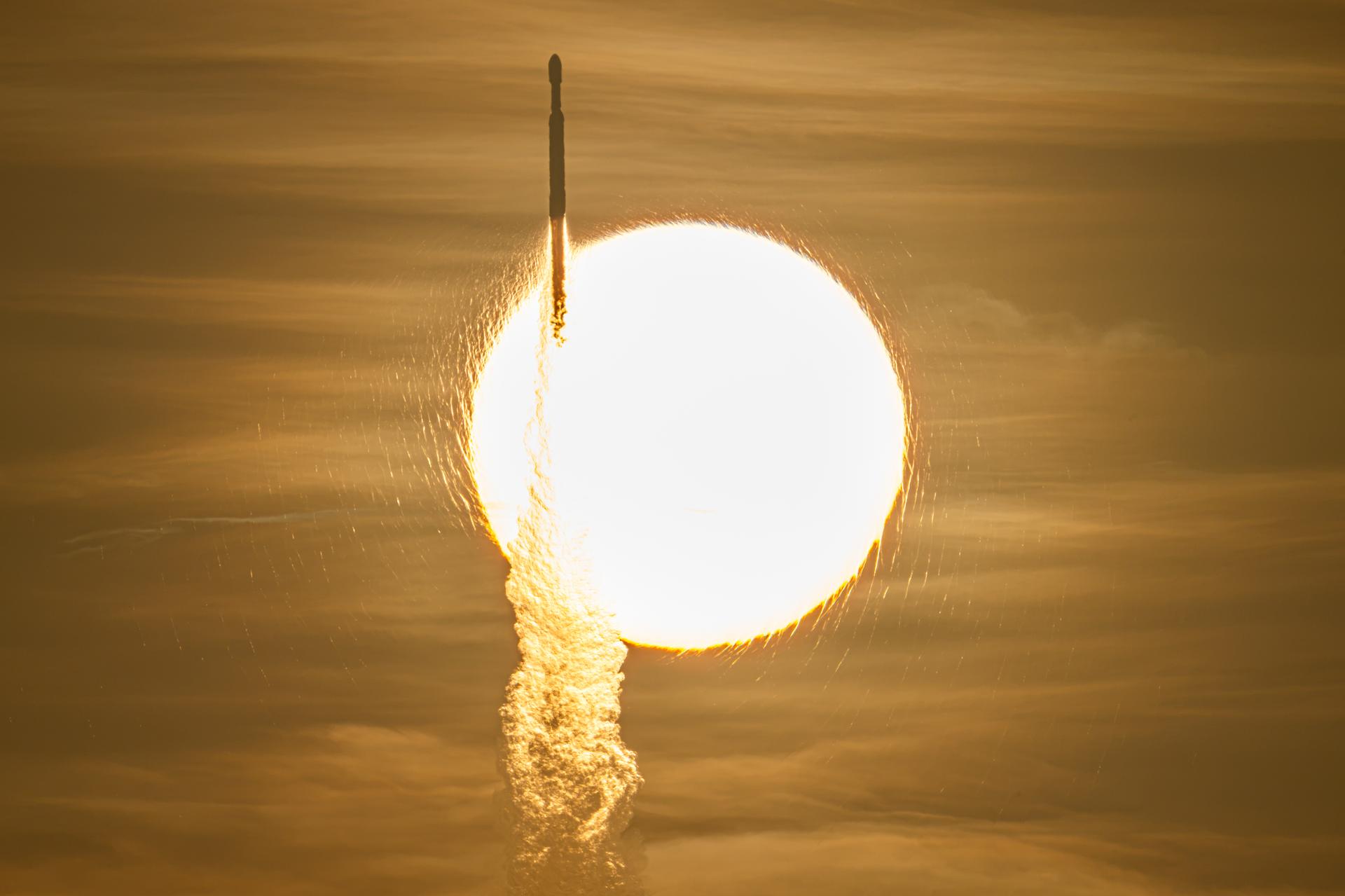
NASA has successfully launched the Nancy Grace Roman Space Telescope aboard a SpaceX Falcon Heavy rocket to probe dark energy, dark matter, and distant exoplanets.
- Launched via SpaceX Falcon Heavy from Kennedy Space Center, Florida.
- Capable of surveying the universe 1,000 times faster than the Hubble Space Telescope.
- Primary mission focuses on dark energy, dark matter, and imaging Jupiter-like exoplanets.
In a landmark achievement for astrophysics, NASA launched the Nancy Grace Roman Space Telescope at 7:26 a.m. EDT on Sunday. The observatory began its million-mile journey toward the second Sun-Earth Lagrange point (L2), a strategic orbit approximately one million miles from Earth that allows for stable, deep-space observations.
The mission, delivered ahead of schedule and on budget, represents over a decade of collaboration between NASA and its industry partners. NASA Administrator Jared Isaacman highlighted the mission as a testament to the agency's ability to pair bold ambition with disciplined execution, promising a new 'atlas of the universe' that will redefine our understanding of cosmic history.
Why This Matters
BozokMedia analysis shows that the Roman Telescope is not merely an upgrade but a paradigm shift in how we map the cosmos. While telescopes like Hubble provide deep, narrow views, Roman offers a wide-angle infrared lens. This capability is critical for mapping the distribution of galaxies to understand how dark energy is accelerating the expansion of the universe, potentially rewriting textbooks on cosmology.
"Roman will be a discovery machine that will bring us closer than ever before to answering humanity’s most profound questions about our cosmic history." - Nicky Fox, NASA.
The telescope is equipped with a massive 300-megapixel Wide Field Instrument. Featuring 18 4K detectors, this camera can capture crisp cosmic panoramas at an unprecedented scale. The sheer volume of data is staggering; the observatory will transmit 1.4 terabytes of data daily—the highest rate for any NASA astrophysics mission to date. To manage this, NASA will employ AI and machine learning to filter significant findings from the noise.
Early deployment phases have already seen the successful opening of the solar panels and the lower instrument sunshade. In the coming days, the Coronagraph Instrument will power on, demonstrating technology that could eventually image Earth-like planets in the search for extraterrestrial life.
The mission is a global collaborative effort, involving the European Space Agency (ESA), JAXA, CNES, and the Max Planck Institute. This international synergy ensures that the data gathered will be analyzed by the world's leading scientific minds across multiple continents.
| Feature | Hubble Space Telescope | Roman Space Telescope |
|---|---|---|
| Survey Speed | Standard | 1,000x Faster |
| Primary Focus | Deep Targeted Observation | Wide-Field Survey |
| Daily Data Volume | Moderate | 1.4 Terabytes |
Frequently Asked Questions
1. What is the primary goal of the Roman Space Telescope?
Its primary goals are to investigate dark energy, dark matter, and search for exoplanets outside our solar system.
2. When will the first images be released?
NASA expects to release the first images from the Roman telescope by early 2027.