The Union Ministry of Road Transport and Highways is set to mandate Vehicle-to-Vehicle (V2V) communication to reduce road fatalities. This wireless system will allow cars to warn drivers of imminent risks beyond their line of sight.
- V2V communication will be mandatory for most vehicle categories by October 2028.
- The system utilizes the 5.875 GHz to 5.925 GHz frequency band for wireless data exchange.
- Unlike ADAS, V2V works beyond the driver's line of sight, covering blind spots and corners.
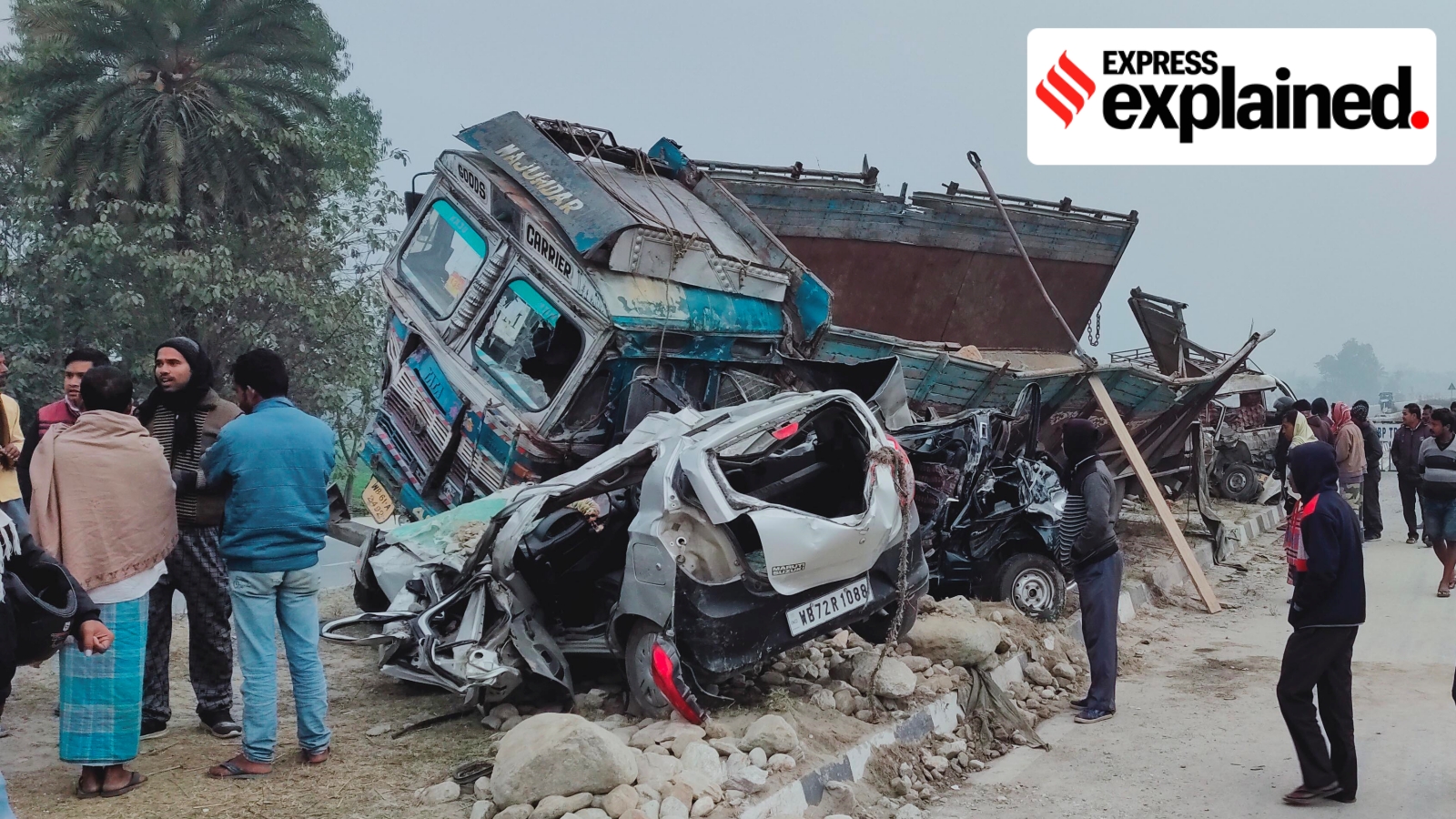
In a decisive move to tackle the escalating crisis of road fatalities, the Union Ministry of Road Transport and Highways (MoRTH) is introducing the Vehicle-to-Vehicle (V2V) communication system. With road crashes claiming 1.83 lakh lives in 2025—an increase of 6,000 over the previous year—the government is shifting from passive safety to active, interconnected safety networks.
Understanding the V2V Framework
The V2V system relies on an On-Board Unit (OBU) installed in vehicles, enabling them to exchange real-time data wirelessly. Utilizing Cellular Vehicle-to-Everything (C-V2X) technology, these units broadcast critical information such as current speed, precise position, direction, and acceleration to all surrounding vehicles within a 300-meter radius.
For example, if a vehicle ahead performs emergency braking, the V2V system instantly alerts following drivers, providing crucial seconds to react even before the brake lights are visible. The Department of Telecommunications has already exempted the required frequency band (5.875 GHz to 5.925 GHz) from licensing to facilitate rapid OEM adoption.
V2V vs. ADAS: The Critical Difference
While Advanced Driver Assistance Systems (ADAS) are becoming common, they rely heavily on sensors and cameras. This means they are limited by the 'line of sight.' If a car is hidden behind a large truck or around a sharp blind curve, ADAS may fail. V2V transcends this limitation by establishing a digital handshake between vehicles, regardless of visual obstructions.
| Feature | ADAS (Sensor-based) | V2V (Network-based) |
|---|---|---|
| Mechanism | Visual/Radar Sensors | Wireless Data Exchange |
| Range | Line-of-Sight limited | Beyond Line-of-Sight |
| Primary Use | Lane keeping, Auto-brake | Predictive collision alerts |
Why This Matters
BozokMedia analysis shows that in the chaotic traffic environment of India, where lane discipline is often ignored, V2V creates a 'digital safety cocoon.' By automating the warning process, it reduces the reliance on human reaction times, which are often compromised by fatigue or distraction.
V2V technology transforms road safety from an individual effort into a collective, intelligent ecosystem.
Implementation Timeline and Privacy Concerns
The draft Central Motor Vehicles (Amendment) Rules, 2026, stipulate that vehicles in categories L (two/three-wheelers), M (cars/buses), and N (goods vehicles) manufactured after October 1, 2027, must comply with AIS-230 standards. By October 1, 2028, the system will be mandatory for all these categories.
However, the transition is not without risks. The massive amount of data generated regarding vehicle location and movement raises significant privacy and cybersecurity concerns. Experts warn that without stringent government regulations, the intelligent transport infrastructure could become a target for cyber-attacks. Additionally, the risk of signal interference or miscommunication remains a technical hurdle.
Frequently Asked Questions
1. Will V2V systems be available for older cars?
The current mandate focuses on new vehicles, but the OBU units may eventually be available as aftermarket retrofits.
2. What is the expected cost of the V2V hardware?
Government officials estimate that the On-Board Units (OBUs) will cost between Rs 5,000 and Rs 7,000.