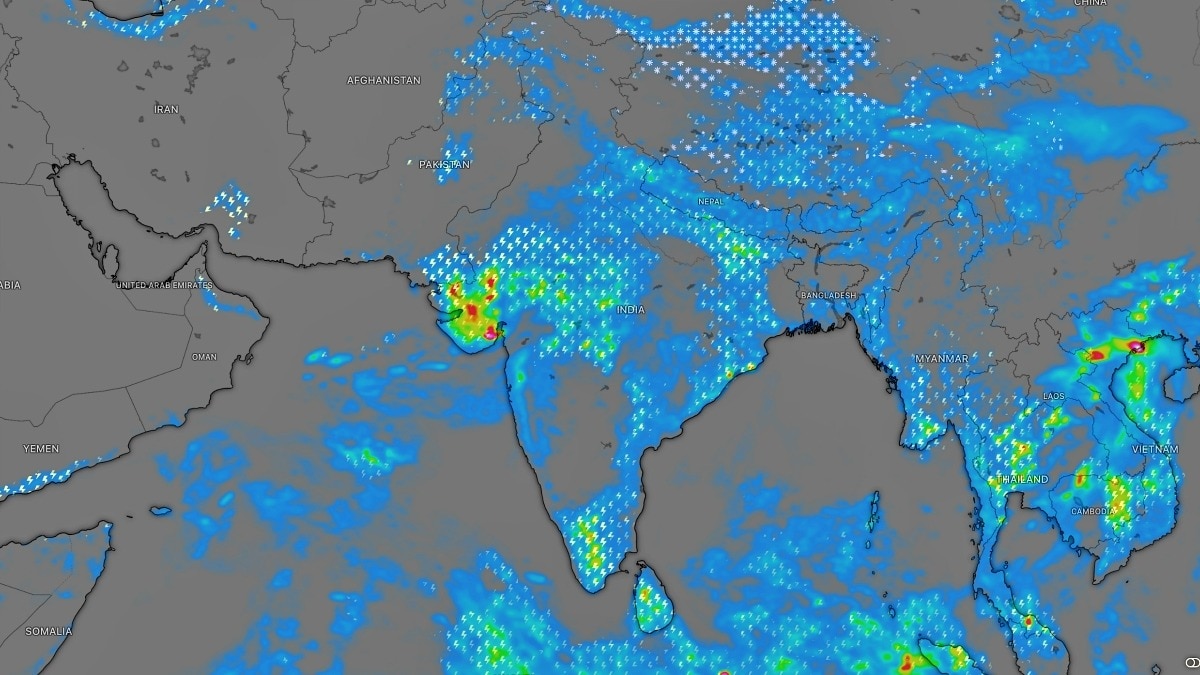
Delhi-NCR is experiencing intense rainfall and thunderstorms as the IMD issues a red alert. Heavy downpours are expected to continue through Saturday due to an active monsoon system.
- IMD has issued a red warning for heavy rainfall across parts of Delhi-NCR.
- Thunderstorms and lightning accompanied by moderate to heavy rain are expected.
- The weather system is driven by a low-pressure area over northeast Madhya Pradesh.
The Delhi-NCR region is grappling with intense weather conditions as heavy rain and thunderstorms continue to lash the area on Friday, September 4. The India Meteorological Department (IMD) has escalated its warning to a Red Alert, indicating that certain pockets could experience extremely heavy rainfall in short durations, potentially leading to localized flooding.
The weather pattern has turned increasingly unsettled, with dark skies and frequent lightning strikes reported across the capital. According to local forecasts, the afternoon hours are particularly vulnerable to intense spells of rain. At Safdarjung, the maximum temperature is expected to hover around 32°C, though the heavy cloud cover and precipitation will keep temperatures relatively lower than usual.
Why This Matters
BozokMedia analysis shows that such intense weather bursts pose a significant threat to urban mobility and infrastructure. For a sprawling metropolis like Delhi, heavy rainfall often results in severe waterlogging, disrupting flight operations at IGI Airport and causing massive traffic gridlocks on major arterial roads.
The current weather instability is a direct result of a well-marked low-pressure system over central India, which is funneling moisture directly into the northern plains.
The impact of this weather system extends beyond the capital. The Haryana-Chandigarh-Delhi corridor and West Uttar Pradesh are also under heavy rain warnings. The IMD has further forecasted that the heavy rainfall spell is likely to persist through Saturday, September 5, before gradually easing off from September 6 onwards.
Historical Background
Delhi's monsoon patterns have become increasingly erratic in recent decades. The shift toward 'extreme weather events'—characterized by high-intensity rainfall over short periods—has become a recurring theme, often attributed to broader climatic shifts and the intensifying urban heat island effect in the National Capital Region.
Frequently Asked Questions
1. When will the heavy rain in Delhi subside?
The intensity is expected to decrease after September 6, though light showers may continue for a few more days.
2. Which other states are affected by this system?
Besides Delhi, Haryana, Chandigarh, and West Uttar Pradesh are also experiencing significant rainfall due to this low-pressure area.