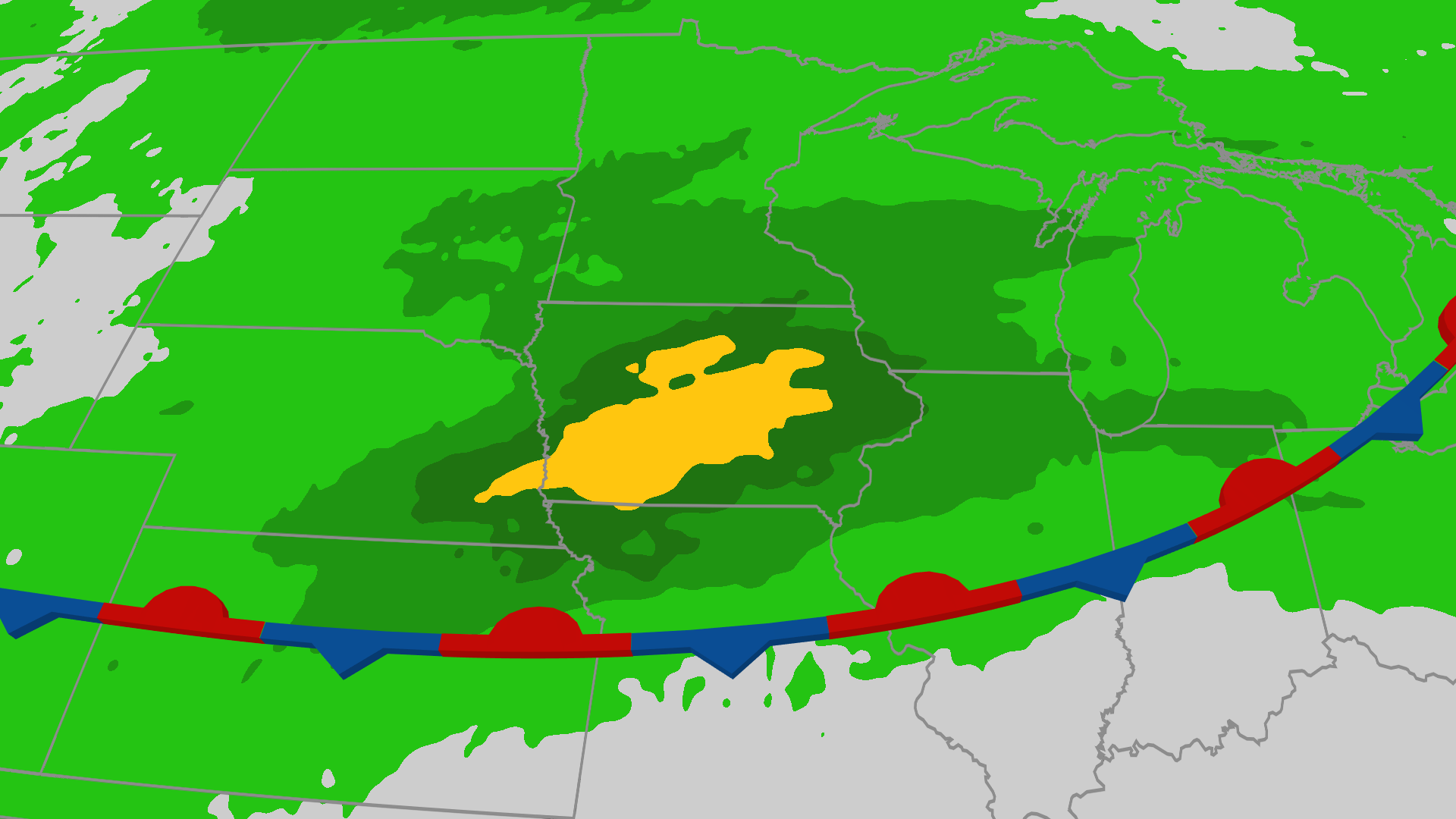
A slow-moving weather front is expected to stall over the central United States, triggering multi-day heavy rainfall and significant flooding risks for major cities like Chicago and Omaha.
- A stalling frontal boundary is causing multi-day rain threats.
- Major cities including Chicago, Omaha, and Des Moines are on alert.
- Rainfall totals are expected to range between 1 to 5 inches.
The Midwest and Central Plains regions of the United States are bracing for a period of intense rainfall and potential flooding this week. Meteorologists warn that a frontal boundary, moving across the central U.S., is expected to stall, leading to continuous precipitation over several days.
Regional Impact and Forecast Details
Heavy storms and torrential rain are poised to disrupt travel and daily commutes across several states. On Monday, excessive rainfall is forecast from Kansas and Nebraska through much of Michigan. The most significant threats are concentrated in eastern Nebraska, spreading into Iowa and most of Wisconsin. Cities such as Omaha, Des Moines, and Milwaukee are at high risk for the heaviest downpours.
Daily Weather Breakdown
The weather pattern is expected to persist through the week. Tuesday will see a repeat of heavy rainfall, starting in the central plains and moving toward the area southwest of Chicago. By Wednesday, the intensity is expected to ramp up further, with the highest rainfall totals predicted across southern Michigan and northern Indiana. Residents are advised to remain vigilant as soil saturation increases the risk of flash flooding.
The Science Behind the Storm
The primary driver of this weather event is a slow-moving cold front clashing with warm, humid air from the South. Unlike typical fronts that pass through quickly, this boundary is expected to stall. When a weather system remains stationary, it dumps massive amounts of water on the same geographic area, leading to localized flooding.
Why This Matters
BozokMedia analysis shows that such stationary weather systems pose a dual threat: immediate danger to life and property through flooding, and long-term economic disruption due to impacted transportation networks and agricultural damage. Rainfall estimates of 1 to 5 inches over a concentrated period can easily overwhelm urban drainage systems.
The stalling of a cold front over saturated terrain is a recipe for significant localized flooding events.
Frequently Asked Questions
Question 1: Which cities are most at risk?
Answer: Chicago, Omaha, Des Moines, Minneapolis, and Kansas City are among the most impacted cities.
Question 2: How much rain is expected?
Answer: Forecast models indicate anywhere from 1 to 5 inches of rainfall over the coming days.