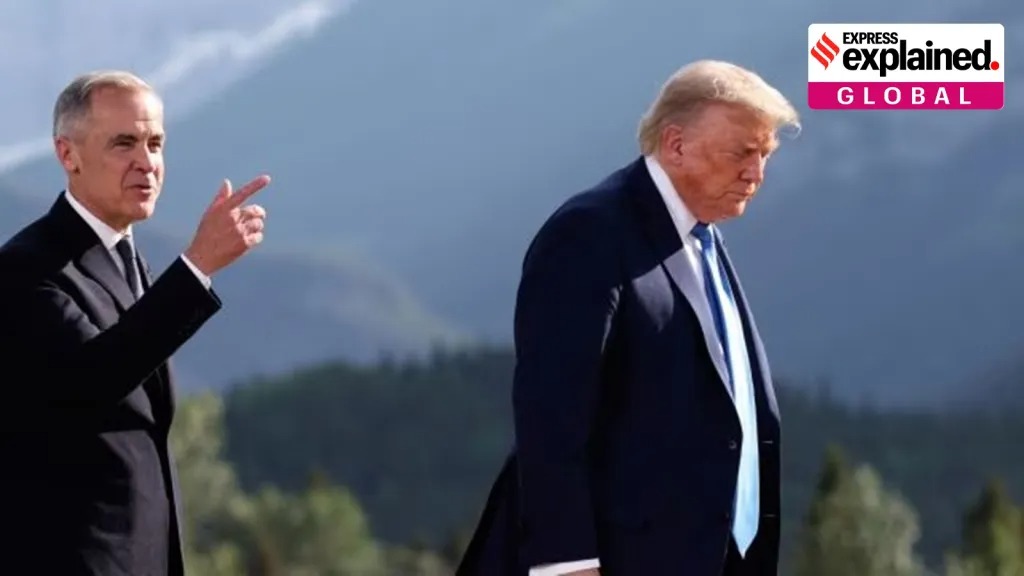
A massive trade conflict has erupted as the US imposes 50% tariffs on Canadian goods, prompting Prime Minister Mark Carney to vow retaliatory measures.
- US has imposed 50% tariffs on $20 billion of Canadian goods.
- Canada has vowed 'dollar-for-dollar' retaliation starting September 8.
- PM Mark Carney walked out of trade negotiations with the Trump administration.
- The US is utilizing the Tariff Act of 1930 to bypass previous court rulings.
The economic relationship between the United States and Canada has entered a period of intense volatility. Following the collapse of last-minute trade negotiations, Washington has imposed a staggering 50% tariff on approximately $20 billion worth of Canadian imports. In a direct response, Canadian Prime Minister Mark Carney has pledged a "dollar-for-dollar" retaliation, marking one of the most significant diplomatic fractures between the two neighbors in decades.
The conflict stems from fundamental disagreements over market access and economic concessions. The Trump administration alleges that Canada has engaged in discriminatory practices against American businesses. Conversely, Prime Minister Carney argues that US demands were excessive, threatening Canada's ability to secure independent trade deals and undermining the reliability of American commitments.
Why This Matters
BozokMedia analysis shows that this trade war carries profound implications for North American supply chains. With 72% of Canada's exports destined for the US, any disruption in the flow of goods—ranging from lumber and autos to dairy and electronics—could trigger inflationary pressures in both nations, affecting millions of consumers.
"The era of unipolar economic dominance is shifting; middle powers are increasingly willing to defend their sovereignty against protectionist surges," notes a senior geopolitical strategist.
The Legal Maneuver: A critical aspect of this standoff is how the US is circumventing previous legal setbacks. While the Supreme Court struck down parts of Trump's earlier tariff programs in February, the administration is now invoking Section 338 of the Tariff Act of 1930. This Depression-era legislation provides the President with unprecedented authority to impose high tariffs on nations deemed to be discriminating against US interests.
Historical Context: Mark Carney, a former head of both the Bank of Canada and the Bank of England, rose to power on a platform of economic resilience. His decision to walk away from the negotiating table reflects his Davos philosophy: that "nostalgia is not a strategy" and that nations must adapt to a new global order where economic coercion is a primary tool of statecraft.
| Feature | United States Stance | Canada Stance |
|---|---|---|
| Primary Action | 50% Import Tariffs | Dollar-for-Dollar Retaliation |
| Target Sectors | Steel, Autos, Lumber | Dairy, Steel, Electronics, Agri-equipment |
| Legal Mechanism | Tariff Act of 1930 (Section 338) | National Economic Sovereignty |
Frequently Asked Questions
1. How will this affect the average consumer?
As importers face higher duties, these costs are typically passed down to consumers, likely leading to higher prices for food, vehicles, and household goods.
2. When will Canada's retaliatory tariffs begin?
While US tariffs began on August 22, Canada's retaliatory measures are scheduled to take effect on September 8.