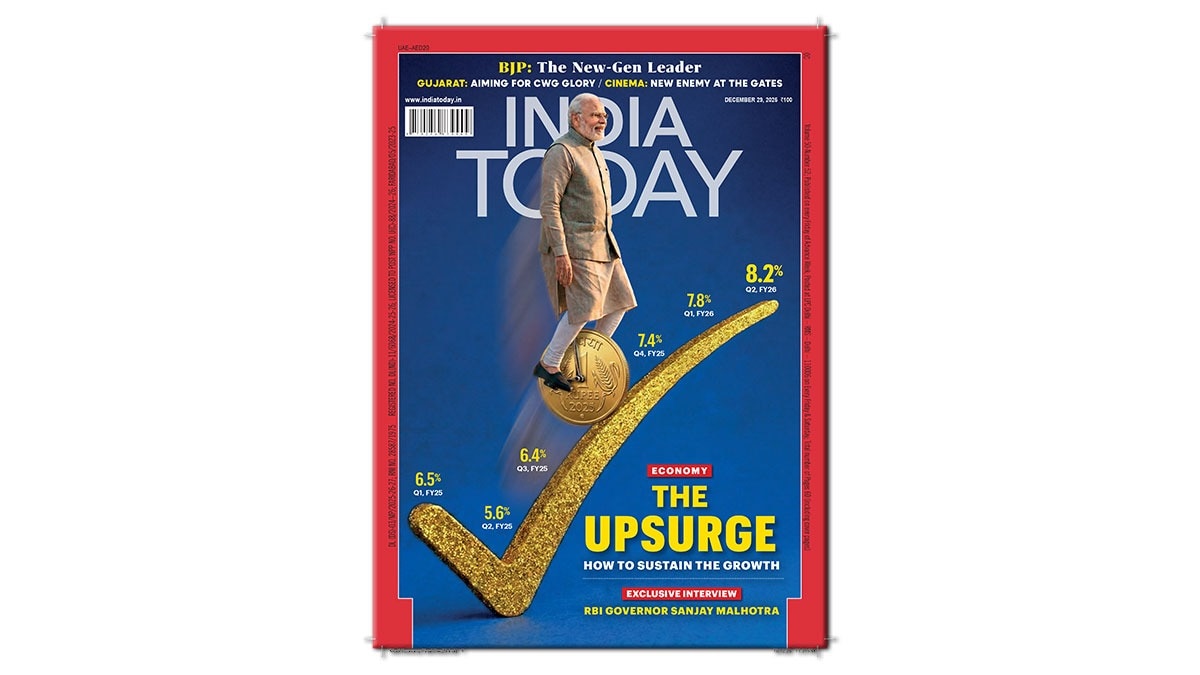
The Indian economy demonstrated remarkable resilience in the April-June quarter with a real GDP growth of 7.8%, comfortably exceeding the RBI's 7% forecast. Surges in manufacturing, services, and capital investment drove the performance.
- India's real GDP grew by 7.8% in the April-June quarter, surpassing RBI estimates.
- Manufacturing (9.2%) and Services (10%) sectors were the primary growth engines.
- Gross Fixed Capital Formation (GFCF) saw a massive jump to 11.9%, indicating a strong investment trend.
Amidst a volatile global landscape marked by prolonged conflicts in West Asia, the Indian economy has emerged as a beacon of stability. The latest data reveals a real GDP growth rate of 7.8% for the first quarter of the fiscal year, beating the Reserve Bank of India's (RBI) projection of 7%. This performance underscores the internal strength of the economy despite external headwinds.
The Three Pillars of Growth
The unexpected surge can be attributed to three critical factors. First, the Manufacturing and Services sectors exhibited aggressive expansion. Manufacturing grew by 9.2%, up from 8.3% last year, while the tertiary (services) sector expanded by 10%. Although agriculture grew modestly at 3.6%, the Chief Economic Advisor (CEA) noted that this was better than feared given the initial monsoon concerns.
Second, a powerful Demand Push was evident. High-frequency indicators such as GST collections and automobile sales suggest robust demand from both rural and urban markets. Government initiatives like PM Kisan and the maintenance of affordable fertilizer prices have played a pivotal role in sustaining rural consumption.
Third, there has been a significant spike in Investment Activity. Gross Fixed Capital Formation (GFCF), a key proxy for investment, rose by 11.9%, nearly doubling the growth of the previous year. In current prices, GFCF growth hit a staggering 20.4%, increasing its share in the total GDP to 34.3%.
Why This Matters
BozokMedia analysis shows that increasing the investment-to-GDP ratio is the only sustainable path to long-term growth. As noted by the Economic Advisory Council to the Prime Minister, sustaining a 7%+ growth rate requires investment to consistently hover around 34-35% of GDP. The current trend suggests India is moving toward this critical threshold.
"What we are witnessing is continuous resilience in the Indian growth performance, well-backed by high frequency indicators." - V Anantha Nageswaran, CEA.
| Sector | Current Growth (Q1) | Previous Growth (SPLY) |
|---|---|---|
| Manufacturing | 9.2% | 8.3% |
| Services | 10% | 8% |
| Agriculture | 3.6% | 4.4% |
Lurking Risks and Global Headwinds
Despite the optimism, the road ahead is not without obstacles. The most prominent risk is the volatility of crude oil prices, exacerbated by tensions between the US and Iran. Brent crude remaining above $80 per barrel could inflate import costs and dampen private consumption. Additionally, food inflation and the strengthening El Niño effect pose potential threats to the agricultural sector's stability.
Frequently Asked Questions
1. Why did India's GDP growth exceed the RBI's estimate?
The growth was driven by a sharp rise in manufacturing and services, alongside a nearly 12% surge in Gross Fixed Capital Formation (investments).
High crude oil prices due to geopolitical tensions and food inflation driven by climate factors like El Niño are the primary concerns.