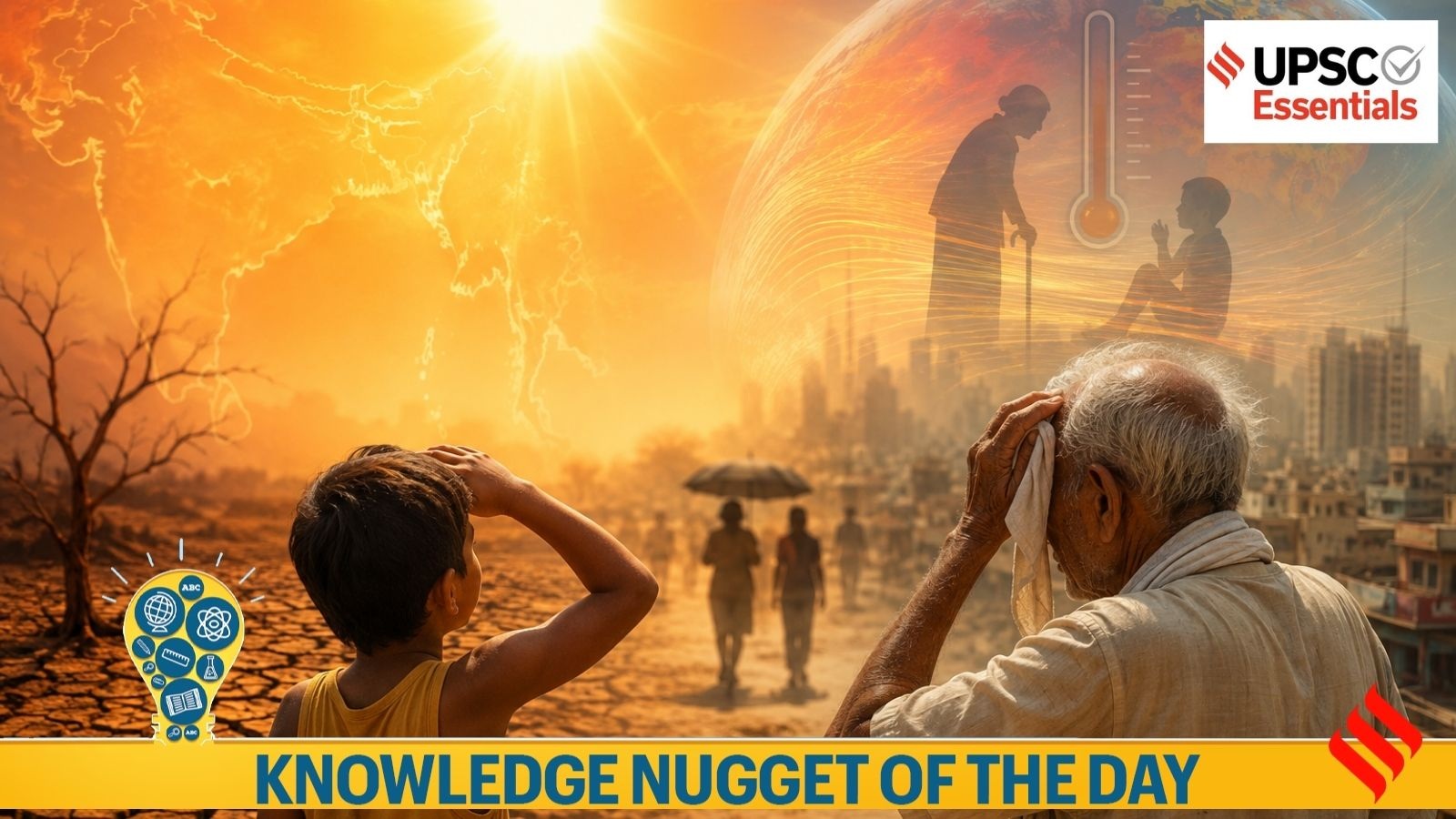
As climate change intensifies, rising heat stress poses a lethal threat to the most vulnerable demographics. New studies reveal India's extreme vulnerability to prolonged, intolerable heat.
- At 3°C of global warming, over 80% of India's elderly population will face dangerous heat waves.
- Older adults are at double the risk due to reduced sweating capacity and slower cardiovascular responses.
- In the Indo-Gangetic Plain, intolerable heat hours could exceed 2,000 per year by 2030.
As climate change accelerates, heat waves are becoming more frequent and intense, pushing human biological limits. Recent studies have highlighted a terrifying reality: children and the elderly are facing disproportionate risks. Unlike healthy adults, these groups struggle to regulate their internal body temperature, making extreme heat a life-threatening phenomenon rather than just a discomfort.
India: A Global Epicenter of Heat Vulnerability
According to research published in The Lancet Planetary Health, India stands as one of the most vulnerable nations globally. If global warming reaches the 3°C threshold, more than half of India's population and over 80% of its older adults could endure at least 180 hours of intolerable heat annually. The crisis is particularly acute in Delhi and the Indo-Gangetic Plain, where heat exposure is projected to skyrocket.
Why This Matters
BozokMedia analysis shows that the danger lies not just in the peak temperature, but in the duration and timing. Heat stress is often concentrated between May and September, leaving the body almost no window for physiological recovery. This continuous exposure puts unprecedented pressure on electricity grids, healthcare systems, and cooling infrastructure.
Older individuals face serious health risks at lower temperatures than previously estimated because their bodies' cooling mechanisms are less efficient.
A critical factor in this crisis is the wet-bulb temperature. This metric combines temperature and humidity to determine the limit of human survivability. When humidity is high, sweat cannot evaporate, rendering the body's primary cooling mechanism useless. This is especially dangerous in tropical regions like South Asia and West Africa.
Vulnerability Comparison
| Global Warming Scenario | Impact on Older Adults | Risk Profile |
|---|---|---|
| 1.5°C Warming | 290 million people face unsafe heat | Significant |
| 3.0°C Warming | 80% of India's elderly at risk | Extreme |
| 4.0°C Warming | Risk expands to young adults | Catastrophic |
Experts argue that generic heatwave warnings are no longer sufficient. There is an urgent need for age-specific adaptation strategies, including specialized alerts for those living alone, the chronically ill, and those in poorly ventilated environments.
Frequently Asked Questions
1. Why are elderly people more susceptible to heat?
Older adults generally sweat less, their blood vessels respond more slowly, and their hearts must work significantly harder to maintain temperature balance.
2. What is the significance of the 3°C warming threshold?
At 3°C, the heat becomes 'intolerable' for much longer periods, often occurring both day and night, preventing the body from recovering.