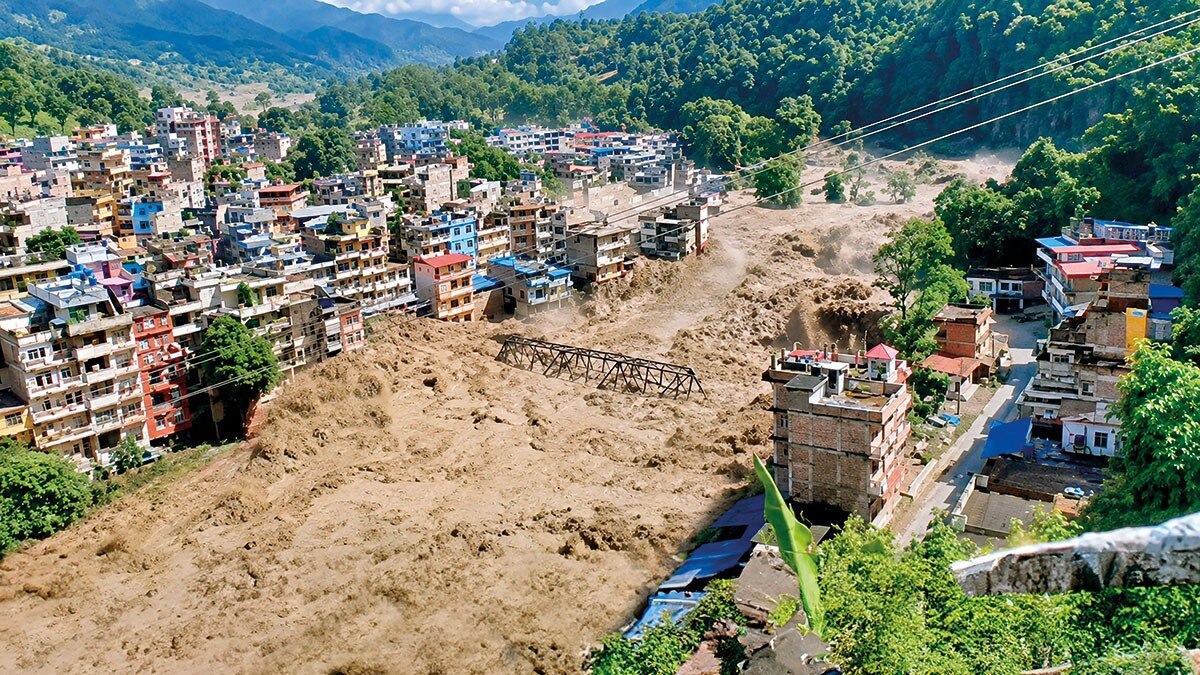
The recent tragedy in Nepal has exposed the extreme vulnerability of India's Himalayan region to glacial lake outburst floods. Rapid melting of glaciers poses a catastrophic threat to millions.
- Rapidly melting glaciers are increasing the frequency of Glacial Lake Outburst Floods (GLOFs).
- India's Himalayan states, including Uttarakhand and Himachal Pradesh, face extreme ecological fragility.
- Climate change and unplanned infrastructure development are exacerbating the risk.
The sudden deluge in Nepal's Rasuwa district has sent shockwaves through the region, serving as a grim reminder of the unpredictable nature of the Himalayas. This disaster was not just a local tragedy; it was a clarion call for India, highlighting the immense vulnerability of its own fragile Himalayan states to catastrophic glacial floods.
The Fragility of the Himalayas: The northern states of India, particularly Uttarakhand, Himachal Pradesh, and Sikkim, sit on a geological fault line of environmental risk. As global temperatures rise, Himalayan glaciers are retreating at an unprecedented rate, creating unstable proglacial lakes. When these natural barriers fail, the resulting Glacial Lake Outburst Floods (GLOFs) can wipe out entire villages in minutes.
Why This Matters
BozokMedia analysis shows that the Himalayan region is the lifeline of South Asia, providing water to millions and fueling the country's hydroelectric power. The instability of these glaciers threatens not just local lives but also national energy security and the agricultural stability of the Indo-Gangetic plains.
The melting of the 'Third Pole' is no longer a distant prediction; it is a present-day emergency that demands immediate policy intervention.
Historical Background: India has a haunting history of such disasters, from the devastating 2013 Kedarnath floods to the 2021 Chamoli disaster. These events underscore the dangerous intersection of extreme weather patterns and heavy human intervention in ecologically sensitive zones.
To mitigate this risk, there is an urgent need for sophisticated real-time monitoring systems, robust early warning protocols, and a drastic re-evaluation of construction norms in high-altitude regions.
Frequently Asked Questions
1. What causes a Glacial Lake Outburst Flood (GLOF)?
A GLOF occurs when the natural dam—made of ice or loose debris—holding back a glacial lake fails, releasing a massive volume of water downstream.
2. How can India prepare for these floods?
Preparation involves installing sensor-based early warning systems, mapping high-risk glacial lakes, and restricting heavy construction in flood-prone valleys.
