The Goa government has deployed 'Aarogya Aarohan,' an AI tool developed by IISc Bengaluru, to detect oral cancer at early stages. The initiative aims to bridge the gap between rural patients and specialist care.
- Deployment of 'Aarogya Aarohan' AI tool developed by IISc Bengaluru.
- Pilot projects launched in Panaji and Betki village.
- Capable of instant, offline classification of suspicious oral lesions.
- Targeting a reduction in late-stage cancer diagnoses in rural India.
The Directorate of Health Services (DHS) of the Goa government has embarked on a pioneering journey by integrating Artificial Intelligence (AI) into the detection and treatment of oral cancer. This pilot project, currently operational in the capital Panaji and Betki village near Ponda, represents a shift toward technology-driven preventative healthcare.
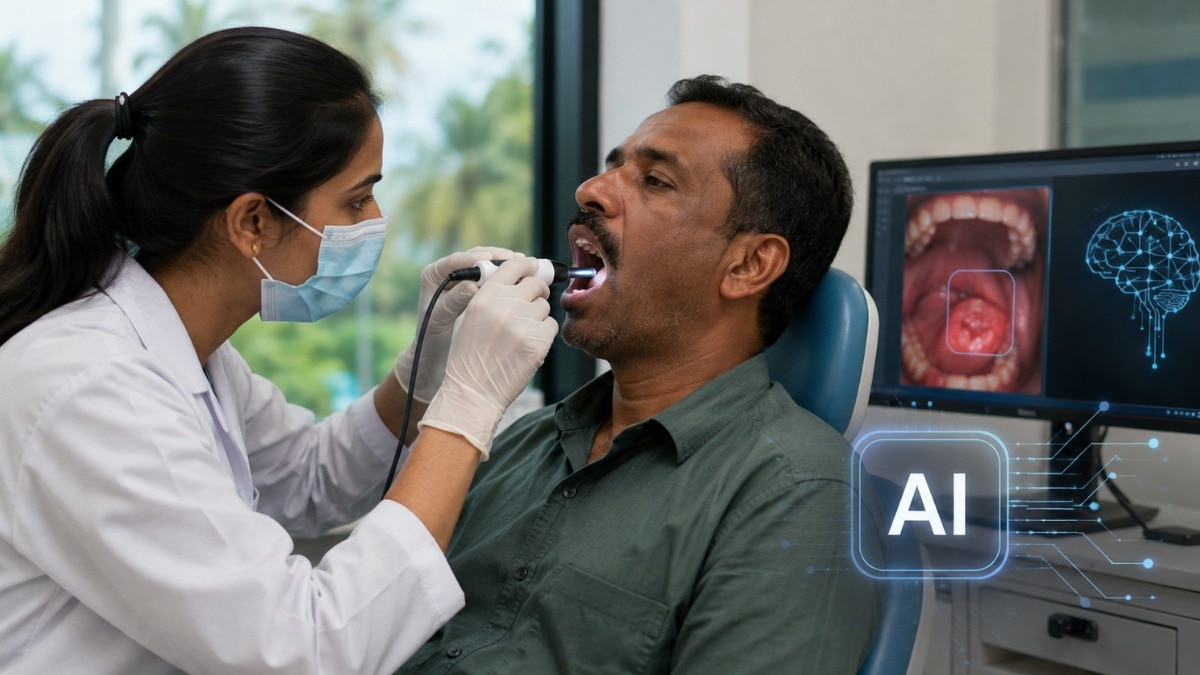
At the core of this initiative is Aarogya Aarohan, a cutting-edge AI screening tool developed by the Indian Institute of Science (IISc), Bengaluru. The mobile-based application allows frontline health workers to capture photographs of a patient's oral cavity. The AI then analyzes these images for abnormalities such as ulcers or leukoplakia. Patients flagged as high-risk are immediately referred to dentists via telemedicine, and if necessary, directed to the Goa Dental College for a biopsy.
Why This Matters
BozokMedia analysis shows that the integration of AI at the primary healthcare level is critical for India, where oral cancer accounts for nearly one-third of all cancer cases. With roughly 70% of cases being detected only at advanced stages, the ability to screen patients in their own homes or local clinics—without requiring a specialist on-site—could save thousands of lives annually.
"The ability to provide point-of-care diagnostics without internet connectivity is a game-changer for rural healthcare delivery in developing nations."
The tool's technical architecture, developed by IISc's AI center of excellence TANUH in collaboration with ARTPARK and Triveous, utilizes white-light imaging. A standout feature is its ability to function entirely offline, making it the only tool of its kind globally to provide instant results at the point of care without an internet connection. It has already received a test license from the Central Drugs Standard Control Organisation (CDSCO).
Initial results from Goa are promising: out of 259 individuals screened, 114 were identified as suspicious cases, and 8 were confirmed as oral cancer patients. Beyond Goa, the tool is being rolled out in Thanjavur (Tamil Nadu) and Mathura (Uttar Pradesh), with future plans for Nagaland and integration into the National Programme for Prevention and Control of Non-Communicable Diseases.
| Feature | Traditional Screening | AI-Based (Aarogya Aarohan) |
|---|---|---|
| Method | Visual Exam by Specialist | AI-Driven Image Analysis |
| Turnaround Time | Days/Weeks (Appointment based) | Instant |
| Accessibility | Limited to Urban Hospitals | Rural & Primary Health Centers |
| Connectivity | N/A | Fully Functional Offline |
Frequently Asked Questions
1. How does the Aarogya Aarohan app identify cancer?
It uses AI to analyze white-light photographs of the mouth, categorizing lesions as 'suspicious' (orange prompt) or 'non-suspicious' (blue prompt) based on color and morphology.
2. Is this tool available for public use?
Currently, it is being deployed via government health centers and frontline workers, with plans to make it a digital public tool if the pilot proves feasible.