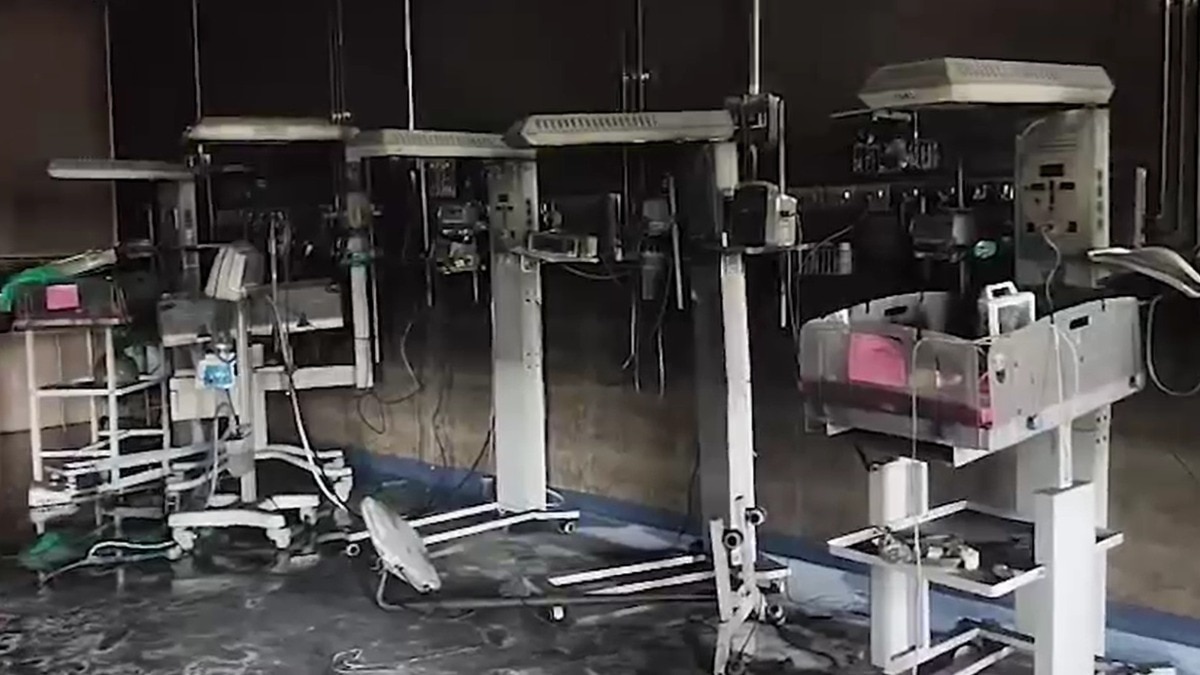
A massive blaze erupted in the NICU of Amravati District Women’s Hospital at 3:30 a.m., killing three newborns and injuring several others. Authorities are still investigating the cause.
- Fire broke out in the NICU of Amravati District Women’s Hospital
- Three newborns died, around six more injured
- Cause under investigation; fire safety protocols questioned
At approximately 3:30 a.m. on Monday, a fierce fire ignited on the third floor of the Amravati District Women’s Hospital, engulfing the Neonatal Intensive Care Unit (NICU). Preliminary reports suggest the blaze started after an alleged explosion in a ventilator, sending flames and smoke surging through the ward.
At the time, about 39 infants were admitted to the NICU. Doctors, nurses, and support staff immediately launched a rescue operation, successfully evacuating many babies. Unfortunately, three newborns succumbed to burns, and six more sustained serious injuries.
The injured infants were rushed to a super‑speciality hospital for intensive care. Hospital officials confirmed that once the fire was contained, all surviving children were moved to a secure area and the situation was stabilized.
Historical Background: India has witnessed several hospital fire tragedies in recent years, including a 2021 blaze at a Kolkata children’s hospital that claimed 12 lives. These incidents have repeatedly spotlighted gaps in fire safety standards across medical facilities.
Why This Matters
BozokMedia analysis shows that inadequate fire‑prevention measures in critical care units pose a grave risk to the most vulnerable patients, underscoring the urgent need for policy reforms and stricter compliance.
"NICU environments demand rigorous, routine fire‑safety audits and modern suppression systems," says Prof. Ajay Singh, public‑health expert.
Frequently Asked Questions
Q1: Could a technical malfunction have triggered the fire?
A: Early investigations point to a possible ventilator explosion, but the final cause remains under official review.
Q2: What steps can prevent similar disasters in the future?
A: Regular fire safety audits, installation of advanced fire alarms, and automatic sprinkler systems in hospitals are essential safeguards.