This article examines why China’s expanding strategic footprint is prompting deeper India‑Australia defence cooperation and analyses the potential effects of the proposed FCRA amendments on Indian civil society. It also offers structured guidance for UPSC GS‑2 answer writing.
For aspirants of the UPSC Civil Services Mains, UPSC Essentials has released Week 162 with two high‑impact questions—one on India‑Australia defence collaboration and another on the implications of the Foreign Contribution Regulation Act (FCRA) amendments. Both topics reflect current geopolitical shifts and domestic regulatory debates, providing a robust framework for analytical answer writing.
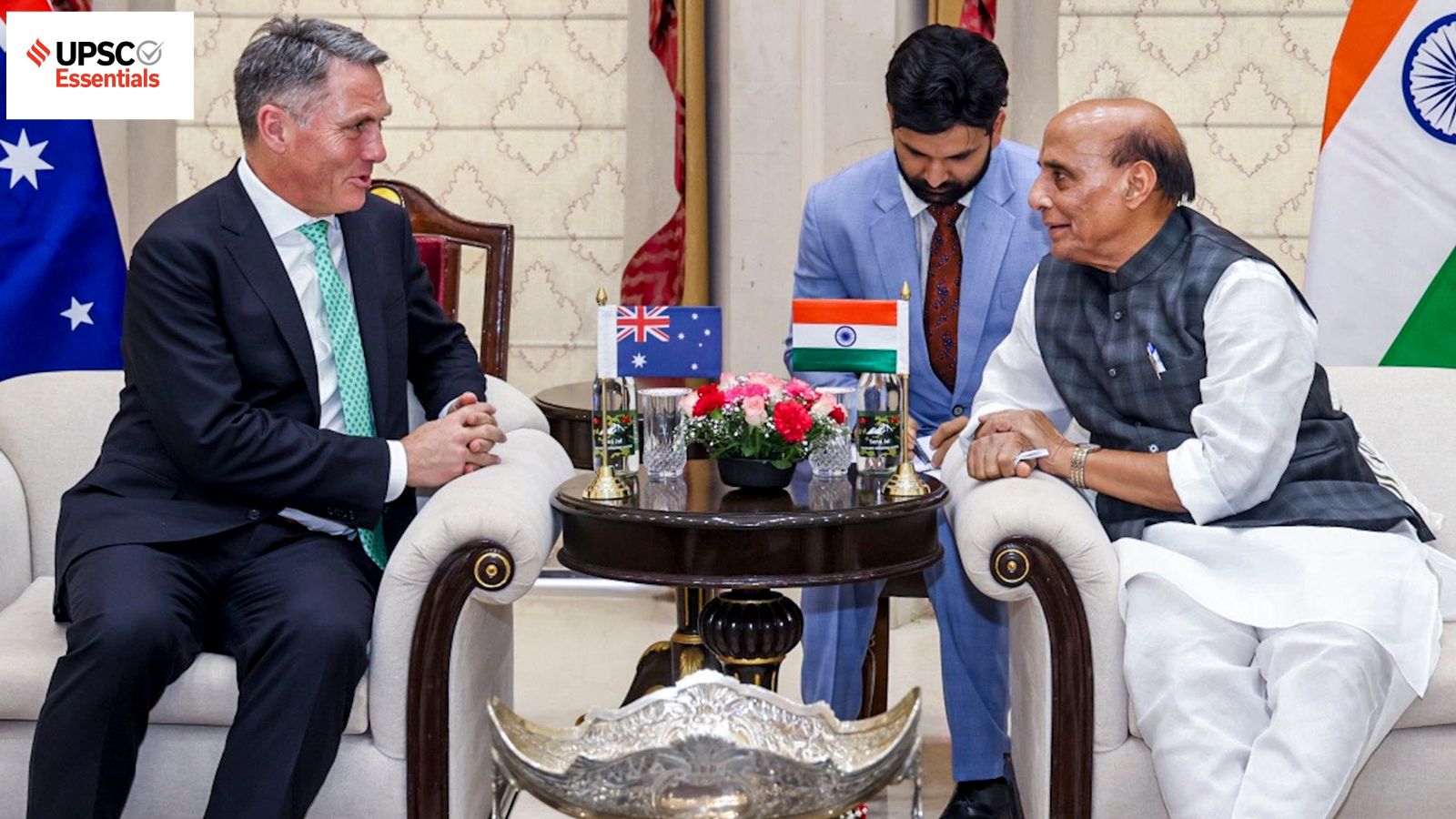
Drivers Behind Strengthening India‑Australia Defence Cooperation
China’s growing naval presence in the Indian Ocean, its assertive activities in the South China Sea, and expanding influence across the Pacific have compelled two like‑minded democracies to align more closely. The partnership, now framed as a Comprehensive Strategic Partnership (CSP), rests on several pillars:
- Joint participation in the Quad, which enhances maritime security, cyber‑defence, resilient supply chains, and disaster‑relief coordination.
- Bilateral exercises such as AUSINDEX and the Malabar naval drill, improving logistics support, interoperability, and maritime domain awareness.
- Co‑development in defence science and technology, fostering industrial cooperation, reciprocal logistics, and shared research initiatives.
Both nations champion freedom of navigation, respect for international law, peaceful dispute resolution, and ASEAN centrality—principles that reinforce a rules‑based Indo‑Pacific order.
Potential Implications of the Proposed FCRA Amendments
The draft amendments to the Foreign Contribution Regulation Act aim to expand executive oversight over foreign funding. Key concerns include:
- Reduced financial autonomy for civil‑society organisations, limiting their advocacy and programmatic reach.
- Stringent approval mechanisms that could deter NGOs from engaging in policy‑critical work.
- Constraints on international donors, potentially weakening development projects and humanitarian assistance.
Such restrictions risk eroding India’s democratic credibility, especially when civil society plays a pivotal role in global dialogues and accountability mechanisms.
Answer‑Writing Guidance for Candidates
To craft a high‑scoring response, candidates should start with a concise introduction outlining the strategic context, follow with a structured body that links cause‑effect dynamics, and conclude with long‑term implications. Emphasising keywords like “strategic autonomy,” “rules‑based order,” and “democratic values” will enhance SEO relevance and align with UPSC’s evaluation criteria.