The fragile cease‑fire between the United States and Iran has collapsed. Washington struck roughly ninety Iranian military sites, while Tehran launched missiles and drones at US‑linked bases in Kuwait, Qatar, Bahrain and Jordan.
The temporary truce that began in April between Washington and Tehran has disintegrated after a fresh round of strikes on July 9. Both sides launched coordinated attacks that broadened the conflict across the Gulf, rekindling fears of a wider regional war.
US Offensive: About 90 Targets Across Iran
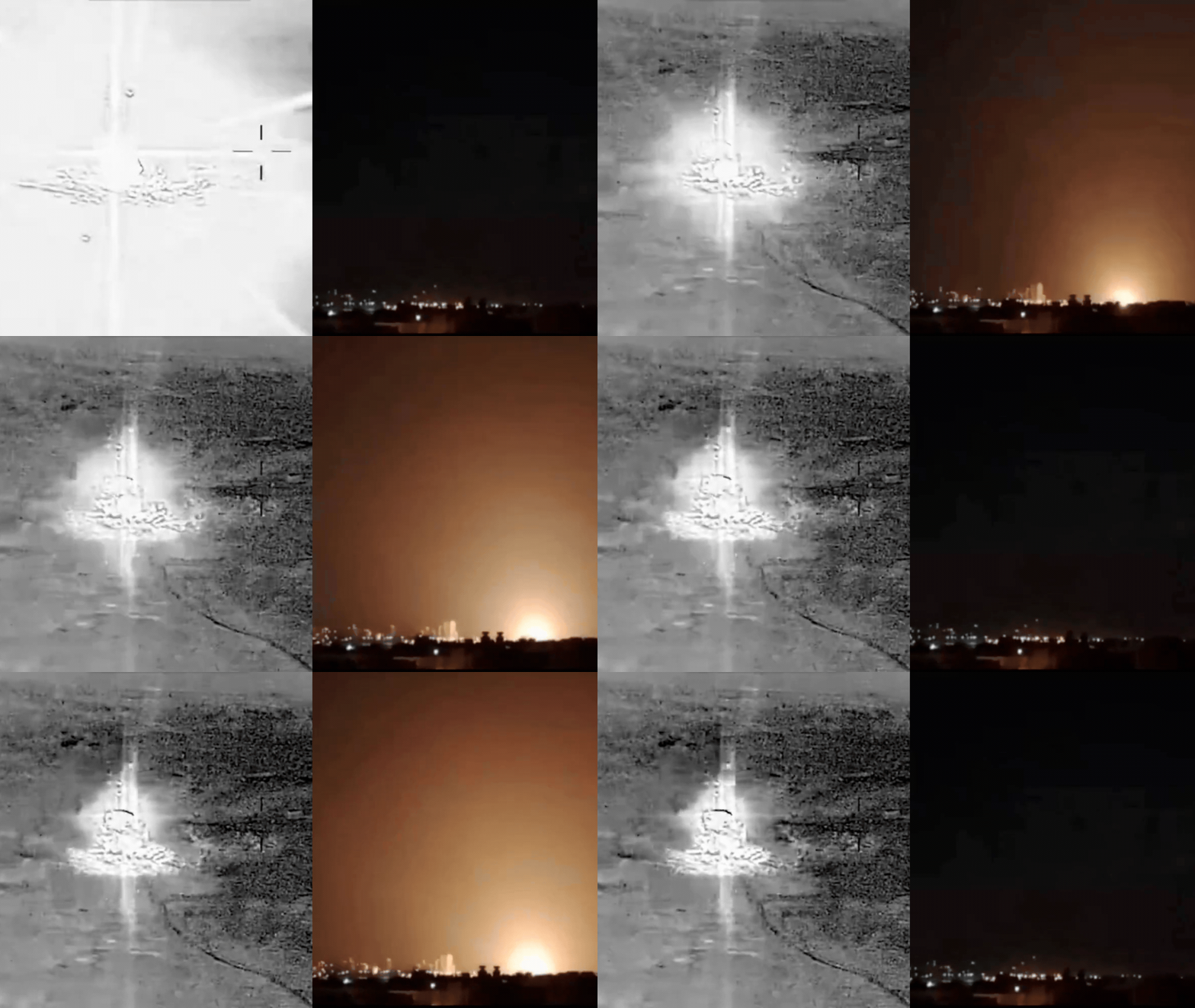
U.S. Central Command (CENTCOM) reported striking approximately ninety military locations inside Iran. The list included air‑defence batteries, coastal surveillance radars, missile launchers, drone storage depots and logistics hubs. In Bushehr province, strikes hit a fishing dock, the perimeter of the Bushehr nuclear power plant – Iran’s sole operational reactor built with Russian assistance – and several other installations, though officials say the reactor itself was unharmed. Explosions were also reported in Bandar Abbas, Iran’s principal southern port overlooking the Strait of Hormuz, where nearby military facilities were hit.
Iranian Counter‑Strike: Targeting US Assets Across the Gulf
Iran responded by firing drones and missiles at US‑linked sites in the region. In Kuwait, Iranian missiles aimed at Patriot air‑defence systems were intercepted after three ballistic missiles, one cruise missile and ten drones were shot down, injuring one civilian from falling debris. In Qatar, Tehran claimed to have struck a US early‑warning station near Al Udeid Air Base – the largest American installation in the Middle East – though damage remains unconfirmed. In Bahrain, a US fuel storage facility supporting the Fifth Fleet was targeted, while in Jordan, ten ballistic missiles were launched at the Azraq military base and a US command centre, both of which were intercepted without casualties.
Context and Potential Fallout
The escalation coincided with Iran’s burial of Supreme Leader Ayatollah Ali Khamenei in Mashhad, following his death in a US strike earlier this year. President Donald Trump declared the interim cease‑fire "effectively over," even as diplomatic channels remain open. Analysts note this is the most significant breach of the truce since its inception, and that continued hostilities could disrupt global oil shipping, spike energy prices, and destabilise an already volatile region.
Outlook
Iran’s warning that any further US intervention will meet a "crushing response" underscores the high stakes. While shipping traffic in the Strait of Hormuz has recovered to roughly half of pre‑conflict levels, mutual distrust is deepening. International actors must urgently push for diplomatic de‑escalation to prevent a broader conflagration.