Indian students and business networks in Australia are reshaping the bilateral relationship beyond cultural clichés. Strategic needs, economic complementarity and institutional frameworks now give the partnership lasting substance.
मुख्य बिंदु (Key Takeaways)
- India‑Australia ties have moved beyond cultural symbols to deep strategic and economic collaboration.
- Institutional mechanisms in education, minerals and maritime security are rapidly maturing.
- Both governments view the diaspora and student community as strategic assets requiring proactive policy.
The western Sydney suburb of Harris Park, founded by 1790s naval surgeon John Harris, quietly embodies the lived reality of the India‑Australia partnership. While most Australians walk past its streets unaware, the community of first‑ and second‑generation Indians illustrates that the relationship’s heart beats in everyday homes, not just in joint statements.
Strategic Imperatives
During a Special Visitors Programme run by Australia’s Department of Foreign Affairs and Trade, the author met parliamentarians, diplomats, think‑tanks and diaspora leaders across Canberra and Sydney. A recurring theme was the Indian Ocean – a strategic corridor vital to both nations. At Parliament House, Tim Watts, Australia’s Special Envoy for Indian Ocean Affairs, stressed that Canberra is not watching India’s rise from a distance; it is actively aligning its policy to engage with New Delhi.
Economic and Technological Cooperation
The inclusion of Australia in the Malabar naval exercises, joint frameworks on critical minerals such as lithium, cobalt and rare‑earths, and India’s “Make in India” manufacturing push illustrate concrete outcomes. Researchers at the Australian National University highlighted that democracies need alternative supply‑chain architectures, and the India‑Australia partnership is emerging as one of the most credible options.
Institutional Architecture and Academic Links
Institutions like the Lowy Institute’s India Chair, the Australia‑India Institute, DFAT’s Centre for Australia‑India Relations and the Australia‑India Business Council create a dense network that survives elections and leadership changes. University partnerships are the most visible expression: the University of Melbourne and Deakin University now operate campuses in India, while Australian campuses host one of the world’s largest Indian student bodies. Assistant Minister for International Education Julian Hill treats Indian students not as a revenue stream but as a human responsibility.
The Role of the Diaspora and Future Trajectory
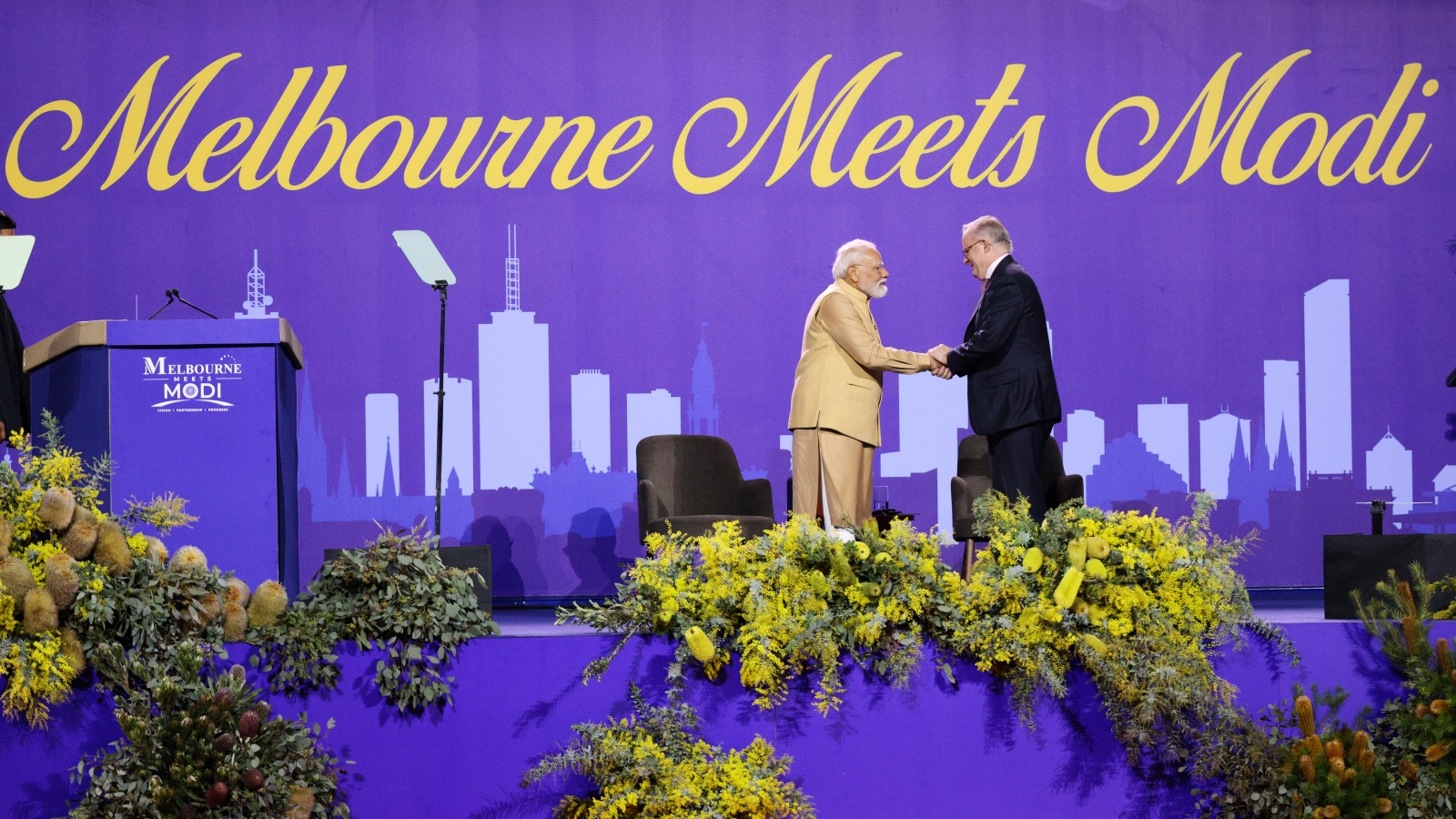
Prime Minister Modi calls the Indian diaspora “Rashtradauts” – living ambassadors. Australian Prime Minister Anthony Albanese echoed this sentiment, even referring to Modi as “boss” in a Sydney event, signalling a relationship where candor has replaced mere courtesy. Parliamentary Friends of India chair Andrew Charlton, author of “Australia’s Pivot to India”, launched his book alongside Albanese, promising to help write the sequel every day in suburbs like Harris Park and Dandenong.
In sum, the India‑Australia partnership has transcended the familiar trio of curry, cricket and Commonwealth. It is now a multi‑layered alliance built on strategic geography, complementary economies and robust institutional frameworks – a model that could shape the broader democratic world order.