A state‑backed geological study flags the 60,000‑MW Medog Hydropower Station, just 50 km from India's Arunachal Pradesh border, as being built atop the active Paizhen Fault. The findings raise serious doubts about the structural safety of the world’s largest hydro‑electric project.
Key Takeaways
- Medog Dam sits directly over the active Paizhen Fault
- Geological instability could trigger landslides and dam failure
- New strain on India‑China water relations
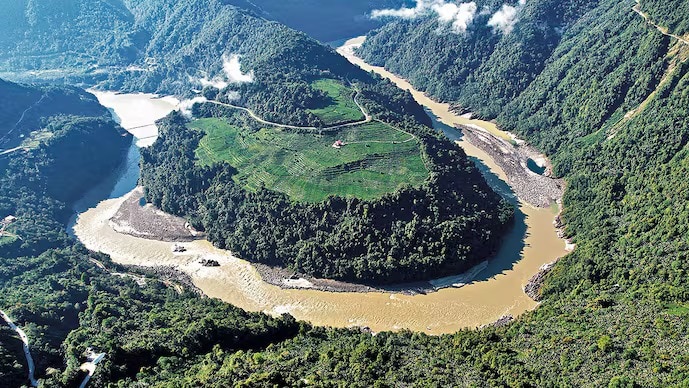
The 60,000‑megawatt Medog Hydropower Station, under construction in Tibet’s Medog County, is slated to become the world’s largest hydro‑electric facility. Located only about 50 km from the India‑China border near Arunachal Pradesh, the dam harnesses the Yarlung Tsangpo—known as the Brahmaputra once it enters India. A recent Chinese state‑funded geological survey has identified the active Paizhen Fault directly beneath the dam site.
Study Findings and Technical Concerns
Researchers from the China Geological Survey, Chengdu University of Technology, and the Middle Yarlung Zangbo River Natural Resources Observation Station published their analysis in the journal Sedimentary Geology and Tethyan Geology. The paper warns that the Paizhen Fault, active since the Pleistocene epoch (over 2.6 million years ago), continues to exhibit tectonic movement. Notably, the fault was implicated in the 6.9‑magnitude earthquake that struck northern Tibet in 2017, underscoring its ongoing seismic potential.
Geological and Environmental Risks
The study notes that repeated fault motion has already fractured the surrounding rock, reducing the foundation’s bearing capacity. When the reservoir fills, prolonged water saturation combined with fault activity could readily trigger landslides and slope collapses. Such events would jeopardize the dam’s structural integrity, downstream communities, and the broader river ecosystem.
Geopolitical Implications
Beyond engineering challenges, the Medog project has become a flashpoint in India‑China water diplomacy. With India recently suspending the Indus Waters Treaty with Pakistan, concerns have risen over Beijing’s ability to control Brahmaputra flows into Indian territory. The new geological warnings add a layer of strategic uncertainty, potentially influencing regional water‑sharing negotiations.
Future Outlook and Recommendations
Experts urge Chinese authorities to conduct a comprehensive geotechnical reassessment and consider redesign or relocation if necessary. Ignoring the fault’s activity could lead to catastrophic failure, amplifying tensions over trans‑border water security. International oversight and risk‑based planning may become essential to prevent a disaster of unprecedented scale.