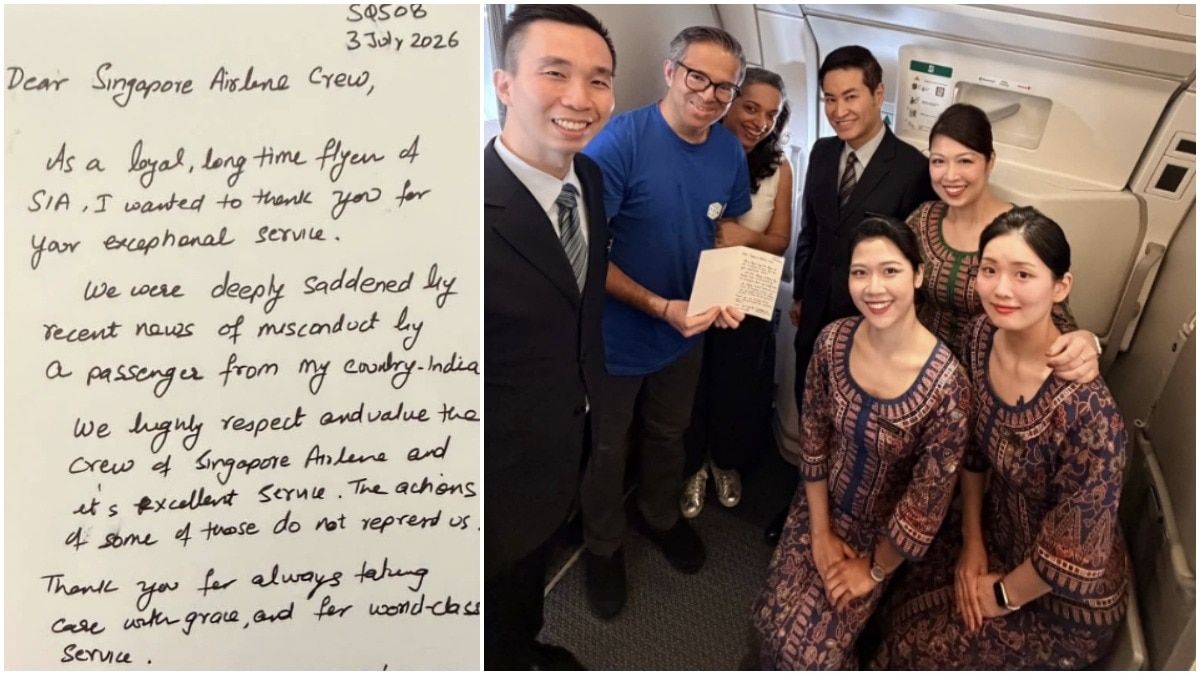
After an Indian passenger was sentenced to jail in Singapore for molesting a Singapore Airlines cabin crew member, a resident Indian in Singapore penned a heartfelt handwritten apology to the airline’s staff, emphasizing that one individual does not represent the nation.
Key Takeaways
- An Indian passenger received a jail sentence in Singapore.
- A resident Indian wrote a personal apology to Singapore Airlines staff.
- The gesture helped separate the act of one individual from the nation’s image.
In July 2026, a Singapore court sentenced 35‑year‑old Indian national Akash Tiwari to six months imprisonment for molesting a Singapore Airlines (SIA) flight attendant and causing her emotional distress. The judgment also ordered him to compensate the victim for trauma and medical expenses. The case sparked heated debate about passenger conduct and airline safety across both countries.
Details of the Misconduct
According to court records, Tiwari inappropriately touched the crew member on two separate occasions, smirked when confronted, and later followed her into the aircraft galley despite repeated requests to stay away, leaving her visibly shaken and in tears. Such behavior raised serious concerns about the enforcement of international aviation standards and the protection of cabin crew.
Response from an Indian Expatriate
Indian audiologist Sharad Govil, based in Singapore, along with his wife, responded to the incident by drafting a handwritten apology note to the airline’s cabin crew. In a Facebook post, Govil wrote, “As Indians and long‑time loyal SIA flyers, we felt it was important to say that this does not represent us, nor the deep respect we have for this airline and its crew.” He highlighted the airline’s consistent warmth and grace towards his family over the years.
Crew’s Reaction and Online Reception
Govil reported that each crew member personally approached the couple to thank them, a response that “completely surprised” them. The crew‑in‑charge later gathered the entire team for a group photograph, underscoring the collective pride in their professionalism. Social media users praised the gesture as thoughtful and dignified, emphasizing that the actions of one individual should never define an entire nation.
Implications for International Relations
This episode illustrates how individual accountability can coexist with broader diplomatic goodwill. By publicly separating an isolated act from the larger Indian community, the apology helped mitigate potential reputational damage and reinforced mutual respect between India and Singapore. Such grassroots initiatives may pave the way for more nuanced dialogue on passenger behavior, airline safety, and cross‑cultural understanding in the global aviation arena.