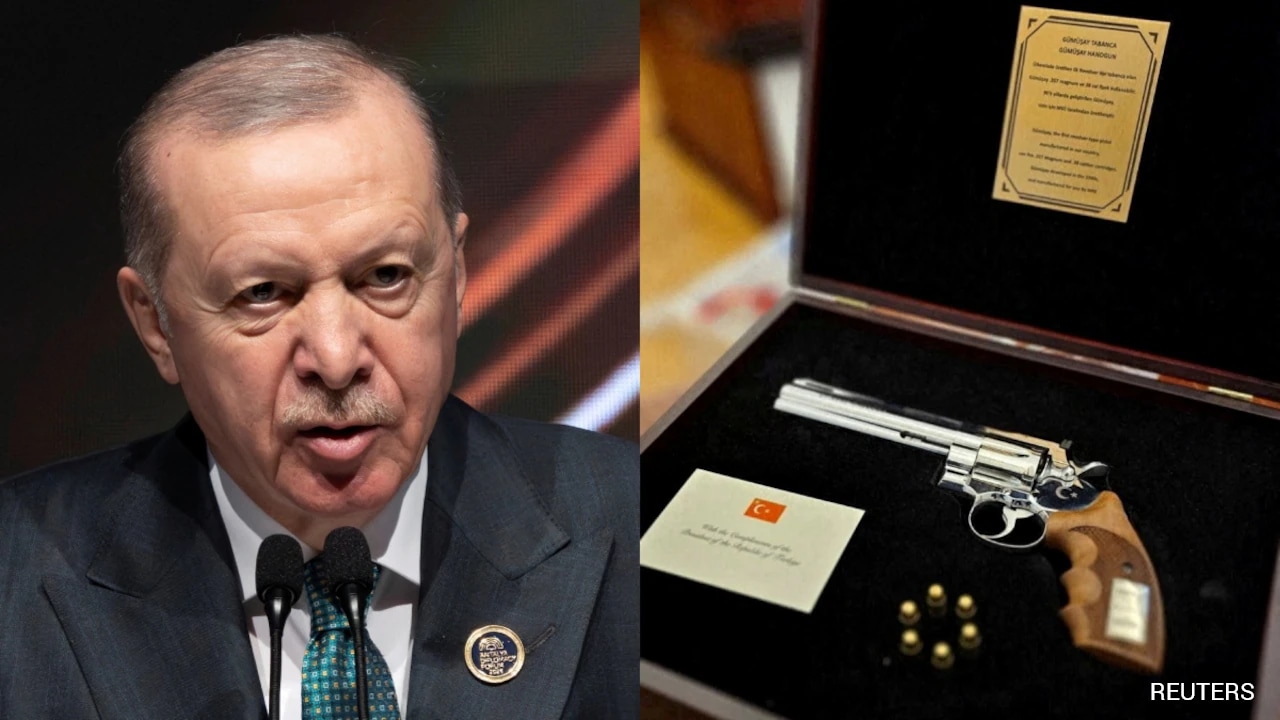
President Recep Tayyip Erdogan presented NATO heads with a unique gift to showcase Turkey’s defence industry – the first domestically produced revolver, ‘Gumusay’. The gesture highlights Turkey’s push for military‑industrial self‑reliance and its strategic outreach within the alliance.
Key Takeaways
- Turkey presented its first home‑made revolver to NATO leaders.
- The gift aims to display the country’s advancing defence manufacturing capabilities.
- It could reshape Turkey‑NATO relations and influence the global arms market.
During a recent NATO summit, President Recep Tayyip Erdogan unveiled a symbolic yet technically significant present – the Gumusay, Turkey’s inaugural revolver‑type handgun. The firearm was displayed in a sleek black‑lined wooden case bearing both the Turkish flag and the NATO emblem. Accompanying the piece was a bilingual placard (Turkish and English) that read, "Gumusay, the first revolver‑type handgun produced in our country."
Background and Development
Over the past decade, Turkey has aggressively expanded its defence industrial base, nurturing domestic manufacturers such as Baykar, Aselsan, and the newly formed Gumusay project. State‑driven investments, technology‑transfer agreements, and a policy of import substitution have propelled the nation toward greater self‑sufficiency. The revolver’s creation is a direct outcome of this strategic push, signalling an ambition to reduce reliance on foreign arms and to become a credible exporter.
Strategic Significance of the Gift
Offering a weapon rather than a conventional diplomatic token underscores a clear message: Turkey wants to be seen not just as a participant, but as a contributor to NATO’s collective security capabilities. Erdogan’s remarks framed the gesture as a testament to the alliance’s shared values and a reminder that Turkish industry can supply cutting‑edge equipment to partners. In the broader geopolitical context, the move seeks to reinforce Turkey’s standing amid recent frictions over procurement and operational autonomy within the alliance.
Potential Implications and Future Trajectory
Should the Gumusay meet performance expectations, it could open new export avenues in regions where affordable, reliable sidearms are in demand – notably the Middle East, North Africa, and parts of Central Asia. Moreover, it bolsters Turkey’s bargaining power in future NATO procurement negotiations, potentially translating into joint‑development projects or technology‑sharing arrangements. Critics, however, caution that a single symbolic presentation does not equate to substantive capability; the true test will be the revolver’s field reliability, after‑sales support, and integration into allied forces.