Prime Minister Narendra Modi became the first Indian premier in four decades to visit New Zealand, where talks centered on the newly signed Free Trade Agreement and a strategic partnership. The visit aims to double bilateral trade by 2030 and reinforce India’s Indo‑Pacific outreach amid rising regional tensions.
Key Takeaways
- Modi’s New Zealand trip marks the first visit by an Indian PM in 40 years, elevating the bilateral relationship to a strategic partnership.
- The India‑New Zealand FTA targets a trade surge from $2.25 billion to $7 billion by 2030, with $20 billion in projected Indian investment.
- Strengthening ties with New Zealand supports India’s Indo‑Pacific strategy, counterbalancing China’s growing influence.
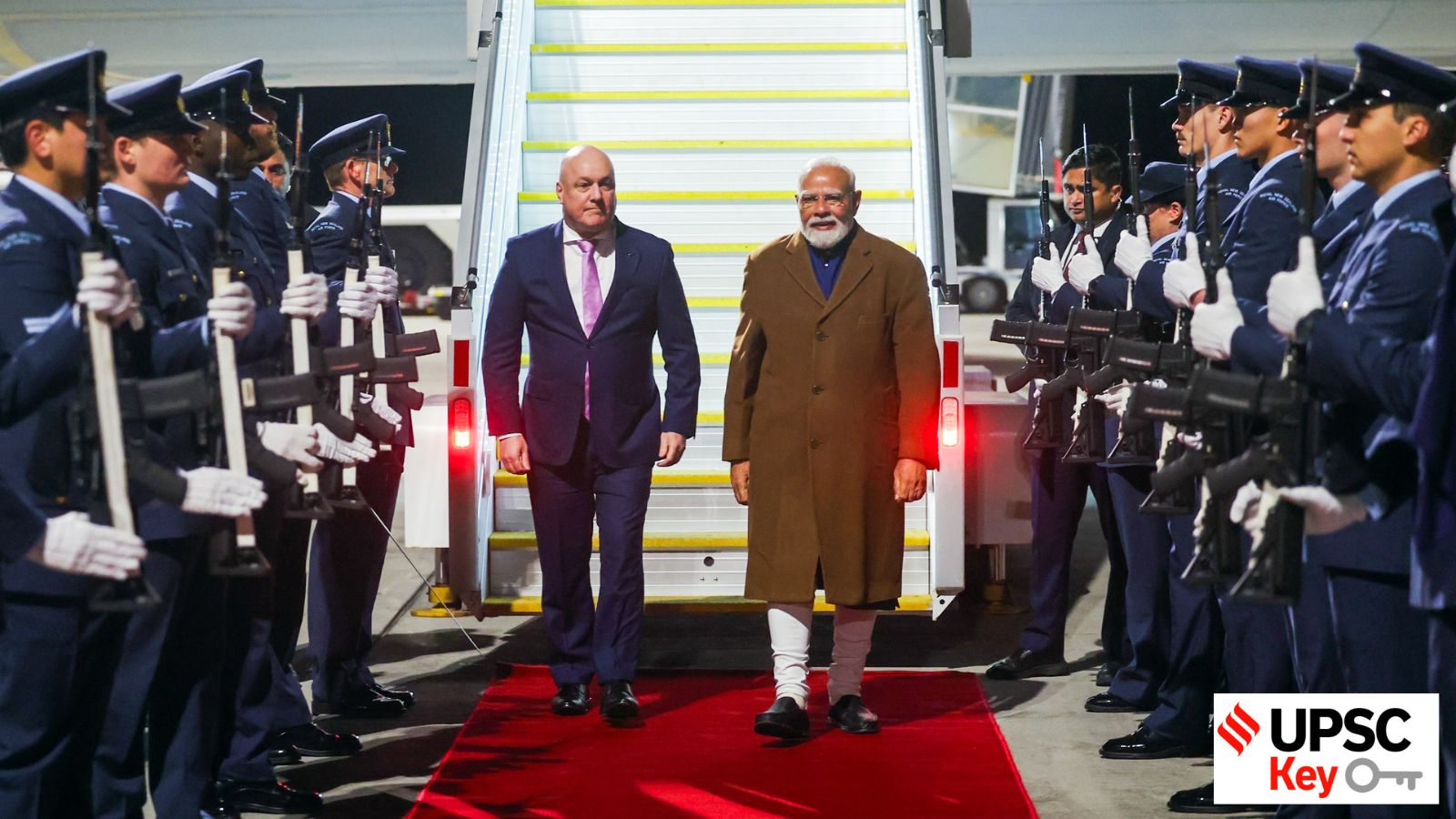
New Zealand Prime Minister Christopher Luxon greeted Prime Minister Narendra Modi at Auckland Airport on Friday, ushering in a historic diplomatic milestone – the first Indian prime ministerial visit to New Zealand in four decades.
Historical Context and Strategic Backdrop
India‑New Zealand relations trace back to the early 1950s, but trade and strategic collaboration have accelerated only in the last twenty years. After initial FTA talks in March 2025 during Luxon’s India visit, both sides signed the Free Trade Agreement in April 2026, completing negotiations in a record 13‑month span. The pact envisions $20 billion of Indian‑bound investment over the next 15 years, underscoring a deepening economic bond.
Trade, Investment and Technology Focus
Current bilateral trade stands at $2.25 billion. The FTA’s near‑tariff‑free framework aims to lift this figure to $7 billion (≈ ₹35,000 crore) by 2030. New Zealand’s R&D spend of roughly 1.5 % of GDP, particularly in dairy, agritech, and high‑performance sports, offers fertile ground for joint innovation. Both governments highlighted cooperation in agriculture, high‑tech start‑ups, and knowledge‑exchange programmes as core agenda items.
Indo‑Pacific Implications
New Zealand seeks to diversify its economic partners beyond its traditional market, creating an opening for India to expand its influence in the Indo‑Pacific. This aligns with Delhi’s broader “Act East” policy, Mahasagar Vision, and the push for a free, open Indo‑Pacific region—critical in the context of China’s assertive moves across the sea lanes.
People‑to‑People Ties
Approximately 300,000 people of Indian origin reside in New Zealand, contributing significantly to the host country’s economy and civic life. Modi’s address to the diaspora underscored the cultural and business linkages that complement official diplomatic efforts.
UPSC Relevance: Kerala Birth Rate & E20
Alongside the diplomatic narrative, the UPSC exam often probes related domestic issues. Kerala’s birth rate, now the lowest in India, raises questions on demographic transition, health policy, and socioeconomic development. Meanwhile, the government’s E20 initiative—promoting 20‑watt electric charging infrastructure—reflects India’s clean‑energy agenda, intersecting with environmental, economic, and technological dimensions covered in the General Studies syllabus.
Understanding the confluence of foreign policy, trade economics, and domestic policy trends is essential for aspirants aiming to answer nuanced UPSC questions that blend international events with internal governance challenges.