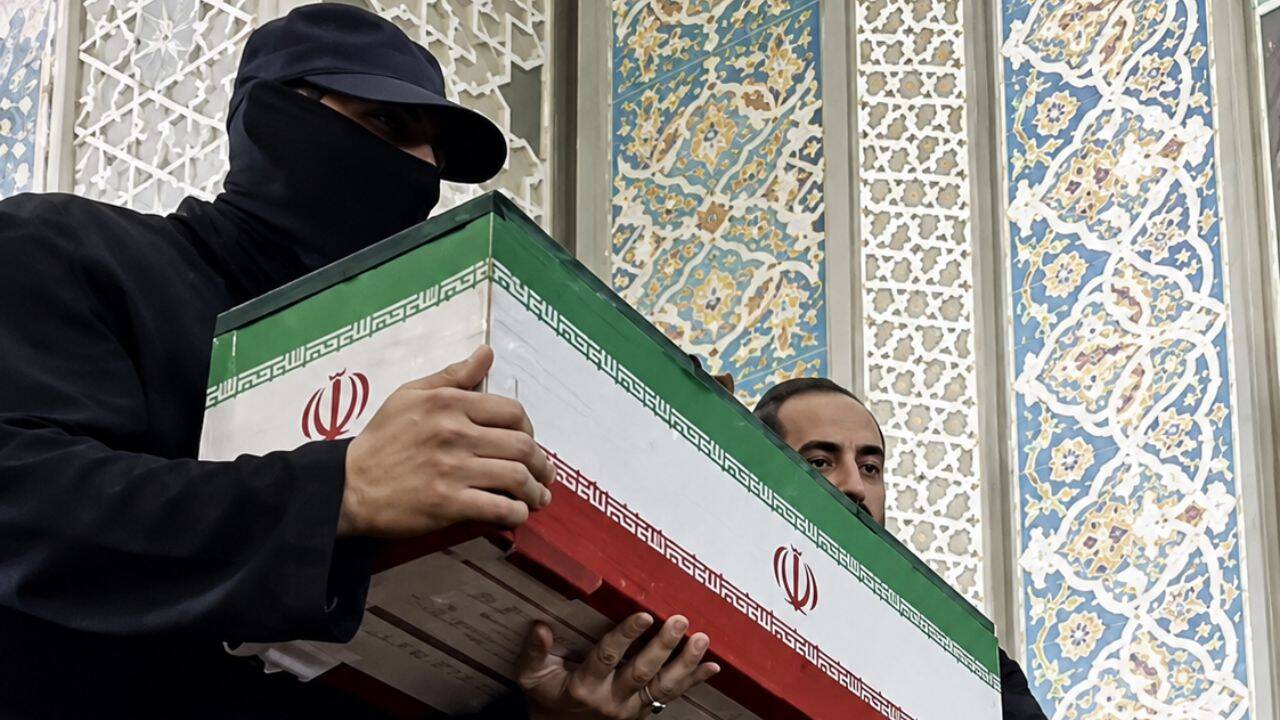
The mysterious masked man seen at Iran's Supreme Leader Ali Khamenei's funeral has been identified as his eldest grandson, Mohammad Javad Khamenei, who was severely injured in the February 28 US‑Israeli strike. The revelation adds new layers to the ongoing speculation around successor Mojtaba Khamenei.
Key Takeaways
- The masked individual at the funeral is Mohammad Javad Khamenei, the late leader's eldest grandson
- Javad suffered severe facial burns in the February 28 US‑Israeli strike that killed Ali Khamenei
- Successor Mojtaba Khamenei remains unseen and silent since assuming office
Following the US‑Israeli strike on 28 February that killed Iran’s Supreme Leader Ali Khamenei, the funeral attracted unprecedented global attention. A figure wearing a baseball cap and a black mask appeared in the front row, prompting widespread speculation that the new Supreme Leader, Mojtaba Khamenei, had finally stepped into the public eye.
Identity Confirmed
Iran International and the Rokna news agency have now clarified that the masked man is Mohammad Javad Khamenei, the eldest grandson of the slain ayatollah. Javad is the son of Mostafa Khamenei, Ali’s oldest son, and sustained severe facial burns during the same strike that killed his grandfather. The mask, therefore, served both to protect his injury‑scarred face and to conceal his identity amid intense media scrutiny.
Why Mojtaba’s Absence Matters
Since taking over in March, Mojtaba Khamenei has neither appeared in public nor released any audio or video message. US intelligence assessments suggest that Mojtaba also suffered disfiguring injuries in the February attack, fueling rumors about his health and whereabouts. His continued silence has amplified intrigue and concern both within Iran and among international observers.
Domestic and International Repercussions
State media reported that up to 43 million viewers across Iran and Iraq tuned in to the six‑day funeral ceremonies, underscoring the deep national mourning. The strike, however, has reignited tensions between Tehran, Washington, and Jerusalem, with analysts warning of a broader regional escalation. The identification of Javad, rather than Mojtaba, underscores the fragile power dynamics inside Iran’s ruling family and hints at a possible re‑configuration of succession narratives.
Looking Ahead
Javad’s visible presence may signal a strategic move to reassure the Iranian public about the continuity of the Khamenei lineage, while Mojtaba’s ongoing concealment suggests a calculated effort to manage internal dissent and external pressure. As Iran grapples with the aftermath of its leader’s death, the funeral episode illustrates how personal trauma intertwines with geopolitical maneuvering, shaping the future of the Middle East’s most volatile arena.