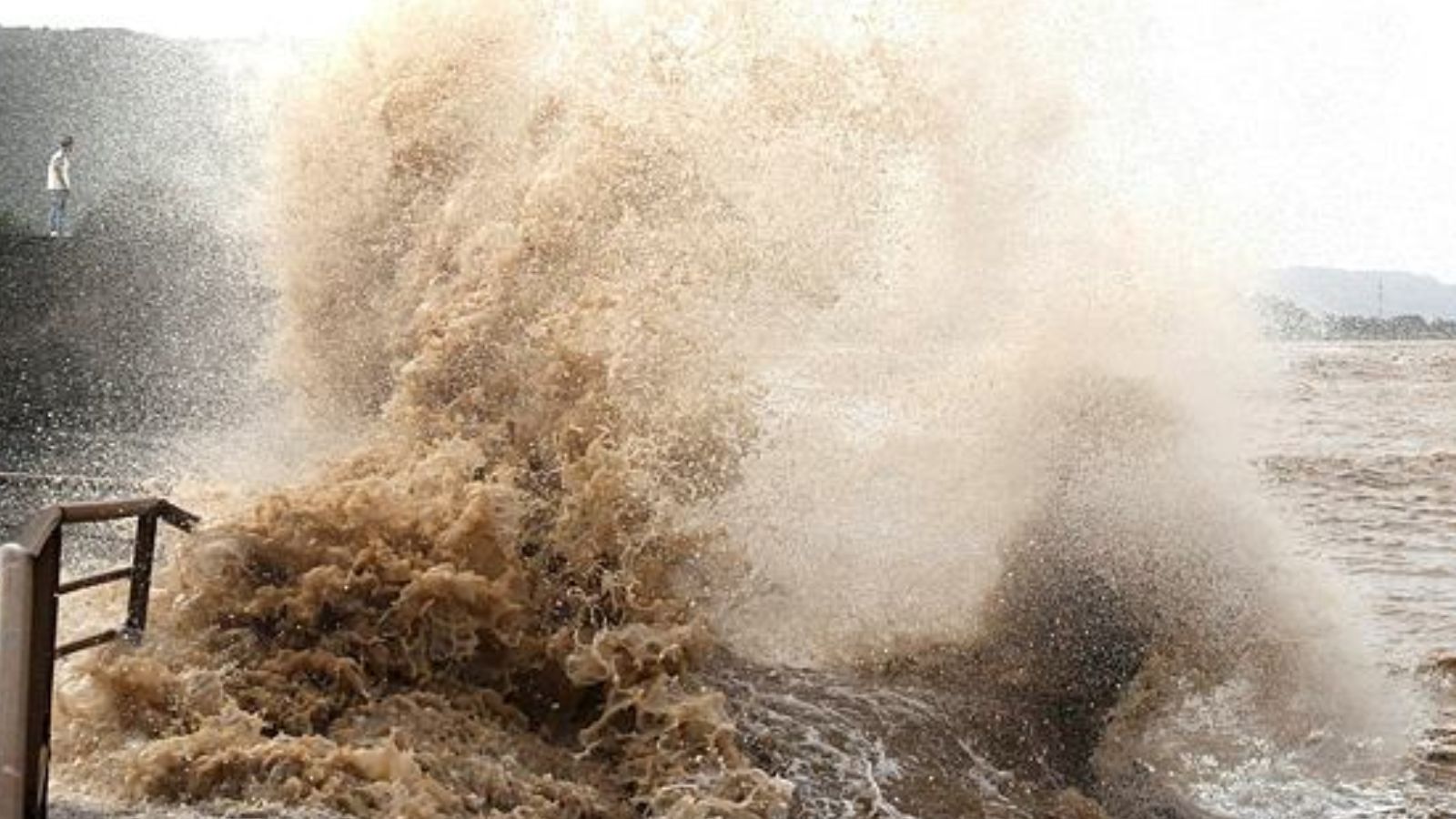
Typhoon Bavi, the most powerful cyclone of 2026, slammed Zhejiang's coastal cities with torrential rain and gale‑force winds. Nearly two million residents were moved to safety while flights, trains and local infrastructure faced massive disruptions.
Key Takeaways (मुख्य बिंदु)
- Bavi is the strongest storm of the year
- About 2 million people evacuated safely
- Significant cancellations of flights, trains and local services
In July 2026, Typhoon Bavi made landfall on China's eastern seaboard, becoming the most intense tropical system to strike the mainland this year. After first touching down in the coastal city of Yuhuan, Zhejiang, around 11:20 pm Saturday, the cyclone surged again into Yueqing, Wenzhou, unleashing winds that ripped off roof tiles, snapped tree branches and flooded low‑lying neighborhoods.
Mass Evacuation and Emergency Response
Authorities orchestrated the evacuation of nearly two million residents, primarily from vulnerable coastal districts of Zhejiang. Emergency crews deployed excavators, chainsaws and portable pumps to clear water‑logged roads and remove fallen trees that blocked critical routes. State broadcaster CCTV reported that more than 1,300 trees were uprooted in Yueqing alone, with over 700 completely torn from their roots.
Human Impact
Taiwan's Transport Ministry confirmed the cancellation of 137 international and 62 domestic flights due to the storm. In mainland China, Hangzhou’s two major railway stations were temporarily shut, while Shanghai saw 1,620 train services and 684 flights called off, as reported by the media outlet The Paper. Local health officials recorded 134 injuries—mostly from motorcycle falls, slips, or falling debris—yet, remarkably, no fatalities were reported.
Historical Context and Future Challenges
Bavi joins a short list of record‑breaking cyclones that have battered China in the past two decades. Climate scientists attribute the increase in storm intensity to rising sea surface temperatures, which fuel heavier rainfall and stronger wind fields. Experts warn that without substantial upgrades to coastal infrastructure, future storms could inflict even greater economic and humanitarian costs.
International Repercussions and Economic Ramifications
The storm’s ripple effects extended beyond China’s borders, disrupting supply chains for electronics, textiles and other export‑driven sectors. The cancellations and delays hint at a looming financial hit, while also underscoring the urgency of global climate‑security policies. As nations grapple with more frequent extreme weather events, Bavi serves as a stark reminder that preparedness must evolve in step with a warming planet.