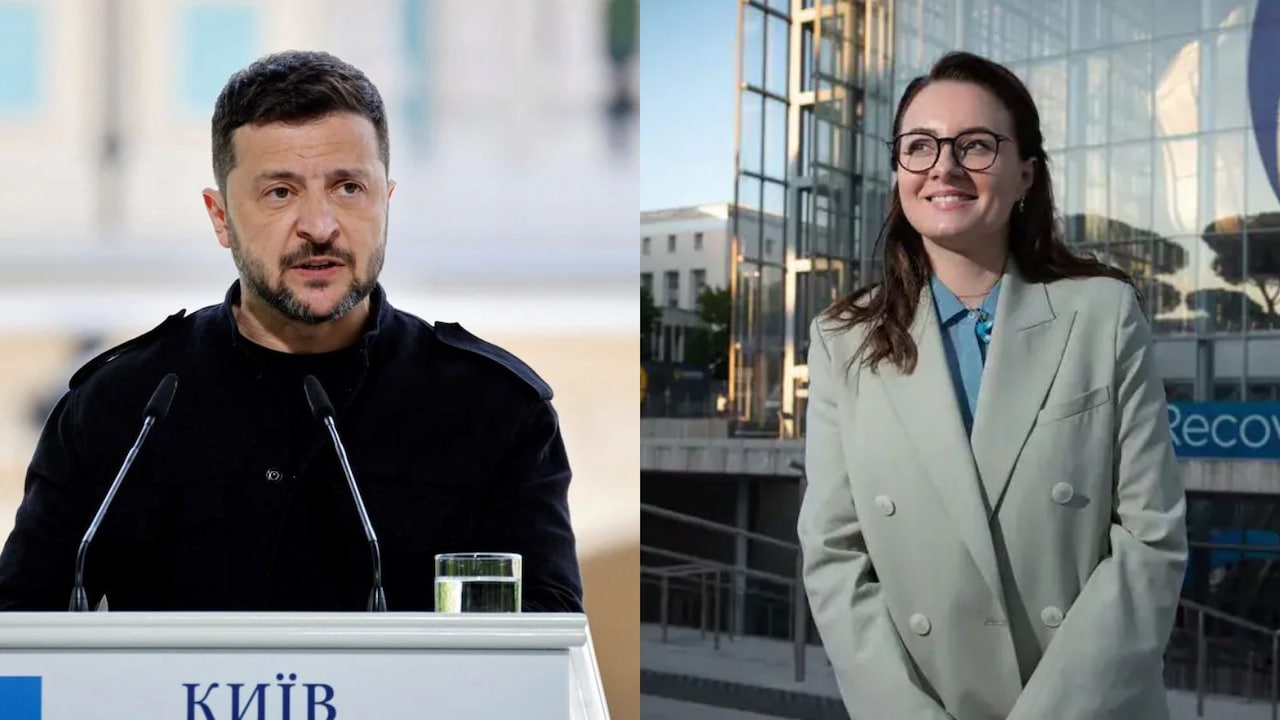
Ukrainian President Volodymyr Zelensky announced a sweeping government reshuffle that includes replacing the prime minister. The move is framed as part of an updated political strategy, though detailed reasons remain undisclosed.
Key Takeaways
- Zelensky proposes a change in the prime minister's office.
- The reshuffle is aimed at implementing an updated political strategy.
- Details are scarce, with international reactions closely watched.
Ukrainian President Volodymyr Zelensky has signaled a major cabinet overhaul, explicitly suggesting the removal of the current prime minister. The announcement, made in early July 2025, follows the appointment of Yulia Svyrydenko earlier that year and reflects a push to align the executive branch with a newly‑crafted political agenda. No further specifics were offered by the president.
Background
Ukraine has endured multiple governmental reshuffles since the onset of the Russian invasion in 2022, each aimed at bolstering wartime governance and economic resilience. The incumbent prime minister, Denys Shmyhal, has served since 2020, overseeing defense budget expansions, anti‑corruption drives, and deeper ties with the European Union and NATO. Yet, evolving battlefield dynamics and domestic fiscal pressures have prompted calls for fresh leadership.
The Updated Political Strategy
Zelensky emphasized that the reshuffle is essential to “ensure the implementation of an updated political strategy.” Analysts speculate that this strategy may prioritize accelerated defense procurement, stricter anti‑corruption measures, and new diplomatic overtures to secure additional Western support. A new prime minister could provide Zelensky with a more pliable partner to execute these objectives without parliamentary gridlock.
Potential Implications
Should the proposal materialize, Ukraine’s parliament (Verkhovna Rada) could see a shift in power dynamics, with opposition parties likely framing the move as a consolidation of executive authority. Conversely, Western allies may view the change as a stabilizing signal, reinforcing confidence in Kyiv’s governance. Russia’s response will also be pivotal, as any perceived weakness could be exploited in its strategic calculations.
Expert Insight
Political analyst Anna Petrova remarked, “This is not merely an administrative swap; it’s a recalibration of Ukraine’s war‑time strategy.” She added that the success of a new prime minister will hinge on balancing national defense imperatives with urgent economic reconstruction. Ultimately, the real impact of Zelensky’s proposal will depend on its timing, execution, and the domestic‑international reception it garners.