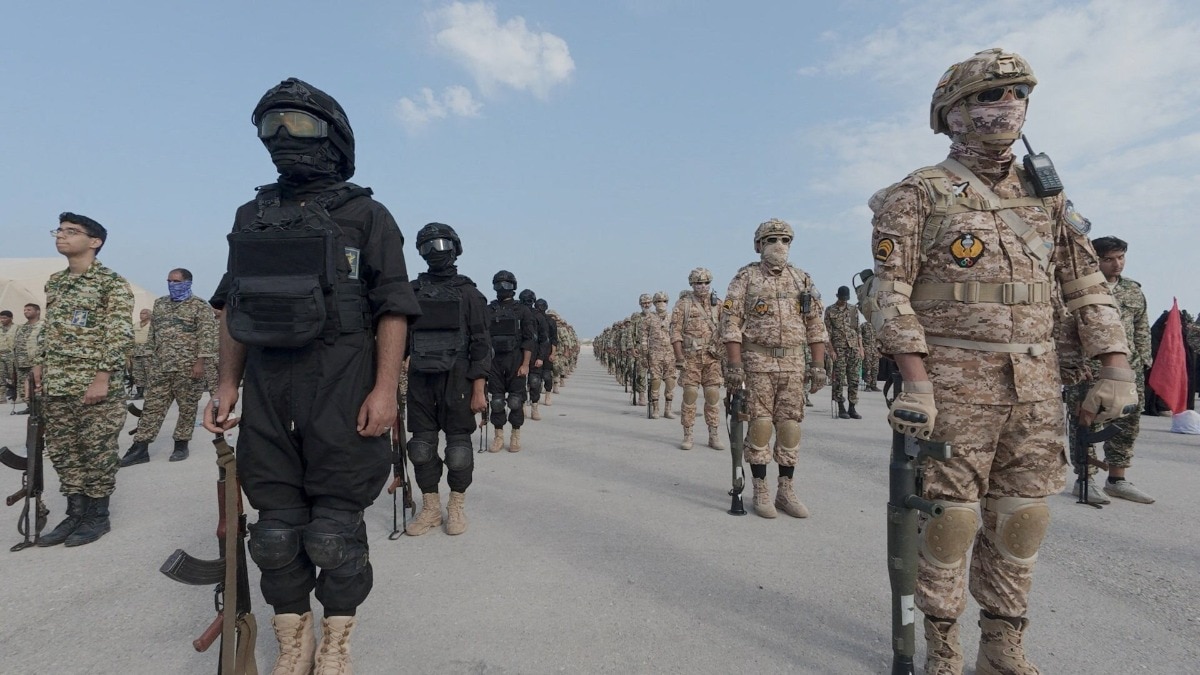
The United Kingdom has officially labeled Iran's Islamic Revolutionary Guard Corps (IRGC) as a terrorist organization, criminalising any support for the group. The decision follows mounting security concerns, including alleged cyber attacks and journalist assassination plots linked to Tehran.
Key Takeaways
- UK classifies IRGC as a terrorist organization and imposes legal bans.
- Decision driven by alleged cyber attacks, journalist killings, and Iranian‑linked threats.
- Move may heighten UK‑Iran tensions and encourage similar actions by allies.
On 13 July 2026, Britain’s Home Office announced that Iran’s Islamic Revolutionary Guard Corps (IRGC) is now formally recognised as a terrorist organization. Under the new ruling, any financial, logistical or ideological support to the IRGC within the United Kingdom constitutes a criminal offence. The measure, long debated in Westminster, is presented as essential to protect national security and British interests abroad.
Historical Context
Formed after the 1979 Islamic Revolution, the IRGC has evolved into one of Iran’s most powerful military and political institutions, wielding influence over the country’s economy, foreign policy, and regional interventions. The United States designated the IRGC as a terrorist group in 2019, while the European Union has historically applied sanctions only to specific IRGC subsidiaries. Britain’s decision therefore marks the first comprehensive European designation, signalling a hardening stance against Tehran‑linked militancy.
Security Rationale Behind the Decision
British officials cited a body of evidence indicating that the IRGC has engaged in activities threatening the United Kingdom’s safety. Notable among these are alleged plots to assassinate two Iranian journalists linked to Iran International, cyber‑intrusion campaigns targeting British critical infrastructure, and support for proxy militias that have carried out attacks on UK interests abroad. These incidents prompted the Home Office to conclude that the IRGC’s operations fall squarely within the definition of terrorist activity.
Expansion of the Sanctions List
Alongside the IRGC, the UK announced plans to add the Islamic Movement of the Companions of the Right (IMCR) and the Russian Federation Volunteer Corps to its prohibited organisations list. The IMCR is alleged to have orchestrated attacks on Jewish community sites within Britain, while the Russian volunteer corps is tied to a wider network linked to Russian military intelligence. This broadened approach reflects a comprehensive strategy to curb both state‑sponsored and extremist threats.
Implications and International Reaction
The designation is likely to exacerbate diplomatic friction between London and Tehran, with Iran historically rejecting external sanctions and warning of reciprocal measures. Moreover, the move may prompt other European capitals to follow suit, increasing economic and operational pressure on the IRGC. Security analysts argue that the decision underscores a shift in Western security policy, prioritising counter‑terrorism and cyber‑defence over traditional diplomatic engagement.
In sum, Britain’s classification of the IRGC as a terrorist entity sends a clear message about its commitment to safeguarding national interests, yet it also opens a new chapter of geopolitical tension in the Middle East.