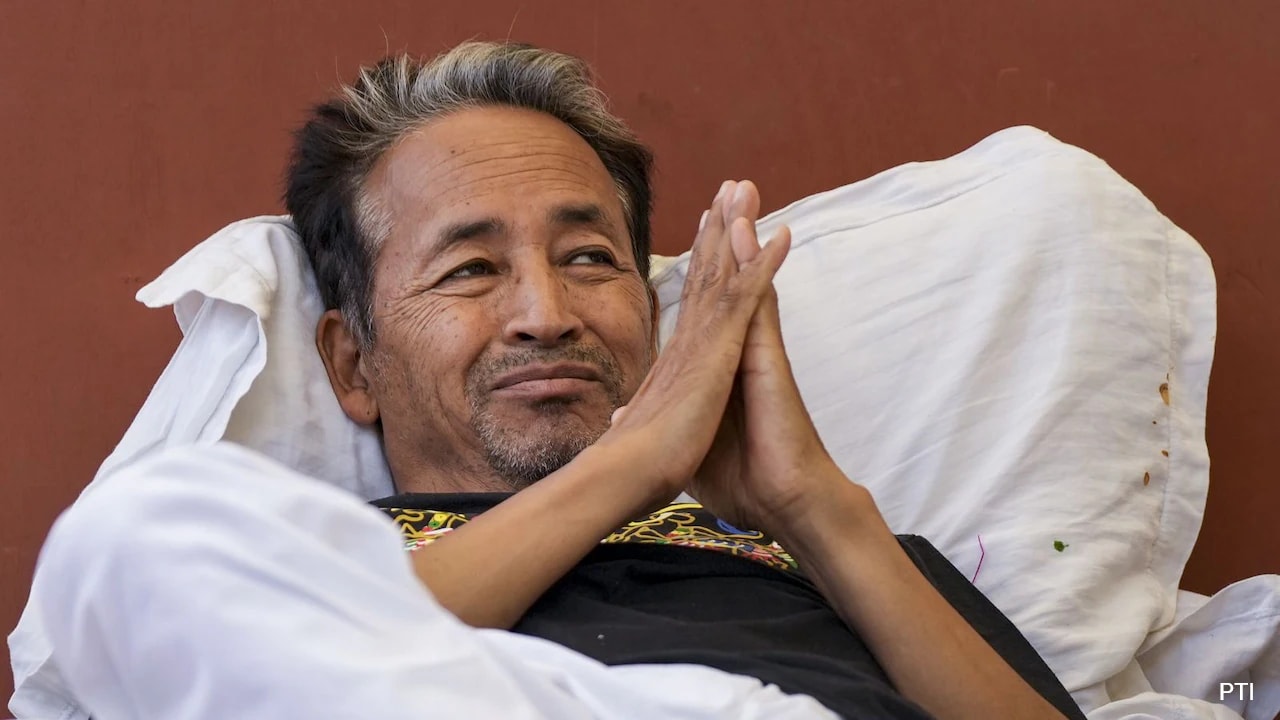
The hospitalization of activist Sonam Wangchuk after a three-week hunger strike has reignited a profound legal debate regarding the limits of state intervention in personal liberties.
Key Takeaways
- Activist Sonam Wangchuk has been hospitalized following a prolonged 3-week hunger strike.
- The case tests the constitutional boundary between personal autonomy and the state's duty to preserve life.
- Legal experts are debating whether forced medical intervention violates fundamental human rights.
The ongoing struggle of renowned environmentalist and innovator Sonam Wangchuk has transcended local activism to become a significant constitutional debate. After enduring a grueling three-week hunger strike, Wangchuk was moved to a hospital on Saturday due to deteriorating health. This development has forced a re-examination of how legal systems navigate the tension between an individual's right to self-determination and the state's mandate to protect life.
The Legal Dilemma: Autonomy vs. Preservation
At the heart of the Wangchuk case lies a complex question: Does the state have the authority to override an individual's will to prevent self-harm, or does such intervention constitute a violation of bodily autonomy? When a citizen engages in a hunger strike as a form of peaceful protest, the judiciary must decide if the 'duty to protect' outweighs the 'right to choose.'
"Courts are often caught in a tug-of-war between the principle of individual dignity and the state's 'Parens Patriae' obligation to protect those in perceived danger."
Why This Matters (इसके मायने क्या हैं)
BozokMedia analysis shows that this case sets a critical precedent for civil liberties in the digital and democratic age. If the state is granted broad powers to intervene in hunger strikes, it could potentially be used to suppress non-violent political dissent by labeling it as a health crisis that requires state management.
Furthermore, for regions like Ladakh, the outcome of this debate affects the political balance between local aspirations and central governance. The way the courts rule will dictate whether the law views a protester as a sovereign individual or a subject requiring state-mandated care, impacting the very fabric of democratic protest globally.
Historical Background
Historically, hunger strikes have been one of the most potent tools of non-violent resistance, famously utilized by figures like Mahatma Gandhi to challenge colonial rule. While the moral weight of the hunger strike is immense, the legal framework has struggled to keep pace. International human rights standards generally protect the right to bodily integrity, yet domestic laws often grant emergency powers to authorities to intervene when a life is deemed to be at imminent risk.
| Perspective | Core Argument |
|---|---|
| Personal Autonomy | Individuals possess the fundamental right to make decisions regarding their own bodies. |
| State Intervention | The government has a legal and moral obligation to prevent loss of life. |
Frequently Asked Questions (अक्सर पूछे जाने वाले प्रश्न)
Question 1: Can the government legally force-feed a hunger striker?
Answer: It is a legal grey area; while the state aims to preserve life, forced medical intervention without consent can be seen as a violation of human rights.
Question 2: What is the primary cause of Sonam Wangchuk's protest?
Answer: He is demanding constitutional protections for Ladakh under the Sixth Schedule to ensure environmental and cultural preservation.