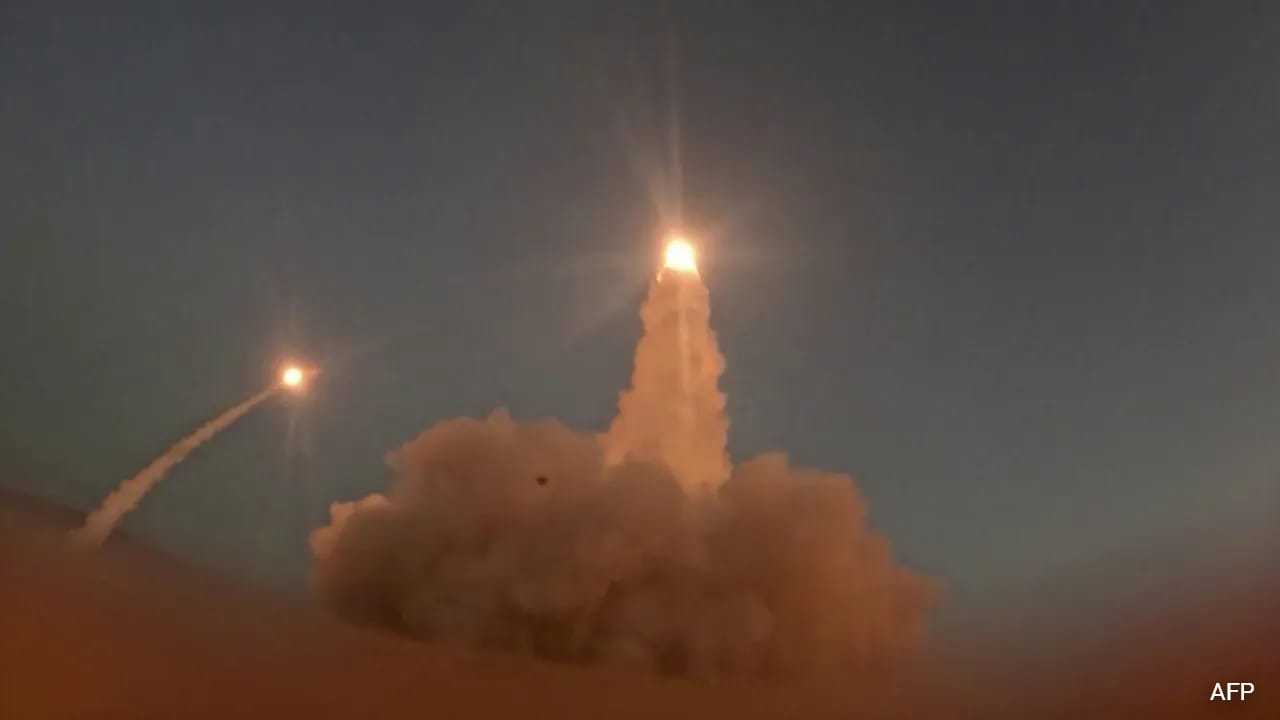
Jordan's military confirmed that its advanced air defense systems successfully downed three missiles launched from Iran targeting the Kingdom. No injuries or structural damage were reported.
The Jordanian Army announced on Monday that its sophisticated air defense systems successfully intercepted and destroyed three missiles originating from Iran. The missiles were reportedly targeting the Kingdom, but the military's rapid response prevented any successful impact on Jordanian soil.
According to official military statements, the interception occurred within Jordanian airspace. Crucially, the military confirmed that there were no reported injuries to civilians and no damage to critical infrastructure, highlighting the precision and effectiveness of the nation's defense protocols during this high-stakes encounter.
Why This Matters (इसके मायने क्या हैं)
BozokMedia analysis shows that this incident underscores the precarious security situation in the Middle East. Jordan occupies a vital geostrategic position, bordered by Israel, Iraq, and Syria. Any failure in Jordan's defense capabilities could have triggered a massive regional conflagration, potentially drawing in global superpowers and destabilizing the entire Levant region.
Furthermore, from an economic standpoint, persistent missile threats in this corridor pose a significant risk to global energy markets. Even a minor escalation can lead to volatility in oil prices and disrupt critical maritime and aerial trade routes that are essential for the global economy. The ability of Jordan to maintain stability is paramount for regional economic predictability.
The successful interception of these missiles demonstrates the critical importance of advanced missile defense technology in modern asymmetrical warfare.
Historical Background
The geopolitical friction between Iran and various Middle Eastern nations has been a defining feature of the region for decades. Iran has long utilized its missile program as a primary tool of strategic deterrence and regional influence. Jordan, while traditionally maintaining a policy of cautious neutrality, finds itself increasingly caught in the crossfire of this 'shadow war.' As missile technology becomes more sophisticated and cheaper to deploy, the reliance on high-tech air defense systems like the Patriot or similar interceptors has become a cornerstone of national security for many Middle Eastern states.
| Feature | Iranian Missile Attack | Jordanian Defense Response |
|---|---|---|
| Objective | Targeting Jordanian Territory | Successful Interception |
| Outcome | Failed Strike | Zero Casualties/Zero Damage |
| Strategic Impact | Increased Regional Tension | Validated Defense Capabilities |
Frequently Asked Questions (अक्सर पूछे जाने वाले प्रश्न)
Question 1: Were there any casualties in the missile attack?
Answer: No, the Jordanian military confirmed that no injuries or deaths occurred as the missiles were intercepted mid-air.
Question 2: What is the current status of the border?
Answer: While tensions remain high, the military remains on high alert to defend against any further aerial incursions.