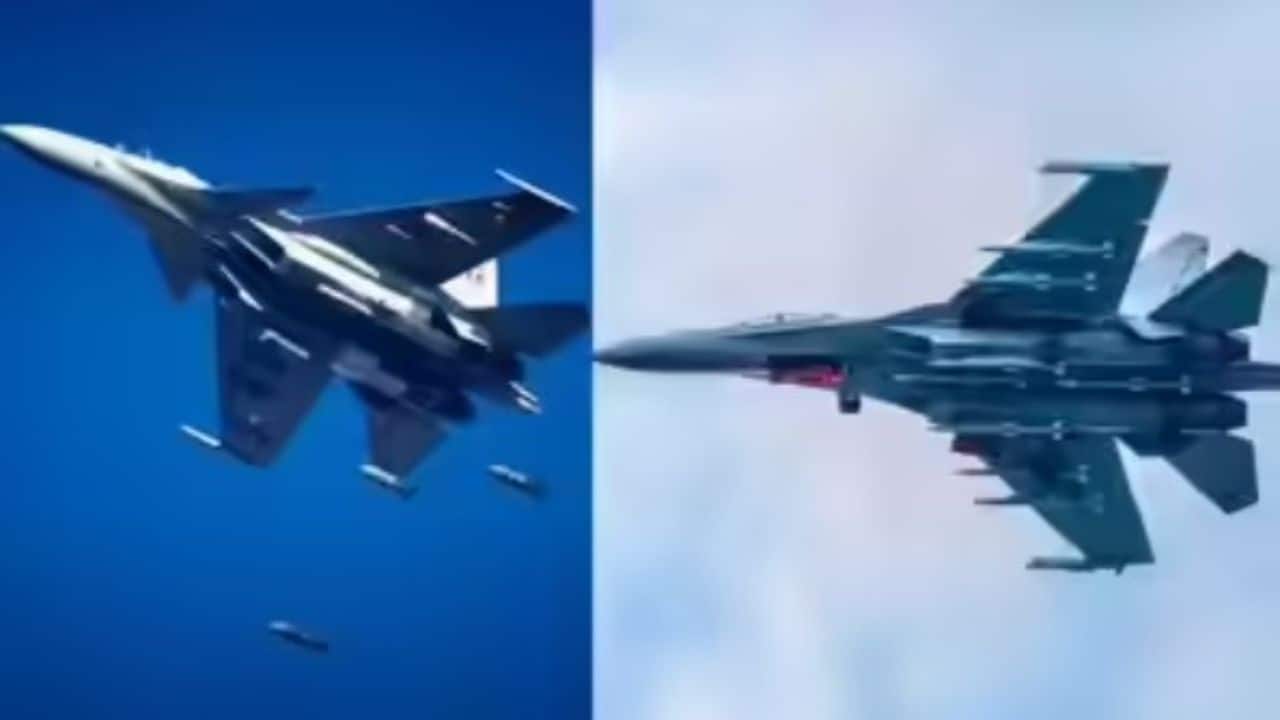
India’s Su-30MKI and China’s J-16 share a Soviet‑era design heritage, yet decades of divergent upgrades have given each distinct strengths. This article compares their avionics, maneuverability, radar and electronic‑warfare capabilities.
Key Takeaways
- Su-30MKI’s superior maneuverability
- J-16’s advanced AESA radar
- Distinct electronic warfare capabilities
Both the Indian Su-30MKI and the Chinese J-16 trace their lineage to the Soviet‑era Su‑27 Flanker family. While the original airframe was procured in the 1990s, each nation has since rebuilt it on its own technological platform, creating two very different “branches” of the same tree.
Design Origins
India partnered with Russia’s Sukhoi to integrate the Su‑30MKI, whereas China bought the Russian Su‑30MKK and transformed it into the J‑16. Both aircraft retain the twin‑engine, double‑delta wing layout and long‑range capability, but subsequent upgrades have taken them on divergent paths.
Divergent Development Paths
China retained the basic airframe but replaced internal systems with domestically produced radar, computers and electronic‑warfare (EW) suites. The result is an indigenous AESA radar that offers superior tracking, resistance to jamming, and extended detection ranges. India, on the other hand, created a multinational “mix‑and‑match” platform – Russian engines and airframe combined with French navigation, Israeli electronics and Indian weapons.
Maneuverability vs Radar
The Su‑30MKI’s greatest advantage lies in its maneuverability. Equipped with canards and thrust‑vectoring engines, it can execute extreme pitch‑and‑roll maneuvers, giving pilots a decisive edge in close‑quarters dogfights. The J‑16 lacks both canards and thrust‑vectoring, limiting its agility in tight combat scenarios. Conversely, the J‑16’s advanced AESA radar provides a longer‑range, higher‑resolution picture, while the Su‑30MKI still operates a legacy PESA radar that is slated for an AESA upgrade under the “Super Sukhoi” programme.
Electronic Warfare and Armament
In the EW arena, the Su‑30MKI uses a hybrid Russian‑Israeli suite, delivering robust defensive jamming and offensive electronic attack capabilities. China has fielded a specialised J‑16D variant focused on disrupting enemy radars and communications. Regarding weapons, the Indian fighter can carry the BrahMos supersonic cruise missile and the home‑grown Astra air‑to‑air missile. The Chinese J‑16 is armed with the PL‑15 long‑range and PL‑10 short‑range missiles, the PL‑15 being one of China’s most sophisticated air combat weapons.
Future Outlook
India’s “Super Sukhoi” upgrade promises a new AESA radar, modernised avionics and potential enhancements to thrust‑vectoring performance. China continues to refine the J‑16’s electronic and radar modules. Ultimately, the aircraft that gains the upper hand will depend on the combat scenario – India’s edge in close‑range maneuverability versus China’s advantage in long‑range detection and electronic warfare.