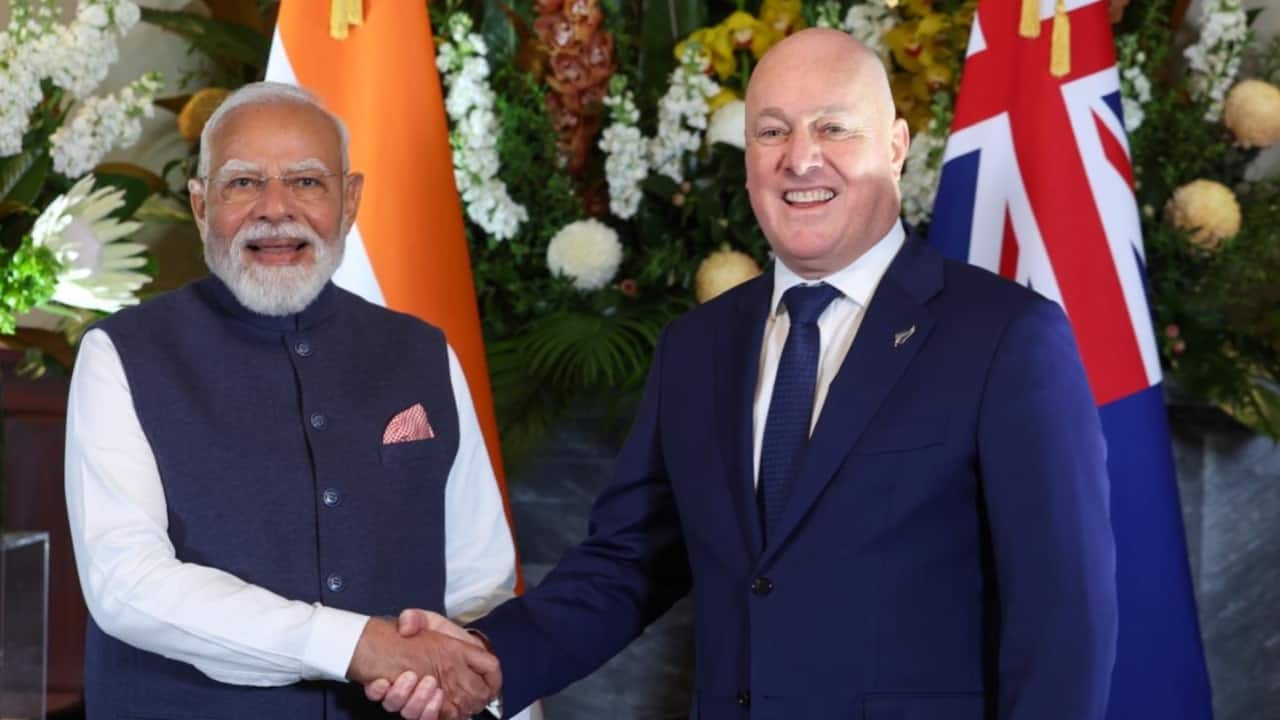
At a business and sports forum in Auckland, Prime Minister Narendra Modi presented the newly‑signed India‑New Zealand FTA as a gateway for investment, technology and talent. He projected a doubling of bilateral trade by 2030 and highlighted a $20 billion investment pledge from New Zealand.
Key Takeaways
- India‑New Zealand FTA concluded in just nine months
- Goal to double bilateral trade by 2030
- New Zealand pledges $20 billion investment over 15 years
Prime Minister Narendra Modi described India as a "launchpad for global growth" at the India‑New Zealand Business and Sports Engagement event in Auckland. The remark came on the heels of a sweeping free‑trade agreement (FTA) that was negotiated in a record‑fast nine‑month window, promising fresh avenues for market access, capital flows, technology transfer, services and skilled‑personnel mobility between the two democracies.
Strategic Context
While trade ties between New Zealand and India date back to the 1970s, the 2026 agreement elevates the relationship to a full‑scale strategic partnership. Eighteen outcome documents were signed, covering defence, maritime security, counter‑terrorism, disaster relief, agriculture, tourism, education and cultural exchange. The move dovetails with India’s broader Indo‑Pacific strategy, positioning New Zealand as a trusted partner in a region where geopolitical competition is intensifying.
Economic Implications
Modi announced that New Zealand has committed to invest $20 billion (≈ ₹1.6 trillion) in India over the next fifteen years, targeting sectors such as renewable energy, digital infrastructure, agri‑tech and the Smart Cities Mission. With a swelling middle class, rapid digitalisation and a massive infrastructure push, India is projected to become the world’s fastest‑growing major economy. Both sides aim to double bilateral trade by 2030, lifting the total to roughly NZ$7 billion (≈ ₹35,000 crore).
Cultural and Social Dimensions
Addressing Māori business leaders, Modi highlighted shared values of respect for nature, community and sustainability, noting that the FTA includes provisions tailored for Māori enterprises. He also pointed to over 8,000 projects under the Smart Cities Mission across 100 Indian cities, inviting New Zealand expertise in urban mobility, water management and waste treatment.
Future Trajectory
The visit culminated in the creation of a Joint Working Group on Counter‑Terrorism, new maritime‑cooperation frameworks, and a Maritime Security Dialogue. A Kiwifruit Action Plan and two Centres of Excellence in Nagaland and Uttarakhand signal deeper agricultural ties. Analysts argue that this partnership could become a template for high‑value, inclusive trade in the Indo‑Pacific, reinforcing India’s role as both a market and a catalyst for global growth.