Beyond their common perception, some snail species exhibit breathtaking beauty with shells adorned in vibrant patterns. This article explores five of the most visually stunning snails on Earth, highlighting how the allure of one, the Cuban painted snail, has tragically made it a target for collectors, pushing it towards endangerment. Conservation efforts are now underway to protect these living masterpieces from disappearing.
- Some snail species possess extraordinary beauty, with shells rivaling tropical birds and butterflies.
- The Cuban painted snail (Polymita) is critically endangered due to excessive collection of its shells for decorative purposes.
- Researchers are actively working to implement conservation strategies for threatened snail species.
- Snail beauty varies from vibrant colors and patterns to elegant shapes and unique biological features.
- Legal restrictions exist on owning certain snail species, like the Albino giant African land snail.
Most people think of snails as small, brown creatures inching across a garden after rain. But some species look as if they’ve been hand-painted, with shells covered in vivid stripes, swirls, spots, and colours that rival tropical birds and butterflies. Some of these can even grow longer than an adult human hand, making them among the largest land snails on Earth, showcasing nature's incredible diversity.
In fact, one group of snails found only in Cuba is so beautiful that scientists say collectors have targeted its shells, putting the species at risk. Researchers from Cuba and the UK are now working to protect these striking creatures before they disappear. This predicament underscores how a species' unique beauty can paradoxically become its greatest threat to survival.
1. Cuban Painted Snail (Polymita tree snail)
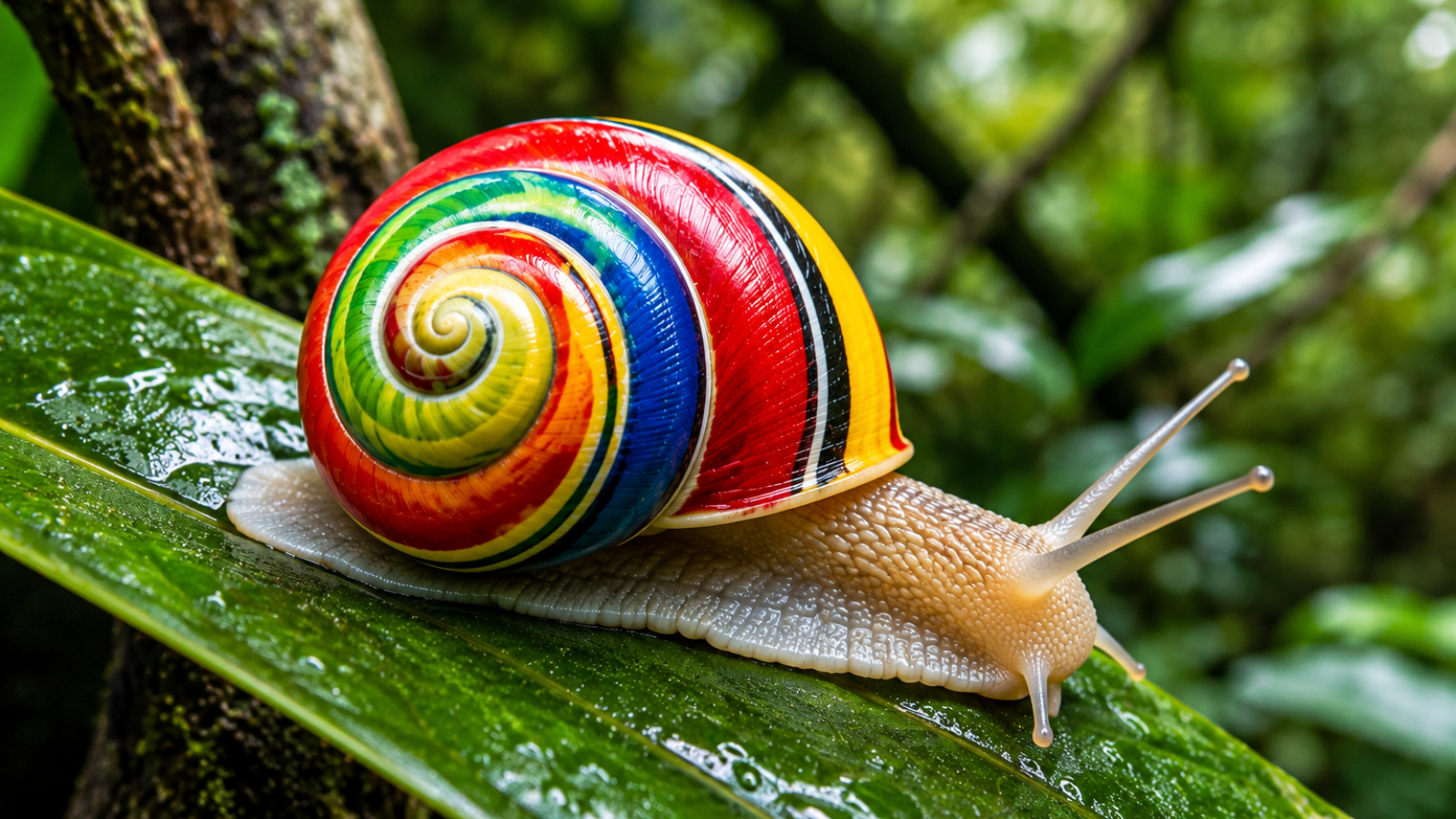
Often called the world’s most beautiful snail, the Polymita tree snail is found only in eastern Cuba. Its shell can feature dazzling combinations of red, yellow, orange, green, blue, and white, making each one look unique. Scientists are especially concerned about these snails because their colourful shells are collected and sold as decorative objects and jewellery. Some species, including Polymita sulphurosa, are considered highly endangered. These tiny wonders are just 20 mm to 30 mm in length, yet their aesthetic value places them in significant peril.
2. Candy Cane Snail (Liguus virgineus)
Native to the Caribbean, the candy cane snail, Liguus virgineus, looks exactly as its name suggests. Its shell is decorated with bright, colourful stripes that resemble a festive candy cane. The tree-dwelling species has long fascinated shell collectors because of its eye-catching appearance and remarkable range of colour patterns, making it a beloved specimen for both naturalists and collectors.
3. Flamingo Tongue Snail (Cyphoma gibbosum)
The flamingo tongue snail may be small, but it is impossible to ignore. Found in the warm waters of the Caribbean and western Atlantic, it appears to be covered in orange-and-black leopard-like markings. Interestingly, the colourful pattern comes from the snail’s living mantle, a layer of tissue that covers the shell. When the animal dies, the shell underneath is plain white, a unique biological feature.
4. Precious Wentletrap (Epitonium scalare)
The precious wentletrap is admired not for bright colours but for its elegant shape. Its shell features perfectly spaced spiral ridges that create a striking staircase-like appearance. For centuries, collectors prized these shells for their unusual beauty, and they were once among the most sought-after seashells in the world. Its historical popularity highlights its distinctive form.
5. Albino Giant African Land Snail (Achatina fulica)
The giant African land snail is already impressive because of its size, but albino varieties are especially striking. Their pale cream or ivory shells and light bodies give them an almost otherworldly appearance. However, it's crucial to note that these snails are strictly illegal to own, sell, or import in countries like the United States, as they can be invasive species and pose significant threats to local ecosystems.
Why This Matters
BozokMedia analysis shows that the plight of the Cuban painted snail serves as a poignant reminder of how human appreciation for natural beauty can inadvertently lead to the destruction of species. The intricate ecosystems these mollusks inhabit play crucial roles, from decomposition to serving as food sources, and their loss can trigger cascading effects. Understanding and addressing the threats to these unique creatures is vital for maintaining biodiversity and ecological balance, underscoring the broader implications of wildlife trade and habitat preservation.
"The aesthetic appeal of species like the Polymita snail often becomes a double-edged sword, drawing admiration but also exploitation, necessitating robust conservation frameworks that combine legal protection with community engagement."
Frequently Asked Questions
Q: Why are Cuban painted snails so sought after by collectors?
A: Their shells exhibit an unparalleled range of vibrant colors and unique patterns, making each specimen a highly prized decorative object or jewelry component, which unfortunately drives illegal collection.
Q: What is the main difference between the Flamingo Tongue Snail and other colorful snails?
A: Unlike many other snails where the shell itself is colored, the Flamingo Tongue Snail's vibrant orange and black spots are actually part of its living mantle tissue that covers the shell, making the shell appear plain white or pale yellow when the animal dies.