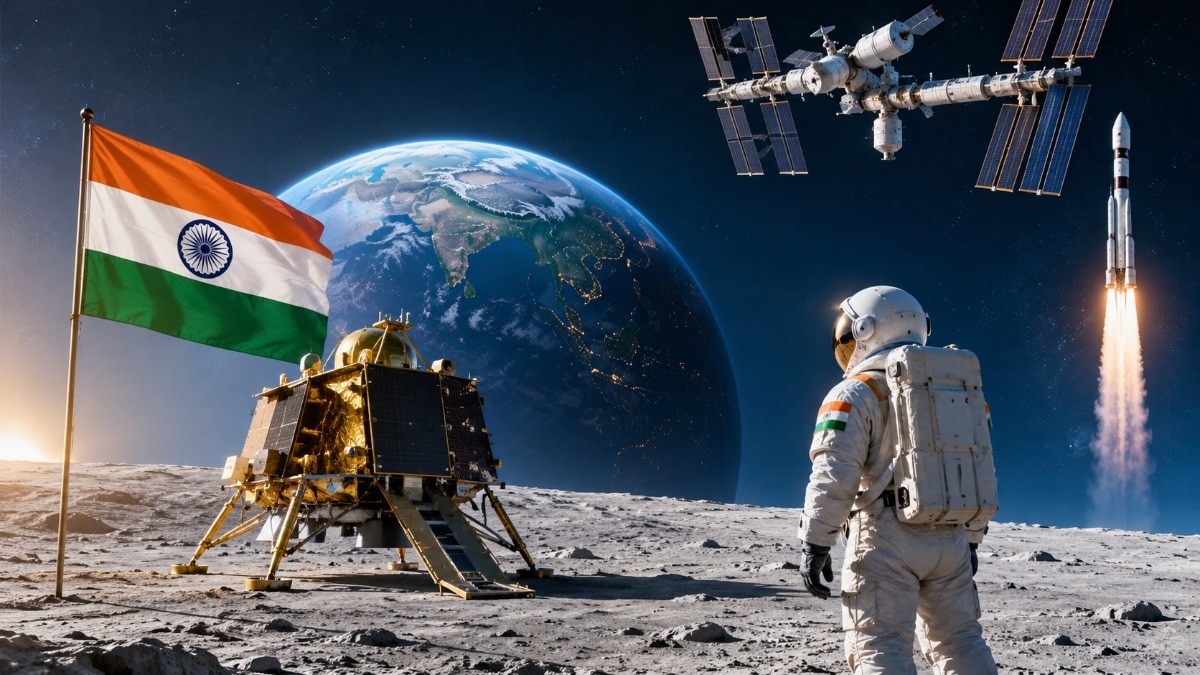
The Indian Space Research Organisation (ISRO) is preparing for its most ambitious phase yet, with the Gaganyaan manned mission scheduled for launch in four months. Following a quiet 2026, ISRO is also targeting a Venus mission and the establishment of India's own space station by 2035.
- ISRO is targeting the first major Gaganyaan test flight within the next four months.
- India plans to establish its own space station, the Bharatiya Antariksha Station, by 2035.
- Mastering space docking technology is crucial for future lunar and deep-space human missions.
From the humble sandy shores of Thumba in 1963 to the threshold of deep space exploration, the Indian Space Research Organisation (ISRO) is preparing for its most monumental leap yet. After a relatively quiet preparatory phase, the Indian space program is gearing up for an action-packed schedule, spearheaded by the landmark Gaganyaan mission, which aims to put Indian astronauts into low Earth orbit.
According to Liquid Propulsion Systems Centre (LPSC) Director V. Narayanan, the space agency is aiming for a critical Gaganyaan lift-off within the next four months. This crewed flight will represent a historic milestone, solidifying India’s status among an elite group of nations—including the United States, Russia, and China—possessing independent human spaceflight capabilities.
A key focus area for ISRO's upcoming missions is the development of autonomous docking technology. Docking allows two spacecraft to align and connect in the vacuum of space, a process vital for transferring crew, fuel, and supplies. ISRO officials have highlighted that mastering this technology is the fundamental gateway to building India's own space station and executing future crewed lunar landings.
Why This Matters
A detailed BozokMedia analysis shows that India's rapid advancement in space technology is not merely a matter of scientific pride, but a calculated geopolitical and economic strategy. By developing indigenous docking systems and heavy-lift capabilities, ISRO is positioning India as a highly cost-effective, reliable hub for global space commerce, challenging traditional Western and Chinese dominance in the commercial satellite launch market.
| Mission Name | Target Year | Primary Objective |
|---|---|---|
| Gaganyaan | 2025/2026 | Send Indian astronauts to Low Earth Orbit (LEO) |
| Venus Orbiter Mission | Late 2020s | Study the atmosphere and surface of Venus |
| Bharatiya Antariksha Station | 2035 | Establish India's permanent space station |
Beyond low Earth orbit, ISRO has set its sights on Venus. The Venus Orbiter Mission (VOM) will study the planet's toxic atmosphere and geological features, marking India's second major interplanetary endeavor after the Mars Orbiter Mission (Mangalyayan). These interplanetary missions are designed to test advanced thermal shielding and long-range communication networks.
"India will establish its own space station by 2035, serving as a stepping stone for our ultimate goal of landing an Indian on the Moon by 2040." — V. Narayanan, ISRO LPSC Director
The historical context of this journey is awe-inspiring. In the early 1960s, India's space program operated out of a church in Thumba, Kerala, where scientists transported rocket parts on bicycles and bullock carts. Today, ISRO utilizes the massive LVM3 rocket and is developing next-generation reusable launch vehicles, showcasing one of the most efficient technological evolutions in modern history.
Frequently Asked Questions
Q1: What is the primary goal of the Gaganyaan mission?
A1: Gaganyaan aims to demonstrate India's human spaceflight capability by launching a three-member crew into a 400 km orbit for a 3-day mission and bringing them back safely to Earth.
Q2: When will India build its own space station?
A2: ISRO plans to launch the first module of the Bharatiya Antariksha Station (BAS) by 2028, with full completion targeted for 2035.