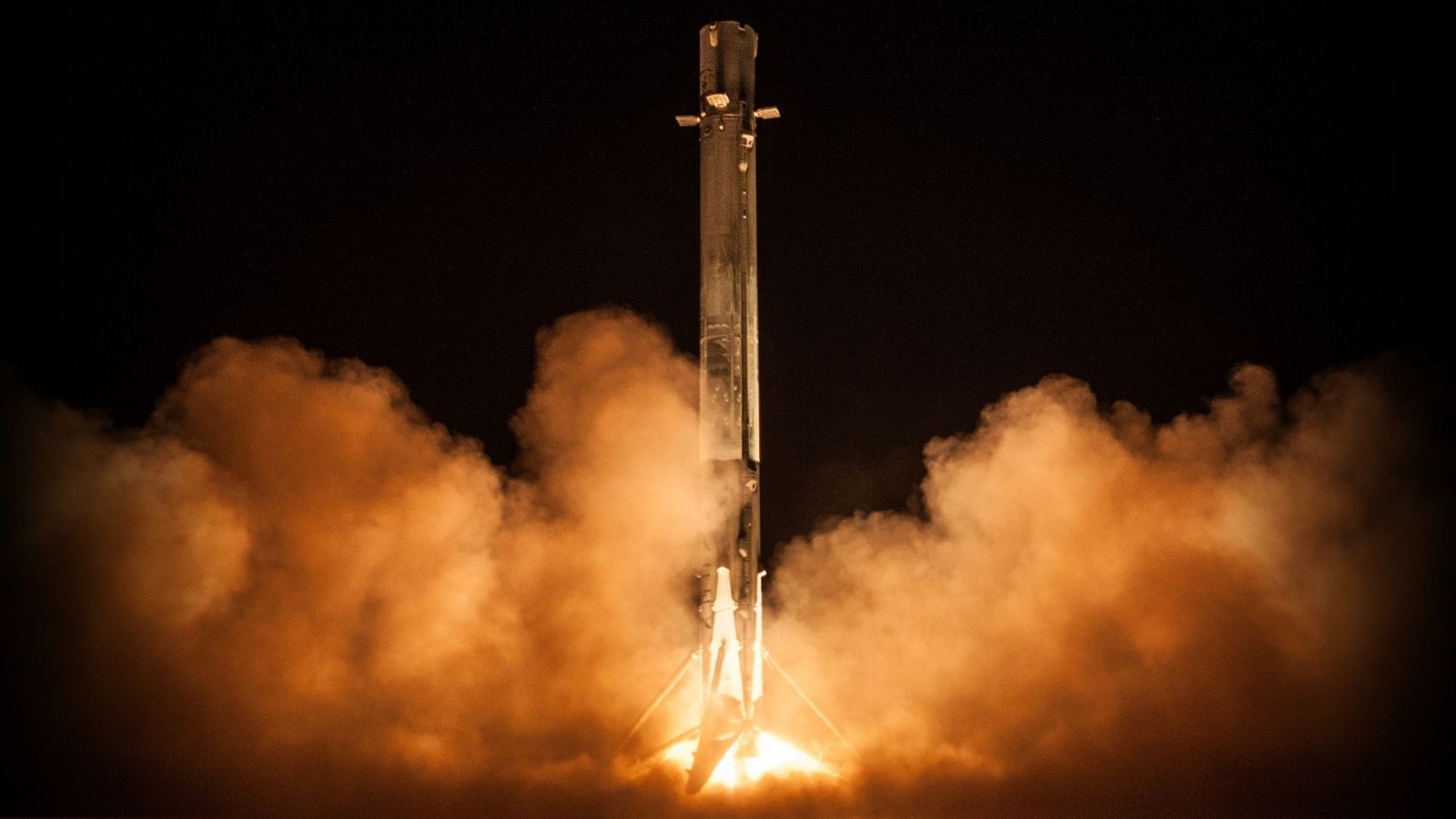
SpaceX has successfully completed its 100th Falcon mission of 2026, deploying another batch of Starlink satellites into orbit. This landmark launch pushes the active Starlink constellation past the 11,000 mark, aligning with Elon Musk's goals and Donald Trump's push for 1,000 annual launches.
- SpaceX successfully completed its 100th Falcon mission of 2026, launching 27 Starlink satellites.
- The total number of Starlink satellites in orbit has officially crossed the 11,000 milestone.
- The launch aligns with political support from Donald Trump, who is pushing for 1,000 launches per year.
In a historic feat that solidifies its dominance in the global aerospace sector, SpaceX has successfully completed its 100th Falcon mission of the year 2026. The milestone mission deployed 27 new Starlink satellites into Low Earth Orbit (LEO). With this launch, the active Starlink constellation has officially surpassed the monumental threshold of 11,000 satellites in orbit, a testament to the rapid scaling of Elon Musk’s satellite internet venture.
The Falcon 9 rocket lifted off from the Cape Canaveral Space Force Station in Florida. Minutes after launch, the rocket's first-stage booster made a precise landing on a drone ship stationed in the Atlantic Ocean. This seamless recovery highlights the mature reusability technology that has allowed SpaceX to maintain an unprecedented launch cadence throughout 2026.
Why This Matters
BozokMedia analysis shows that SpaceX's rapid deployment of Starlink is no longer just a commercial triumph, but a major geopolitical asset. By operating over 11,000 satellites, Starlink has created a near-monopoly on global low-latency satellite broadband, providing critical communication infrastructure to remote regions, maritime vessels, and conflict zones. The scale of this network makes it nearly impossible for traditional competitors to catch up anytime soon.
Furthermore, the political alignment between Elon Musk and U.S. President Donald Trump is set to accelerate this growth. Trump has publicly pushed for SpaceX to reach an astonishing target of 1,000 launches annually. Such a high target would require further deregulation of airspace and launch licensing, a move that could permanently alter the landscape of commercial spaceflight and solidify American dominance in orbit.
"SpaceX’s ability to execute 100 launches before the year's end demonstrates an unprecedented industrial scale in aerospace history, transforming space from a rare destination into a routine highway." - Space Industry Analyst
However, the rapid expansion of the Starlink mega-constellation does not come without controversy. Astronomers worldwide continue to warn that the sheer volume of reflective satellites in orbit is severely interfering with ground-based optical and radio astronomy. Additionally, orbital safety experts have raised alarms about the heightened risk of satellite collisions and the accumulation of space debris in LEO.
| Feature / Company | SpaceX (Falcon 9) | United Launch Alliance (Vulcan) | Arianespace (Ariane 6) |
|---|---|---|---|
| Annual Launch Frequency (2026 Est.) | 100+ Launches | Under 15 Launches | Under 10 Launches |
| Primary Payload Focus | Starlink & Commercial | National Security & Science | European Institutional |
| Reusability | Highly Reusable (First Stage) | Expendable (Future Smart Reusability) | Expendable |
Frequently Asked Questions
Q1: What is the significance of the 100th Falcon launch of 2026?
A1: It marks an unprecedented milestone in commercial spaceflight, proving that SpaceX can sustain a highly rapid, reusable launch cadence that far outpaces any state-run space agency or private competitor.
Q2: How does Donald Trump's 1,000-launch target impact SpaceX?
A2: Achieving 1,000 launches a year would require massive regulatory easing and expansion of launch facilities, potentially giving SpaceX an unchallenged monopoly over orbital logistics and deployment.