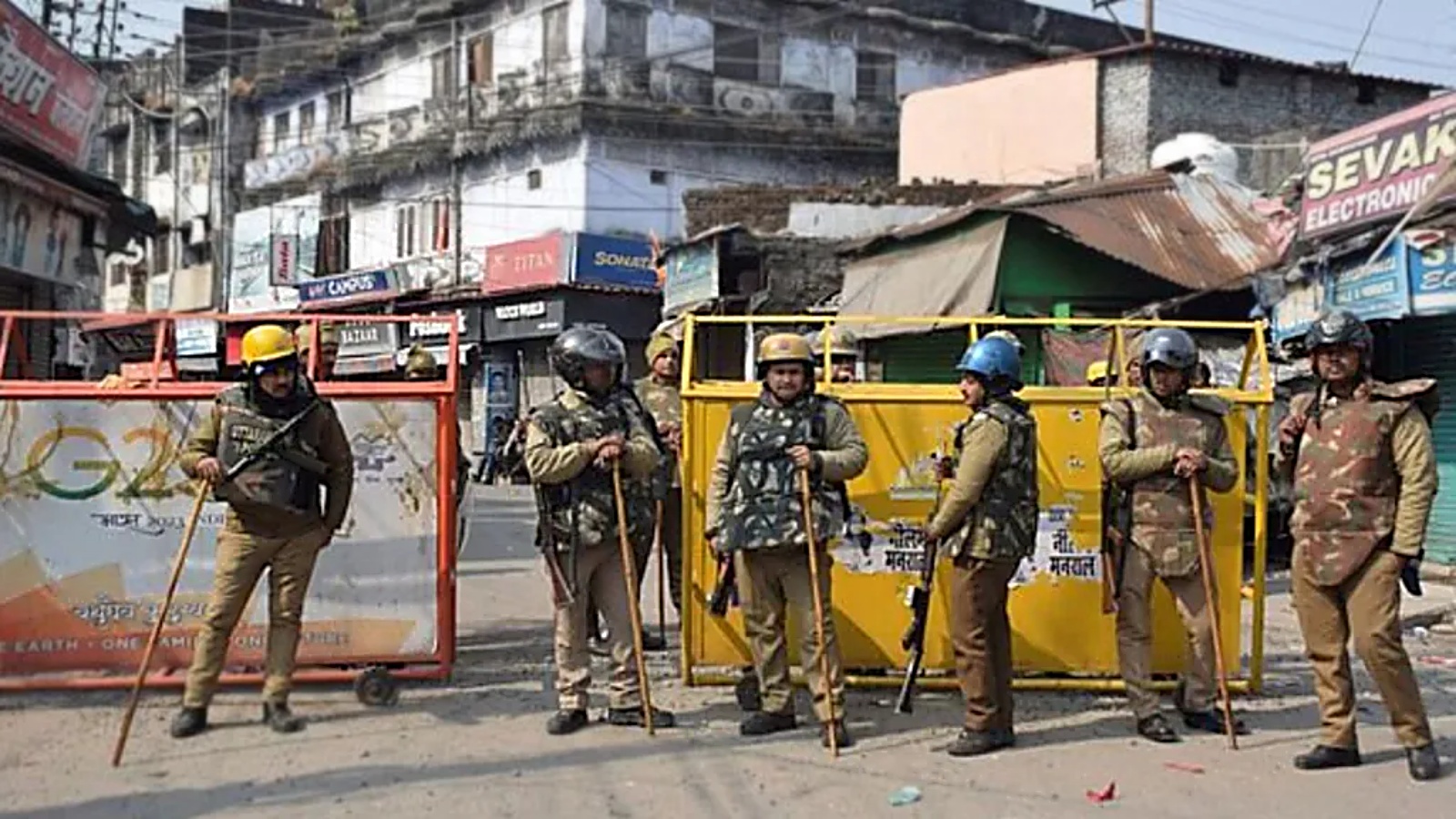
Haldwani's Banbhoolpura area has been turned into a fortress with drones and anti-riot squads as the Supreme Court prepares to deliver a crucial verdict on a massive railway land dispute affecting 50,000 residents.
- Massive police deployment in Banbhoolpura, divided into sectors and zones for surveillance.
- Dispute involves 4,365 alleged encroachments affecting over 50,000 residents.
- Supreme Court to decide on the balance between Railway infrastructure needs and resident rehabilitation.
The city of Haldwani has been transformed into a high-security zone as the state administration braces for the Supreme Court's verdict regarding a long-standing dispute over railway land. The Banbhoolpura area, specifically the localities of Gafoor Basti, Dholak Basti, and Indira Nagar, is now under a specialized police deployment strategy, divided into sectors, zones, and super zones to prevent any potential unrest.
Senior Superintendent of Police (SSP) Manjunath TC confirmed that additional forces from across Uttarakhand, including multiple companies of the Provincial Armed Constabulary (PAC), have been mobilized. The security apparatus includes tear-gas squads, anti-riot units, and high-tech drone surveillance teams to monitor the sensitive pockets of the city. The Local Intelligence Unit (LIU) and wireless communication teams are also on high alert to ensure seamless coordination between units.
Why This Matters
BozokMedia analysis shows that this is not merely a land dispute but a complex humanitarian crisis. With over 50,000 people residing in the disputed area—including students of 11 private schools, 3 government schools, and worshippers of 10 mosques and 12 madrassas—any eviction order could trigger massive social instability. The tension stems from the clash between the state's infrastructure goals and the fundamental right to shelter for thousands of families who have lived there for generations.
The legal battle in Haldwani represents a classic conflict between administrative land records and the lived reality of urban settlements in India.
The roots of the conflict trace back to illegal sand mining proceedings in the Gaula River, which eventually brought the railway land encroachments to light. A 2016-17 joint survey identified 4,365 unauthorized structures. While the Railways relies on a 1959 notification and 1971 records, residents point to a 1907 record claiming the land was 'nazul land'—government land historically allocated for private settlement.
The Railways argue that the land is critical for the expansion of the Haldwani Railway Station, citing the need for additional platforms, washing pits, and sick line sheds for coach repairs. Furthermore, they have raised concerns regarding the vulnerability of infrastructure near the Gaula river banks.
| Entity | Primary Argument | Key Evidence |
|---|---|---|
| Indian Railways | Infrastructure expansion & safety | 1959 Notification, 1971 Records, 2016 Survey |
| Local Residents | Generational occupation & Nazul status | 1907 Government Records, Property documents |
In February 2026, the Supreme Court issued a substantive order stating that occupants cannot claim an indefinite legal right to the land. However, the court also mandated a rehabilitation plan, though it explicitly stated that residents cannot insist on being rehabilitated at the same site.
Frequently Asked Questions
1. Who is affected by the Haldwani railway land dispute?
Over 50,000 residents across Gafoor Basti, Dholak Basti, and Indira Nagar, including various schools and religious institutions.
2. What does the Railway department want to build on the land?
The Railways plan to build additional lines, platforms, coach washing pits, and repair sheds to expand station capacity.