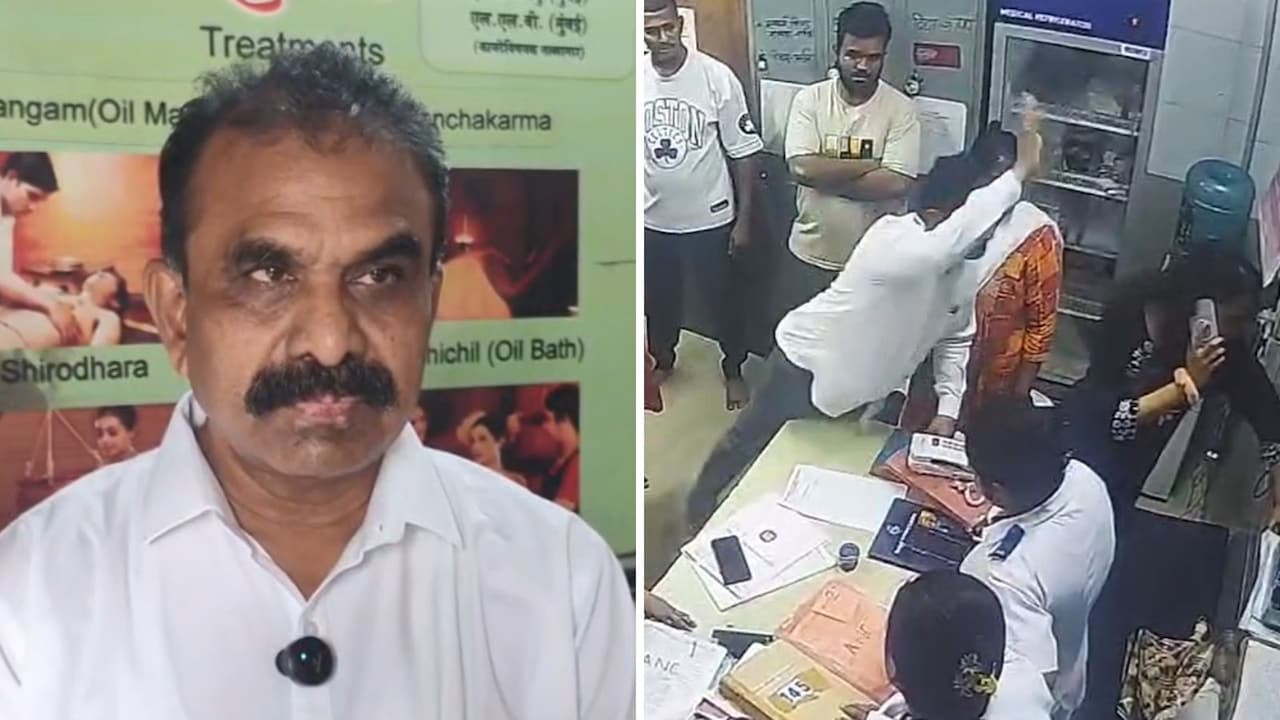
Dr. Srishti Baviskar and colleague Dr. Vaibhav Salunkhe were violently attacked by a local Sena corporator, raising concerns over the safety of medical professionals. The doctor’s father, Mahendra Baviskar, told reporters that his family is still reeling and unable to sleep.
Key Takeaways
- Political figure’s violent assault on Dr. Srishti Baviskar
- Father Mahendra Baviskar’s emotional response and demand for justice
- Implications for medical safety and democratic governance
In a shocking incident at a Mumbai hospital, Dr. Srishti Baviskar and her colleague Dr. Vaibhav Salunkhe were attacked by a local Sena corporator, leaving both doctors in a state of severe shock. Immediately after the assault, Mahendra Baviskar, the father of Dr. Srishti, addressed reporters, describing his daughter’s inability to sleep and the lingering trauma affecting the entire family.
Background and Incident Details
Dr. Srishti Baviskar is a young physician renowned for her community health initiatives and her outspoken advocacy for better public healthcare infrastructure. Her colleague, Dr. Vaibhav Salunkhe, shares a similar dedication to patient care. Both doctors had reportedly received threatening messages in recent weeks, reflecting a rising tension in the local political climate that has increasingly targeted professionals perceived as critics of the ruling party.
Political Context and the Sena Corporator
The alleged assailant is a sitting corporator from the Shiv Sena, a party known for its strong regional influence in Maharashtra. This incident mirrors a disturbing pattern of political intimidation that has surfaced in several municipal jurisdictions, where power struggles over budget allocations and development projects often spill over into personal vendettas. The attack occurred amidst heated debates over municipal funding for hospital expansions.
Legal Response and Demands for Accountability
Law enforcement agencies promptly opened a case and detained the corporator for questioning. Mahendra Baviskar has called for swift judicial action, urging the courts to impose stringent measures to protect doctors from future threats. He emphasized that the safety of healthcare workers is a matter of public interest, and any lapse could jeopardize the entire health system’s credibility.
Broader Implications for Society
This assault underscores a growing risk to the nation’s medical workforce, potentially deterring qualified professionals from serving in public hospitals. It also raises urgent questions about the intersection of political power and personal safety. If unchecked, such incidents could erode public trust in democratic institutions and amplify civil unrest, making it imperative for policymakers to enact robust protection mechanisms for frontline workers.