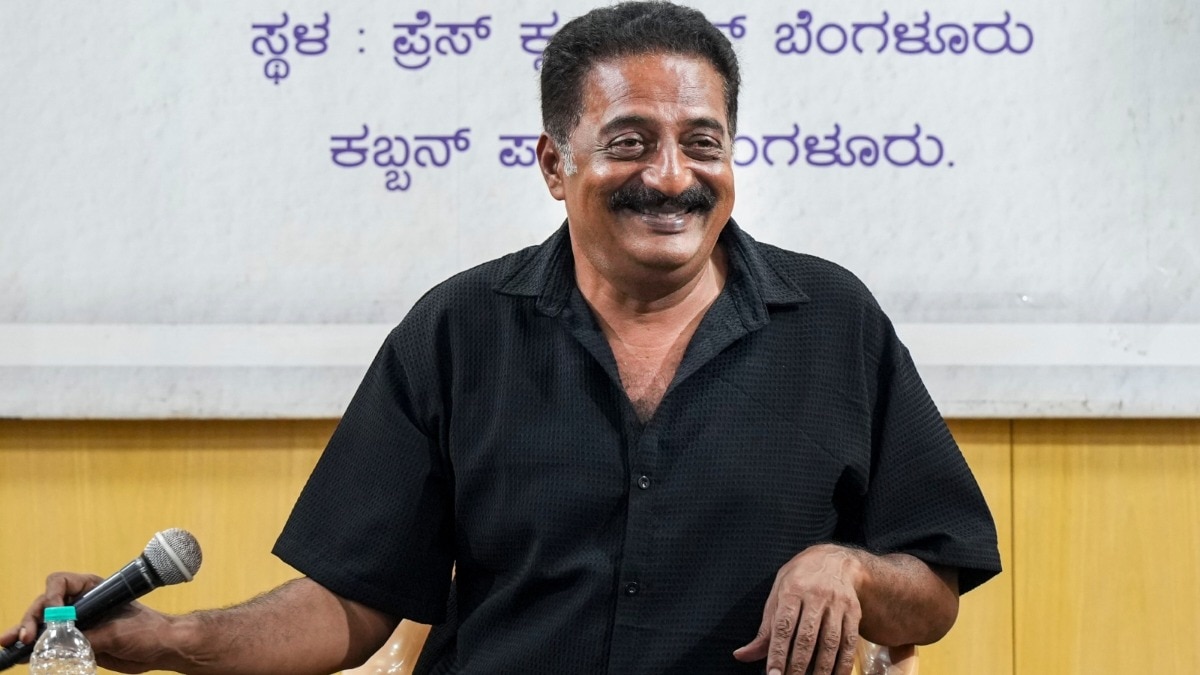
The 48th Additional Chief Judicial Magistrate Court in Bengaluru released actor Prakash Raj on a cash surety of ₹4,000, recalling the non‑bailable warrant after his counsel argued that summons were never served. The decision adds a new chapter to the investigation of his alleged possession of voter IDs across several states.
Key Takeaways
- Prakash Raj granted bail on a ₹4,000 cash surety
- Non‑bailable warrant recalled due to lack of service of summons
- Investigation into multiple voter ID holdings continues
Election Law Meets Celebrity Status
On Friday, the 48th Additional Chief Judicial Magistrate (ACJM) Court in Bengaluru granted bail to actor Prakash Raj, setting the cash surety at ₹4,000 and rescinding a non‑bailable warrant that had been issued earlier. The court’s decision followed a vigorous argument by Raj’s legal team that the summons were never formally delivered and that the actor learned of the proceedings only through media reports.
Background of the Multi‑State Voter ID Complaint
The controversy dates back to 2019 when advocate Dileep Kumar filed a complaint at Halasuru Gate Police Station, alleging that Raj possessed voter identity cards in four different states – Karnataka, Tamil Nadu, Telangana and one additional state. Under the Election Commission of India’s regulations, a citizen may be registered as a voter in only one constituency nationwide. If proven, the alleged multiple registrations would constitute a clear breach of election law.
Judicial Proceedings and the Recall of the Warrant
The court had previously issued summons on two separate occasions, each of which Raj failed to appear for. Consequently, a non‑bailable warrant was issued. During the hearing, Raj’s counsel successfully petitioned for the recall of that warrant, and the bench granted bail conditioned on a modest cash surety, effectively closing the immediate procedural aspect of the case while the substantive investigation remains open.
Potential Legal and Political Ramifications
Beyond the personal impact on Raj’s reputation, the case underscores the broader issue of electoral integrity when public figures are involved. Should the investigation confirm the possession of multiple voter IDs, the Election Commission could impose severe penalties, including cancellation of voting rights, monetary fines, or even criminal prosecution. The precedent would send a strong signal to other celebrities and public personalities about strict compliance with voter registration rules.
Public and Media Reaction
The story quickly trended across Indian news portals and social media platforms. Legal analysts have highlighted the case as a litmus test for the enforcement of election norms against influential individuals, while some commentators praised the court’s swift handling of procedural irregularities. Others argue that the underlying issue—multiple voter registrations—must be addressed decisively to preserve public confidence in the electoral system.